Table of Contents
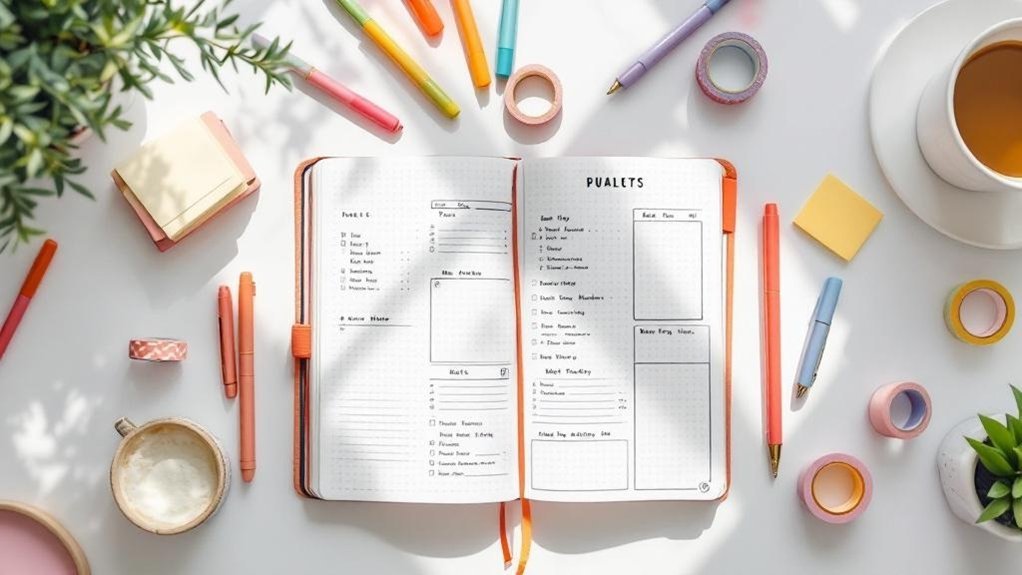
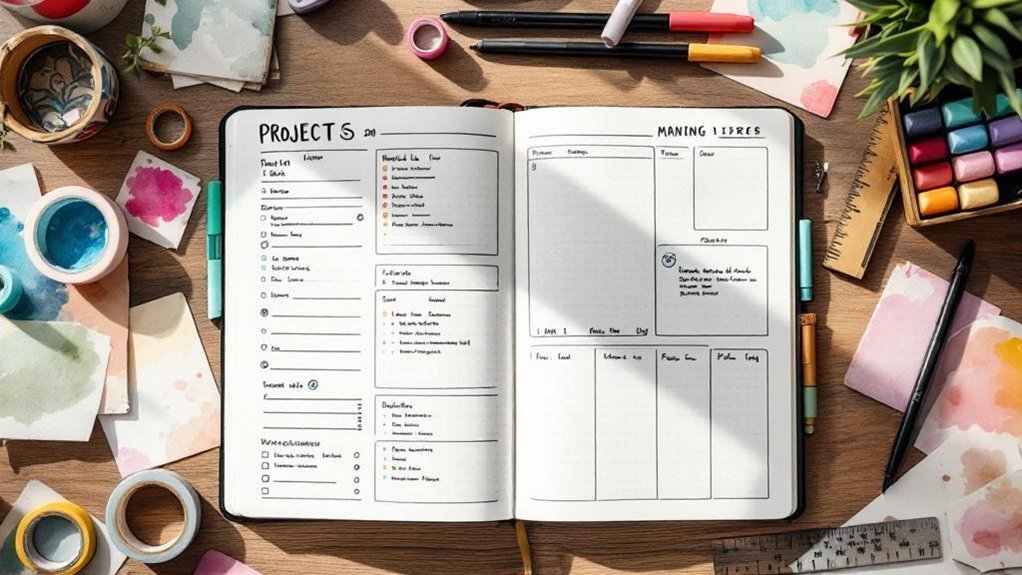
You know that feeling when you’re staring at a blank page, waiting for inspiration to strike? It can be both daunting and liberating. But once you find a system that clicks—like using a habit tracker to visualize your progress—it’s a game changer. I’ve spent three months fine-tuning layouts that work for me, and I’m excited to share how you can do the same. You’ll learn how to combine structured tracking with visual feedback to make your habits stick. Remember, start messy—every little step counts!
Key Takeaways
- Break habits into daily tasks of 5 minutes or less — small actions spark motivation and show clear progress towards your goals.
- Use a color-coded grid for tracking — it provides instant visual feedback, boosting accountability and helping you stay aware of your habits.
- Limit yourself to 3 habits — focusing on fewer goals prevents decision fatigue and increases your chances of sticking with them.
- Schedule a weekly reflection session for 10 minutes — this helps you celebrate small wins, maintaining your momentum and reinforcing positive habits.
- Embrace flexibility in your tracking — allowing yourself to skip days reduces the pressure of perfectionism and keeps you engaged long-term.
Introduction
Have you ever felt stuck trying to build a regular exercise routine or commit to reading more? I totally get it. You might've discovered that willpower fizzles out faster than you think. That’s where bullet journaling comes in! It’s a game-changer for habit formation, and I’m excited to share how it can transform your approach.
Supplies You’ll Need:
- Journal: Leuchtturm1917 A5 Dotted (or a budget-friendly option like a simple, dotted notebook)
- Pens: Tombow Dual Brush Pens (or Crayola Super Tips for a cheaper alternative)
- Fineliner: Micron 05 (or a pack of affordable gel pens)
Skill Level: Beginner to Intermediate
Here's what I love about bullet journaling: it breaks down those big habits into bite-sized tasks. Instead of feeling overwhelmed, you can tackle one small piece at a time. Think of it as turning lofty goals into daily, achievable steps.
Break down big habits into bite-sized tasks. Transform lofty goals into daily, achievable steps.
Plus, with regular reflections, you’ll boost your self-awareness and keep those habits aligned with your long-term vision. Tracking habits can lead to better accountability, enhancing your chances of success.
Let's Get Started
- Set Your Goals: Grab your journal and jot down 3-5 specific habits you want to build. Keep it simple; “Read for 20 minutes” or “Workout three times a week” works perfectly.
- Create a Habit Tracker: Draw a 6cm x 6cm box on the top right of your page. Inside, create a grid for the month. Each square represents a day. Use a colored pen to fill in the boxes as you complete each habit. It’s like a visual reward!
- Reflect Weekly: At the end of each week, make a quick note. What worked? What didn’t? This isn’t about perfection; it’s about progress. Celebrate those small wins!
- Adjust as Needed: If something isn’t working, don’t hesitate to change it up. You’re not locked into a rigid system. I’ve tried different layouts until I found what clicked for me — and guess what? It’s okay to start messy.
Common Mistakes to Avoid
The mistake most beginners make? Overcomplicating things! It’s easy to get caught up in making it look pretty instead of focusing on function. Remember, done is better than perfect. Your journal is a tool for you!
Feel that? It’s the excitement of starting something new.
Try This Today
Grab your supplies and create your habit tracker! Just start with one habit and fill in a square each day you accomplish it. Enjoy the process! You’ll be amazed at how those tiny steps lead to meaningful change.
And hey, if you find yourself overwhelmed, take a step back. What I’ve learned over the years is that it’s all about adapting and finding what works for you.
The journey of journaling is just as important as the result. Ready to give it a shot?
Understanding the Problem
You've likely experienced the excitement of starting a habit tracker, only to see your dedication slip away as motivation wanes and life throws unexpected challenges your way.
This happens because many overlook how decision fatigue saps their willpower, leading to disruptions that can dismantle even the best-laid plans. A key factor in sustaining your practice is to implement a sustainable bullet journal system, which can help maintain your momentum and adaptability over time.
Why This Matters
Why This Matters
You ever feel stuck with your habits? Trust me, I’ve been there. It’s frustrating when you can’t see your progress, and all those good intentions just float around without turning into action. Decision fatigue kicks in, and before you know it, you’re back to square one.
When progress feels invisible, motivation can just disappear. You start questioning if you’re actually moving forward or just stalling out. That kind of uncertainty? It’s a slippery slope to ditching your goals when life throws you a curveball.
Here’s where bullet journal habit tracking shines! I love how a visual representation of your efforts makes everything feel more real and accountable. It’s like having a little cheerleader for your goals right on the page. By connecting your daily habits to those bigger dreams, you’re not just relying on fleeting willpower; you’ve got something solid to drive you forward.
Supplies You’ll Need:
- Bullet Journal: Leuchtturm1917 A5 Dotted (around $20) or a budget-friendly option like a Simple Blank Notebook (around $5).
- Pens: Tombow Dual Brush Pens (set of 10 for about $30) or Crayola Supertips (set of 50 for about $10).
- Ruler: A clear plastic ruler (around $5) or any straight edge you have at home.
- Stickers or Washi Tape: Optional for extra flair!
Skill Level: Intermediate
Let’s break it down:
- Set Up Your Tracker: Start by drawing a grid for the month. For example, create a 7-column by 5-row box (each box should be roughly 1.5cm x 1.5cm) to represent days and habits. Use a 0.5mm black pen for clean lines.
- Choose Your Habits: List 3-5 habits you want to track. I usually go for things like “drink water,” “exercise,” or “read.”
- Color Code: Assign a color for each habit using your Tombow pens. This makes your tracker visually appealing and easy to scan at a glance.
- Mark Your Progress: Each day, fill in the corresponding box with a colored dot or a checkmark. It’s super satisfying to see those boxes fill up!
- Reflect: At the end of the month, take a moment to review. Did any habits stick? Which ones didn’t? This is where you can adjust for next month.
Feel that? That’s the thrill of watching your habits come to life on the page!
Common Mistake:
The mistake most beginners make? Overcomplicating it. Keep it simple! A cluttered tracker can be overwhelming. Just focus on a few key habits to start, and remember—done is better than perfect!
Alternative Approach:
If you’re not into daily tracking, consider a weekly spread instead. Draw a similar grid but just for the week ahead. It’s flexible and lets you adjust as life unfolds.
Try This Today: Grab your bullet journal and set up your habit tracker for this month. Decide on your habits, color them in, and start marking your progress! You’ll be amazed at how much motivation comes from just seeing those boxes filled in. Happy journaling!
What Most People Get Wrong
What Most People Get Wrong
You know that moment when you sit down to build your habit tracker? You’ve got all the excitement, and suddenly, you’re tempted to throw in everything—ten habits, fancy designs, color-coded systems. But trust me, that’s a recipe for overwhelm.
Here's the thing: decision fatigue is real. Each choice you make drains your mental energy, and soon enough, you might find yourself slipping into inconsistency or abandoning your tracker altogether. I've been there!
It’s easy to treat your tracker like a rigid contract. When life throws you a curveball—like an unexpected illness or a busy work week—it’s tough to adapt without feeling guilty. But guess what? It’s okay to be flexible!
What I love about habit tracking is that it can be a reflection of where you're right now. If you miss a day, just jump back in without the guilt.
Now, let’s talk about those overly complex lists. You know, the ones that look great at first but quickly become overwhelming? I've tried both the simple and the complex routes, and let me tell you: complexity kills momentum. Keep it simple. Start with 2-3 habits that truly matter to you. That counts!
And here’s a biggie: disconnecting your habits from your long-term vision. Without a clear *why* behind what you’re tracking, it’s easy to lose motivation. Ask yourself, “Why does this habit matter to me?” Keep your approach grounded in purpose, simplicity, and adaptability—not perfection.
Supplies You'll Need
- Notebook: Leuchtturm1917 A5 Dotted ($20) or a budget-friendly alternative, a simple dotted journal ($10).
- Pens: Tombow Dual Brush Pens ($10 for a set) or Crayola SuperTips ($6 for a set).
- Ruler: Any flexible ruler ($5) or a basic straightedge ($2).
Skill Level: Beginner (no experience, basic supplies)
Let's Build Your Habit Tracker
- Set a Time Frame: Choose a month to focus on. For example, let’s say you want to track habits in October.
- Create a Simple Layout: Draw a rectangle that's 12cm wide and 16cm tall, 2cm from the top of the page. Divide it into four rows and three columns, leaving a 1cm space between each line. This gives you a grid for 12 habits.
- Label Your Habits: Use a medium black pen (like a Micron 05) to write each habit in the first column, starting 2cm from the left edge. Feel that? That’s your foundation!
- Add Checkboxes: In the next three columns, draw small boxes (1cm x 1cm) for each day of the week. Use a contrasting color from your Tombow set to make it pop.
- Decorate Mindfully: Add a little flair with doodles or washi tape, but keep it functional. Every design choice should help improve scanability or tracking.
Common Mistakes to Avoid
One mistake I see beginners making is going too big, too fast. Start messy! Track only what feels right for you. This way, you won’t feel crushed under the weight of your own expectations.
I used a complex system once and abandoned it after a month—it just didn’t stick.
Alternative Approach
If you’re feeling overwhelmed by building a tracker, try a printable template! You can find plenty online that fit standard paper sizes, like A5 or letter. Just print it out and fill in your habits. Easy peasy!
Try This Today!
Take a few minutes to jot down 2-3 habits you want to track this month. Remember, it doesn’t need to look perfect. Just get started! Embrace the mess, and you’ll find what works best for you. Happy journaling!
The Solution: Step by Step

With a solid understanding of your initial practices, it's time to see how to implement them effectively. As you embark on this journey, you'll transition through three key phases: Foundation, Implementation, and Verification.
Each phase builds upon the last, guiding you in creating a sustainable bullet journal habit system that evolves into a powerful tool for habit tracker formation.
Phase 1: Foundation
Building on that solid foundation, it’s essential to focus on the practical steps that will help you implement these habits effectively.
By narrowing your daily tracking to just four or five key items, you’ll minimize decision fatigue and enhance your consistency.
This strategic approach sets the stage for a confident and successful bullet journal habit practice.
Key Setup Details
Supply List:
- Notebook: Leuchtturm1917 A5 Dotted ($20) or a simple, budget-friendly alternative like a basic dotted journal from Amazon ($10).
- Pens: Tombow Dual Brush Pens ($8 for a set) or Crayola Supertips ($5 for a set).
- Fineliner: Micron 05 ($3) or a pack of black gel pens from a discount store ($5).
Skill Level: Beginner
—
Ever sat down with your bullet journal only to feel overwhelmed by the endless possibilities? I’ve been there!
What I love about starting fresh is the chance to simplify. Here's a little secret: laying a solid foundation for your habit tracking is key, and it doesn't have to be complicated.
Start by choosing four or five habits you genuinely want to track. This focused approach can feel liberating, don’t you think? It lightens the cognitive load, making it easier to keep those habits consistent.
I've tried spreading myself too thin with too many habits, and trust me, it’s a recipe for burnout.
Next, let's talk layout! Create a simple visual design that speaks to you. I like to use color-coding for quick feedback.
Maybe you pick a calming blue for water intake, a cheerful yellow for exercise, and a grounding green for mindfulness. Feel that? Each color draws you in and makes tracking a little more exciting.
Here’s a fun tip: pre-plan your routines. It minimizes daily decision fatigue and streamlines how you implement those habits.
If I know I’ll do my yoga in the morning, I set up my habit tracker the night before. It’s all about making the process as smooth as possible!
—
Engagement Break:
What I'd do differently: If I could rewind time, I’d keep my designs even simpler at first.
Sometimes, less really is more. A clean layout is easier to maintain and gives you the freedom to be creative without feeling bogged down.
—
Now, let’s talk about the visual elements. For your habit tracker, draw a 5cm x 5cm box for each habit, spaced 1cm apart, using a Micron 05 for crisp lines.
Inside each box, you can create a grid to fill in daily progress. I usually go with a 4×4 grid so it’s easy to see how I’m doing at a glance.
Here’s where I want to emphasize function alongside aesthetics. Each decorative element, like little doodles or headers, should serve a purpose—whether it’s to inspire you or help you remember what you're tracking.
The mistake most beginners make? They focus too much on making it look perfect instead of functional.
Remember, done is better than perfect! You can always evolve your layout as you go.
—
So, are you ready to dive in? Try setting up your habit tracker today.
Choose your habits, sketch out your boxes, and don’t stress about perfection. Embrace the messiness of your journey! Happy journaling!
Phase 2: Implementation
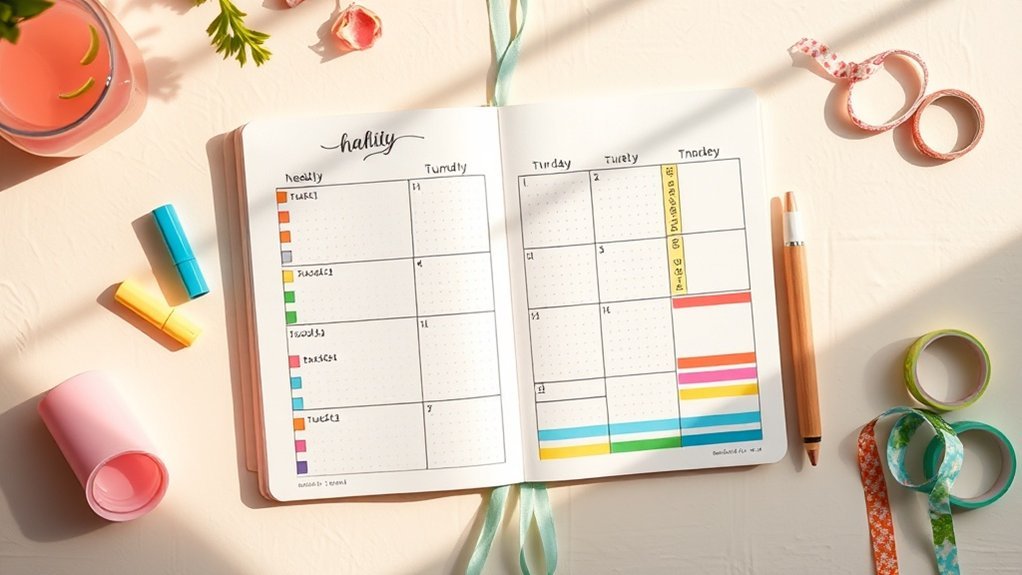
With a solid understanding of your habits established, it’s time to focus on implementation.
You'll need to carve out specific moments throughout your week to pause and assess your habit progress. These checkpoints aren't just about marking boxes—they're your opportunities to identify patterns, celebrate wins, and catch slip-ups before they derail your momentum.
Critical Checkpoints
How to Know If Your Habit Tracker’s Working
You ever find yourself wondering if your habit tracker is doing its job? I’ve been there! After years of bullet journaling, I've learned that establishing critical checkpoints is key to keeping things on track. Here’s what I do: I take a look at my visual tracker every week. I like to analyze the completion patterns and really reflect on how each habit aligns with my goals.
What I love about this method? It’s all about that feedback loop! You’re not just filling in boxes; you’re getting real insights into what’s resonating with you and what might need a little tweak. It’s okay if things don’t click right away—start messy! That counts!
Supplies You’ll Need:
- Notebook: Leuchtturm1917 A5 Dotted ($20) or a budget-friendly alternative like the Scribbles That Matter Dotted Notebook ($15).
- Pens: Tombow Dual Brush Pens ($30 for a set) or try Crayola Supertips ($10 for a pack).
- Ruler: A simple plastic ruler ($2) works perfectly.
Skill Level: Intermediate
If you’re comfortable with basic layouts and hand lettering, you’re ready for this!
Step-by-Step: Creating Your Checkpoints
- Weekly Review: Set aside a cozy time each week—maybe Sunday evenings? Grab your favorite pen and look over your tracker. What patterns do you see?
- Completion Patterns: Circle the habits you nailed and mark the ones you struggled with. This is where you really analyze. Feel that? You're becoming your own habit detective!
- Reflect on Relevance: Take a moment to ask yourself: “Does this habit still serve my goals?” If it doesn’t, it might be time to pivot.
- Adjust as Needed: Don’t be afraid to mix things up! I once abandoned a habit that looked great on paper but took too long to complete. Here's what actually stuck after the novelty wore off: I focused on smaller, bite-sized habits that felt fun!
Engage With Your Tracker
Every month, I like to theme my habit check-ins. For instance, in January, I focus on wellness habits as everyone’s fresh into the new year. In contrast, by May, I’m all about outdoor activities! This keeps it fresh and exciting.
Quick Tip: The mistake most beginners make? They overcomplicate things! Keep your checkpoints simple. Even a few symbols or colors can tell you a lot.
Try This Today
Grab your favorite pen and set up your first weekly review tonight. Write down three things you want to check in on. Trust me, you’ll start seeing patterns that help you grow! Remember, perfect is the enemy of done—so just enjoy the process!
Phase 3: Verification
You'll know your habit formation worked when you can visually track consistent progress through your bullet journal entries and notice patterns emerging in your behavior. By reviewing your completed habits weekly or monthly, you'll identify which tracking methods resonated with you and which adjustments improved your follow-through.
Your color-coded entries and reflection notes become concrete evidence that you've successfully embedded these habits into your daily routine.
But what happens when you begin to see those patterns? This insight not only reinforces your progress but also sets the stage for deeper exploration into the dynamics of your habits and how to refine them further.
How to Know It Worked
How to Know Your Habit’s Stuck
Ever start a new habit and wonder if it’s really going to stick? Trust me, I’ve been there! Here’s the thing: you’ll know it’s working when you hit that sweet spot of maintaining a consistent streak for 21+ days. It sounds simple, but it can be a game-changer!
Supplies You’ll Need:
- Journal: Leuchtturm1917 A5 Dotted (or a budget-friendly option like the Scribbles That Matter Dotted Journal)
- Pens: Micron 05 for fine details (or any gel pen you love)
- Highlighters: Mildliners for color-coding (or some good ol' Crayola highlighters)
Skill Level: Beginner to Intermediate
Tracking Your Habit:
Start by tracking your completion rates in your journal. I like to use a simple grid layout. Draw a box that’s 5cm x 5cm, spaced 1cm apart, to represent each day of the week. It’s a great visual to see your progress at a glance.
What I love about this method is how it keeps me accountable. I mark each day I complete my habit with a fun sticker or a quick doodle. It doesn't have to be perfect — done is better than perfect, right?
Weekly Reviews
Now, let’s talk about those weekly reviews. Set aside a few minutes each week to reflect. Ask yourself: What worked? What didn’t? Feel that? It’s all about spotting patterns. Did you notice that you completed your habit more consistently on days you planned ahead? Take notes!
Emotional Tracking
Don’t forget to jot down how you felt. I’ve tried tracking my emotional responses, and it helps me understand the motivation behind my habits. Use a simple scale from 1-5 — 1 being “meh” and 5 being “on fire!”
Cross-Referencing Progress
Now, here’s where it gets exciting. Cross-reference your tracked behaviors against your long-term goals. Are your efforts moving you toward what you truly want? I’ve found that when I can see the connection, it’s so much easier to stay motivated.
Engagement Break:
If you’re feeling overwhelmed with tracking, remember: it’s okay to start small. Maybe try tracking just one habit for a week before expanding. The mistake most beginners make is trying to do too much at once. You don’t need a full habit tracker if you’re just starting!
Try This Today
Ready to dive in? Start messy! Grab your journal and set up your habit tracker with those supplies. You can even create a little key for your stickers or doodles.
Every mark you make counts, and each day is a step forward. Let’s do this together! You’ve got this!
Pro Tips From Experience
Pro Tips From Experience: Habit Tracking Made Simple
Ever felt overwhelmed by tracking too many things at once? Trust me, I’ve been there. After years of bullet journaling, I’ve learned that keeping your tracking list to just four or five items helps you focus on what truly matters. You’re not just tracking; you’re making progress!
Here are some strategies that really work:
- Stack habits intentionally—This is a game changer! Link new habits to something you already do. For example, if you want to start drinking more water, do it right after you brush your teeth. That little connection helps cut down on decision fatigue and builds a nice routine. Feel that?
- Normalize missed days—Let’s be real: life happens. Skipping a day or two won’t ruin everything. What matters is picking it back up. I’ve had weeks where I barely tracked anything, but just getting back to it kept my momentum going. Remember, done is better than perfect!
- Visualize completion—Use color-coded boxes in your tracker. I love using bright Tombow Dual Brush Pens to fill in each box. It gives such satisfying feedback! When you see those colorful boxes fill up, it really reinforces those positive habits. Plus, it looks pretty!
- Connect to purpose—Anchor your habits to something that matters to you. If your goal is to read more, think about why it’s important. This transforms a mundane task into something that resonates deeply. What’s your “why”?
Supplies You'll Need
- Tombow Dual Brush Pens (for color coding) – Budget-friendly alternative: Crayola Super Tips
- Leuchtturm1917 A5 Dotted Notebook (for bullet journaling) – Budget-friendly alternative: Scribbles That Matter Dotted Notebook
- Micron 05 Pen (for fine details) – Budget-friendly alternative: Staedtler Triplus Fineliner
Skill Level
Beginner: Just a notebook and some pens will do!
Intermediate: Comfortable with rulers and hand lettering? You’re set!
Advanced: If you love specialized tools, go for it!
Visual Elements
Let’s talk layout! For your habit tracker, draw a 4cm x 6cm box, 1cm from the left margin, using a 0.5mm black pen.
Inside that box, create smaller squares for each day of the month. If you're tracking five habits, make five rows of squares, each 1cm x 1cm. Leave a 0.5cm space between each row for clarity.
Choose a color for each habit and fill those boxes in once you complete them. It’s all about making it easy to scan and track!
Engagement Break
Quick tip: Many beginners try to track everything at once. The mistake most beginners make is thinking they need to keep up with an overwhelming list. Start with just a few habits—trust me, it’ll feel more manageable.
Personal Experience
Recommended for You
🛒 Dotted Journal Notebook
As an Amazon Associate we earn from qualifying purchases.
I used this layout for three months, and what really stuck was visualizing my habits. I loved flipping through my journal and seeing all those filled boxes.
It kept me motivated to keep going, even on days when I missed tracking.
Before and After: What to Expect
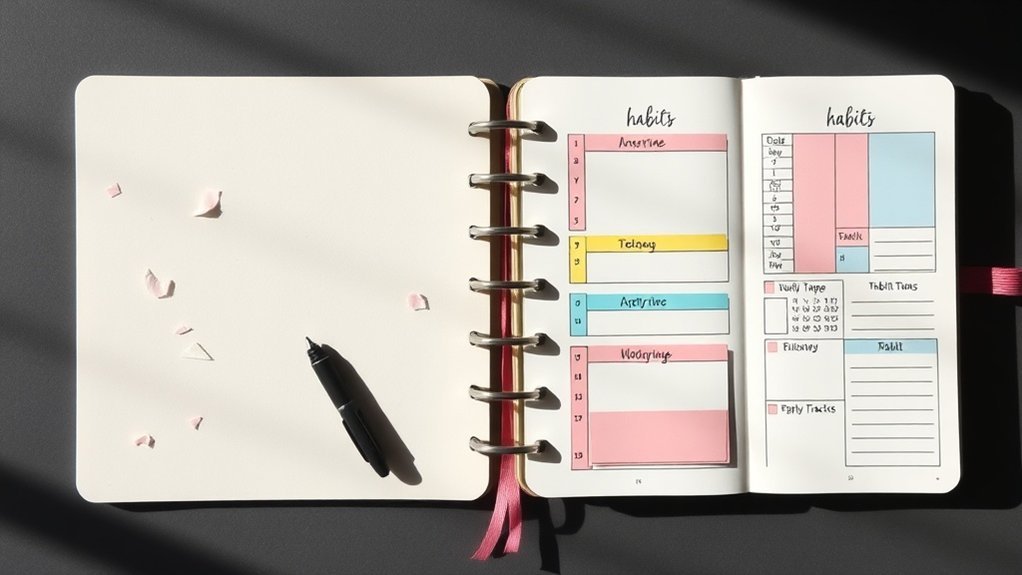
Before and After: What to Expect
Have you ever felt overwhelmed by tracking your habits? I remember the days when my bullet journal felt more like a chaotic collection of lists than a source of inspiration. The shift from scattered tracking to organized habit formation is a game-changer for managing daily routines.
| Aspect | Before | After |
|---|---|---|
| Decision-Making | High daily fatigue | Reduced mental load |
| Tracking Consistency | Sporadic and irregular | Structured and reliable |
| Motivation Levels | Initial enthusiasm fades | Sustained through flexibility |
| Recovery Time | Difficult after lapses | Quick return to habits |
| Goal Connection | Disconnected actions | Linked to long-term vision |
Feel that? As you dive into this journey, you might notice your motivation dips after a few weeks. Don't panic—it’s totally normal! My flexible bullet journal design embraces this ebb and flow, letting you make adjustments without feeling like you've abandoned ship.
What I love about this approach is how each habit links to something meaningful. It’s like giving your routines a purpose! When I first connected my daily actions to my long-term goals, I felt a rush of motivation. The visual system morphs those sporadic efforts into automatic routines, making it much easier to bounce back after a missed day.
Let’s talk about the nuts and bolts of your setup. Grab your supplies:
Supply List:
- Notebook: Leuchtturm1917 A5 Dotted (or a budget-friendly alternative like the Scribbles That Matter Dotted Notebook)
- Pens: Tombow Dual Brush Pens (or Crayola Super Tips for a budget option)
- Fine Liner: Micron 05 (or a budget option like the Sakura Pigma Micron)
- Ruler: Any sturdy ruler for straight lines
- Washi Tape: For decoration and organization
Skill Level: Intermediate (comfortable with rulers and hand lettering)
Layout Technique
Start by outlining your monthly goals on two pages. Leave 2-3 centimeters at the top for a decorative header—this can be hand-lettered or stamped. Below that, draw a 4cm x 6cm box for each goal, spaced 1cm apart. Use a black pen to outline the boxes, and fill them in with color using your Tombow markers.
Now, here’s the fun part: connect each habit you want to track to these goals. For example, if your goal is to read more, create a daily reading log under that box. Use a simple checklist for each day of the week.
Encouragement Break
What I’ve found helpful is keeping it simple. The mistake most beginners make is overloading their spreads! Start messy and let your creativity flow without the pressure of perfection. You can always refine it later.
Personal Experience
I've tried various layouts over the years, and the ones that stuck were those that felt personal and adaptable. For three months, I used a similar setup, and it transformed my approach to daily routines. The beauty of this method is that it evolves with you. If a goal starts to feel stale, tweak it! Change the colors, the layout, or even the habit itself.
Final Thoughts
Ready to try this today? Start with just one goal and its corresponding habits. Draw your boxes, connect your actions, and watch how the structure helps you break free from that initial fatigue. Remember, that counts!
Embrace the journey, and let your bullet journal be the tool that supports your growth. You've got this!
Your Next Steps
Your Next Steps in Bullet Journaling
Hey there, fellow journaler! Remember that buzz when you first set up your bullet journal? It’s time to ride that wave into action! You've got your layout designed, and your habits linked to your goals—now let’s get it flowing.
Supplies You’ll Need:
- Notebook: Leuchtturm1917 A5 Dotted ($20) or a budget-friendly alternative like the Scribbles That Matter Dotted Notebook ($11).
- Pens: Tombow Dual Brush Pens ($17 for a set) or Crayola Super Tips Markers ($10 for a pack).
- Fine Liners: Micron 05 ($3) or a budget-friendly option like the Paper Mate Flair Pens ($8 for a pack).
Skill Level: Intermediate (you’re comfy with rulers and hand lettering).
Start by committing to four or five core habits. Trust me, this focused approach can skyrocket your completion rates and keep tracking consistent. I’ve found that having fewer habits to track makes it feel more achievable.
Establish a routine that feels natural—this way, you can ditch decision fatigue and save your brainpower for what really matters. Feel that sense of relief? It’s freeing!
Here’s a fun trick: use color-coding for completed tasks. It’s not just pretty; it gives you that little rush of positivity. Each time you check something off in a vibrant hue, you’re reinforcing those good vibes.
My Go-To Approach: I love setting aside time each week for reflection. This is when I reassess each habit’s relevance to my long-term goals. Maybe you think you won’t need that habit next month? That’s okay!
This practice deepens your accountability and keeps your motivation alive, even when the initial excitement fades. Your breakthrough won’t come from complex systems. It’s about simplicity blended with intentional tracking.
Start messy—seriously, that counts! Measure your progress, adjust based on what you learn, and let go of those perfectionist vibes.
Quick Engagement Break
What I'd Do Differently: If I could go back, I’d focus on fewer habits sooner. The mistake most beginners make is overwhelming themselves with too many tasks. Keep it simple; you’ll feel a difference!
Let's Get Specific
Here’s how to make it work:
- Draw a Habit Tracker: Create a 6cm x 8cm box on the left side of your spread, 2cm from the top. Inside, list your habits vertically, leaving space for monthly tracking.
- Color Code: Use a different color for each habit. Maybe green for hydration, blue for exercise—whatever resonates with you.
- Weekly Reflection Section: Reserve a 5cm tall space at the bottom of the page for reflections. I like to write prompts like “What worked?” and “What didn’t?” in a lighter color.
Printable-Friendly Consideration: This layout is easy to adapt for A5 or letter-sized paper. Just scale up or down as needed.
Final Thoughts
Try this today: set your four or five core habits, create that tracker, and get colorful! Remember, the goal is progress, not perfection. It’s all about finding what works for you and making it stick. Happy journaling!
Frequently Asked Questions
What Habits to Track in Bullet Journals?
Q: What habits should I track in my bullet journal?
You'll want to focus on four to five habits that align with your goals. Start with physical wellness, like exercise, sleep, and nutrition, and add in mental growth habits such as reading or meditation.
Try stacking new habits onto your existing routines for easier integration. Use a dotted A5 notebook like the Leuchtturm1917 ($20) for flexibility.
Q: How much time does it take to set up my habit tracker?
Setting up your habit tracker takes about 15 minutes once you have your layout figured out, and just 30 seconds daily to fill in. Make it simple!
You can use mildliners ($15 for 15) to color-code your habits.
Q: How do I know which habits matter to me?
Pick habits that resonate with your personal goals and reflect on their significance regularly. You can jot down your thoughts in your journal weekly.
A simple notebook like the Scribbles That Matter ($20) is great for this.
Q: How often should I review my tracked habits?
Review your habits weekly to see what’s working and what isn’t. This should take about 10-15 minutes.
You might find the Erasable Frixion pens ($10 for 5) helpful for making changes without mess.
Q: What if I miss tracking a habit?
Don’t stress if you miss a day or two! Imperfection is part of the process. Just get back on track when you can.
A quick note in your journal about how you felt that day can help you refocus.
Is a Bujo Good for Anxiety?
Q: Is bullet journaling helpful for anxiety?
Absolutely! Bullet journaling can really help you manage anxiety. Start by creating a daily log to organize your thoughts—it takes about 15 minutes to set up and just a few minutes each day to fill in.
For supplies, you can use a simple dotted A5 notebook like the Leuchtturm1917 ($20) or a budget-friendly option like the Strathmore Sketchbook ($10).
Q: How does writing in a journal help with racing thoughts?
Writing helps ground those racing thoughts, giving you a sense of calm. Try setting aside 10-15 minutes each day to jot down your feelings or thoughts.
You can use a nice pen like the Pilot G2 ($10 for 5) or a more affordable option like the Bic Cristal ($5 for 10).
Q: Can tracking habits really reduce anxiety?
Yes, tracking habits can give you a sense of control. You can set up a habit tracker in about 20 minutes and spend just a minute or two daily updating it.
Consider using a colorful set of markers like Tombow Dual Brush Pens ($25 for 10) or Crayola Supertips ($6 for 20) to make it visually appealing.
Q: How can I customize my journal for my emotional needs?
You can personalize your journal layouts to fit what you feel you need most. It only takes about 30 minutes to brainstorm and create your custom spreads.
Use an A5 notebook to keep it manageable, like the Moleskine Classic ($20) or the budget-friendly Scribbles That Matter ($15).
Q: Does creative expression in journaling lower stress?
Definitely! Expressing yourself creatively can help reduce stress levels. Set aside around 20 minutes each week to work on doodles or designs in your journal.
Use watercolor pens like the Kuretake Zig Clean Color ($25 for 12) for vibrant colors, or Crayola Super Tips ($6 for 20) if you're looking for something budget-friendly.
Conclusion
Grab your journal and a single black pen. Draw a 2×3 grid on the next blank page — that’s your first weekly tracker. Fill in today’s column with a habit you want to track. Start messy; that counts! You don’t have to be perfect right away. Just seeing your progress will motivate you to keep going.
Once you’ve got that down, think about adding a small daily reflection section. A couple of sentences about how you felt or what you accomplished can really boost your self-awareness. Remember, done beats perfect every time! Now go make that first step happen!
Related Posts



Related Posts
Related Posts
Related Posts
Related Posts
✨ Unlock creative energy with spiritual tools:
- AI Spell Generator – Create Personalized Intention Rituals
- Free Tarot Reading – Unlock Creative Inspiration
- Crystal Encyclopedia – Crystals for Creativity & Focus
Powered by Luna's Circle — Free Tarot, Spells & Spiritual Tools
Related Posts
Related Posts




Related Posts



🔍 Our Top Pick
Editor's Pick: Elevate your bujo headers with vibrant brush pen sets for artistic hand lettering and added visual flair.
Related Posts
Your Weekly Dose of Inspiration
Journaling ideas, family tips, and gentle inspiration.