After filling 22 bullet journals over the past six years, I’ve learned that the ruling inside your notebook matters more than the cover color, binding, or even the brand. I’ve stood in the stationery aisle staring at three identical-looking notebooks—one dotted, one lined, one grid—and felt the weight of choice paralysis. What seems like a minor aesthetic preference actually dictates how your spreads function, how your pens behave, and how much you’ll enjoy the process. In this guide, I’ll break down the three ruling types with the same obsessive detail I use to plan my monthly logs. You’ll get exact GSM numbers, pen recommendations (my Tombow Dual Brush and Micron 05 are never far), and honest stories about what worked and what made me rip out pages in frustration. By the end, you’ll know exactly which notebook belongs on your desk—and which one belongs back on the shelf.
The Paper Quality Showdown: Why GSM Matters More Than You Think
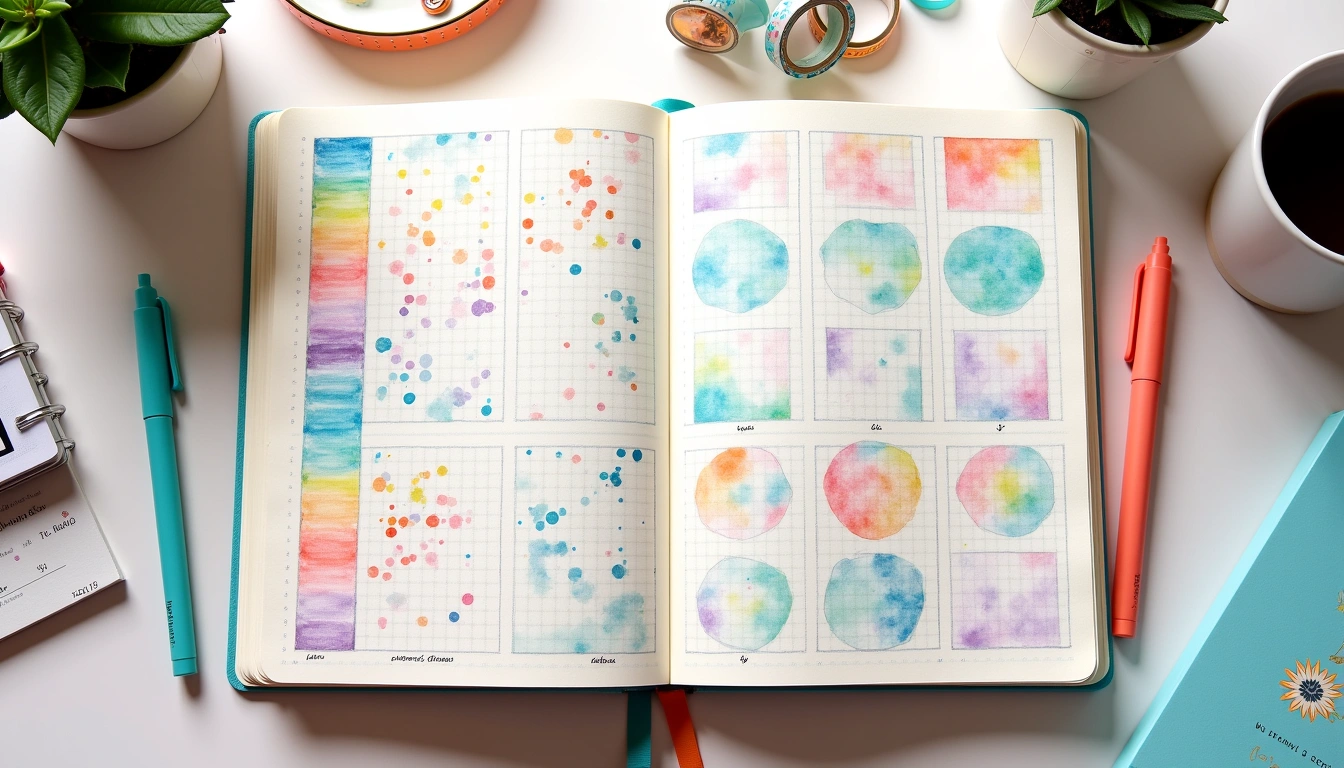
Paper weight is measured in grams per square meter (GSM), and it’s the first thing I check before a ruling even comes into play. Most budget notebooks hover around 70–80 GSM—think Moleskine or classic Leuchtturm1917. At that weight, a Tombow Dual Brush pen will ghost through to the next page like a bad secret. I tested my Leuchtturm1917 dotted (80 GSM) with a single layer of brush lettering: the back side showed a faint but readable shadow. Two layers? Unusable. In contrast, Archer & Olive notebooks use 160 GSM paper—thick enough that I can paint with watercolor without a care. The trade-off is bulk: a 160 GSM notebook with 160 pages is as thick as a 200-page 80 GSM notebook. For daily carry, I prefer 120 GSM from Scribbles That Matter—it handles Tombow Dual Brush pens with minimal ghosting and adds only moderate weight. My rule of thumb: if you use anything wetter than a Micron 05 (0.45 mm tip), aim for 100 GSM minimum. For brush pens or markers, 120–160 GSM is non-negotiable. I once bought a pretty lined notebook with 70 GSM paper and tried to use a mildliner—the highlighter bled through three pages. That notebook now lives in my recycling bin.
- 80 GSM (Leuchtturm1917): Fine for pencil and fine-liner pens. Ghosting with Tombow Dual Brush is moderate.
- 100 GSM (Dingbats): Good balance. Handles mildliners and Micron pens well. Brush pens may still ghost.
- 120 GSM (Scribbles That Matter): My sweet spot. Minimal ghosting with most markers. Still portable.
- 160 GSM (Archer & Olive): Near-zero ghosting. Thick and heavy. Ideal for mixed media.
Testing paper quality takes five minutes. Scribble with a Tombow Dual Brush on one page, then hold the next page up to a window. If you see a clear outline, that notebook will frustrate you. I learned this the hard way: my first bullet journal was a $7 lined notebook from a drugstore. The paper was so thin that my monthly calendar looked like a double-exposed photograph. I abandoned it after two weeks.
Ruling Visibility: Can You See the Lines When You Don’t Want To?
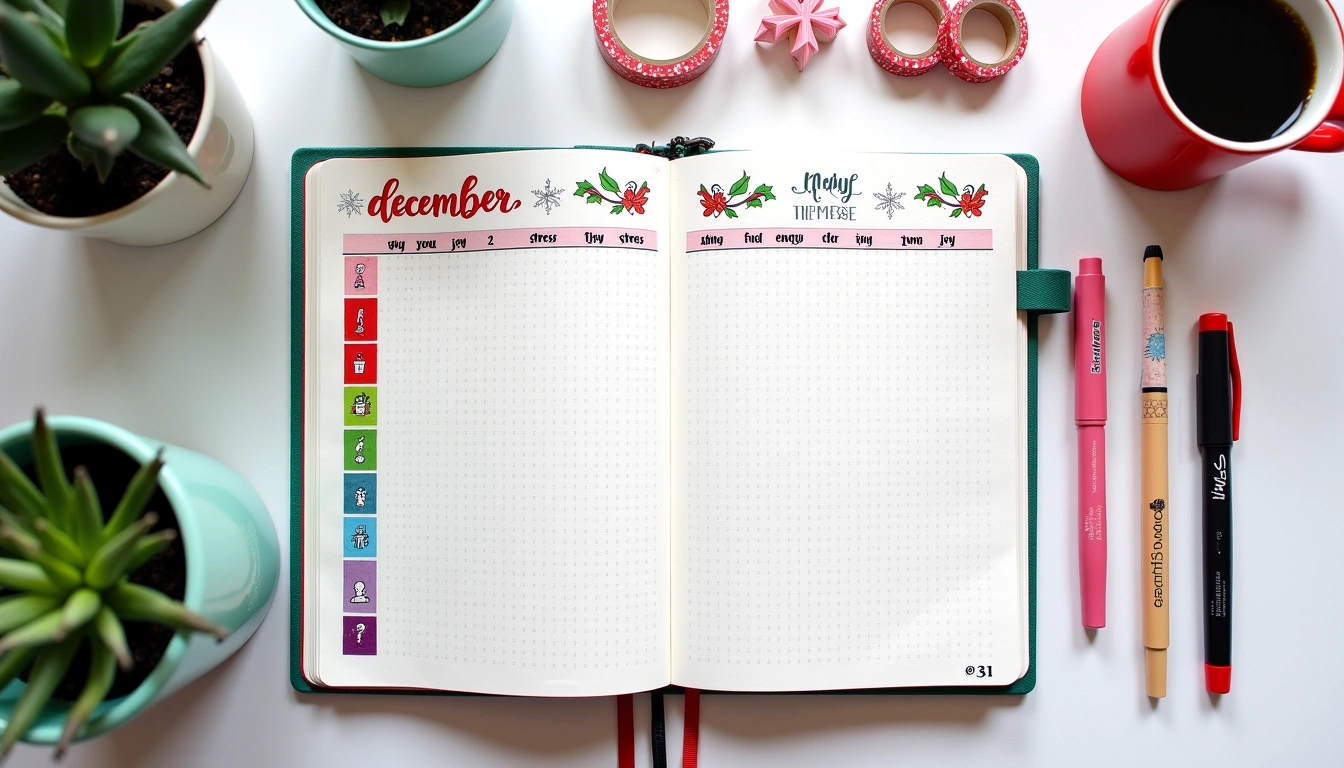
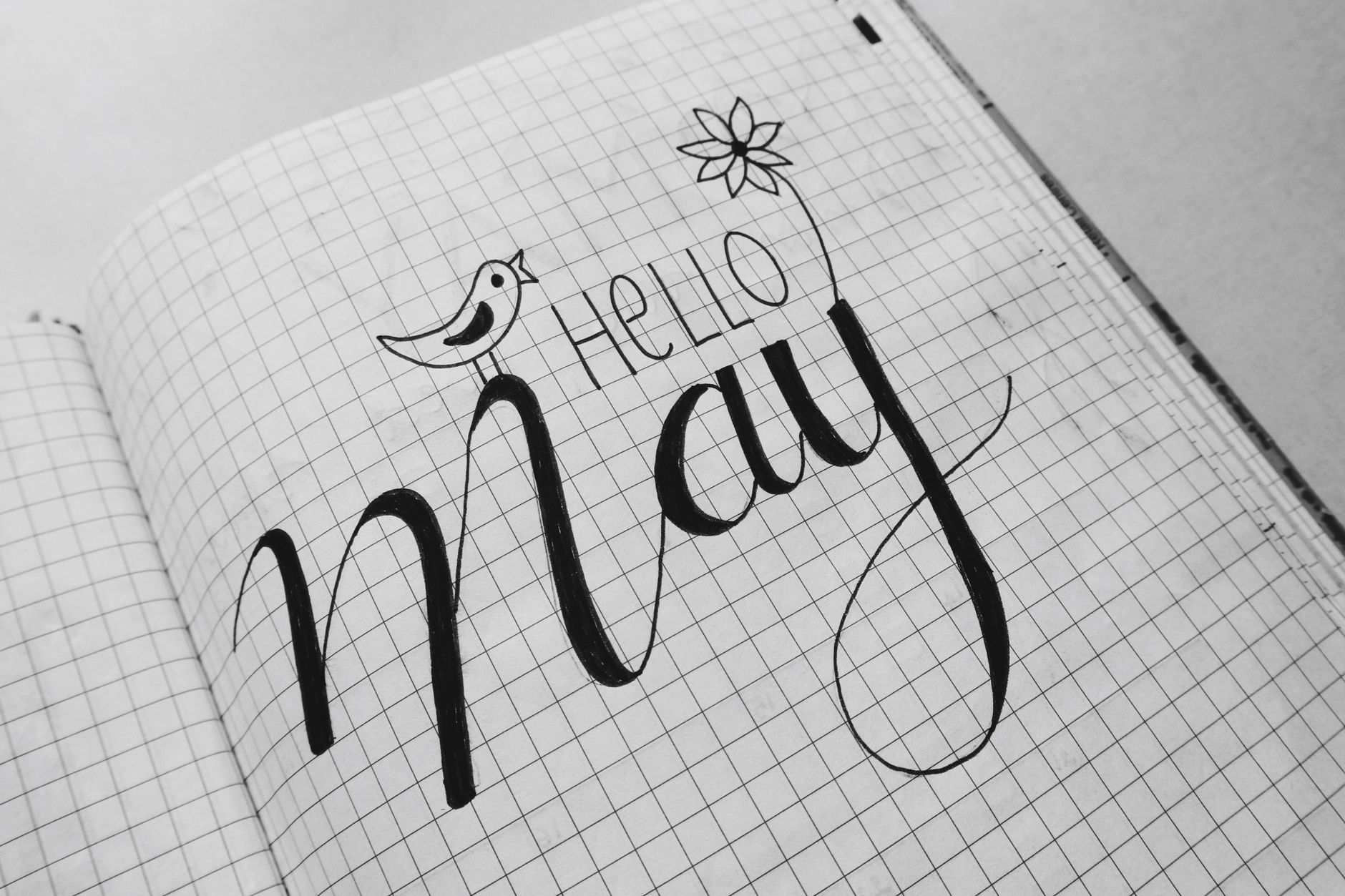
Ruling visibility is the quiet dealbreaker. Lined notebooks scream “write in straight lines”—great for notes, terrible for drawing a mood tracker or a habit wheel. Grid notebooks offer a crosshatch of squares that can feel like you’re writing on graph paper. Dot grid, on the other hand, provides subtle anchors without dominating the page. The ideal dot grid uses 5 mm spacing with light grey dots—faint enough to ignore when you’re painting, visible enough to guide a ruler. I’ve tried Nuuna notebooks with 3.5 mm dot spacing—the dots are so small and close together that they’re almost useless for drawing straight lines. Scribbles That Matter uses 5 mm dots in a soft grey that disappears under a layer of Tombow ink. For comparison, Leuchtturm1917 dots are slightly darker and more prominent, which can compete with your spread. I once attempted a minimalist weekly spread in a lined notebook. The dark blue lines clashed with my black Micron 05 headers, making the page look cluttered. I spent 15 minutes trying to ignore the lines before giving up. In dot grid, a weekly spread takes me 10 minutes—the dots guide my ruler without dictating where my content goes. For grid notebooks, the lines are usually 5 mm apart, creating a full grid. This is excellent for precise layouts like calendars or habit trackers, but for artistic elements like banner headers or doodles, the grid can feel restrictive. I’ve used grid for a mood tracker and ended up with a messy color wash because the lines showed through my watercolor. Now I reserve grid notebooks for purely functional spreads like finance logs or meal plans.
- Dot grid: Most flexible. Dots serve as guides without visual noise. Best for mixed layouts.
- Lined: Best for text-heavy journals (e.g., gratitude logs, long-form writing). Not ideal for trackers or drawings.
- Grid: Excellent for tables, calendars, and habit trackers. Can feel busy for artistic spreads.
Visibility also depends on dot color. Some brands use black dots (Nuuna) which are hard to ignore. Others use light grey (Scribbles That Matter, Archer & Olive) that fade into the background. I recommend holding the notebook at arm’s length—if you can still clearly see the dots, they’re too dark for my taste. A good test: draw a simple box using a Micron 05. In a light-grey dot grid, the box stands out; in a black-dot grid, the dots compete.
Layout Flexibility: Which Ruling Gives You the Most Creative Freedom?
Layout flexibility is where dot grid wins by a landslide. With 5 mm dots, I can create custom grids for any spread without being locked into pre-printed lines. For a habit tracker, I count 30 dots down and 7 dots across—that’s 30 rows and 7 columns, perfectly fitting on a standard A5 page (14.8 cm wide). The dots let me draw straight lines with a ruler, but they also allow freehand curves for a mood tracker wave. I timed myself: a full-month habit tracker in dot grid takes 20 minutes from start to finish. In grid, the same tracker takes 18 minutes because the lines are already there—but the visual noise makes the final result feel less clean. In lined, I can’t even make a proper tracker without drawing horizontal lines myself, which adds 5 minutes and never looks as straight. For artistic spreads, dot grid is unmatched. I can sketch a floral border using the dots as anchor points without worrying about intersecting grid lines. My most elaborate monthly cover—a watercolor galaxy with hand-lettered title—took 45 minutes in a 160 GSM dotted notebook. The dots were invisible after the first layer of paint. In a grid notebook, the same spread would have required me to erase or ignore the grid, adding frustration. Lined notebooks are the worst for flexibility: they force a horizontal orientation that kills vertical layouts. I tried a lined notebook for a weekly spread and ended up with a cramped, uneven mess. The lines were 7 mm apart (Moleskine’s standard), which is too wide for compact trackers but too narrow for large headers. Now I only use lined notebooks for long-form journaling or book notes—never for bullet journal spreads.
- Dot grid: 10/10 flexibility. Works for trackers, calendars, doodles, and text.
- Grid: 8/10 flexibility. Excellent for tables, less ideal for art.
- Lined: 4/10 flexibility. Only suitable for text-heavy layouts.
If you love experimenting with different spread styles—weekly, monthly, habit, mood, finance—dot grid is the only ruling that won’t box you in. I’ve used it for everything from a 12-month bill tracker to a hand-drawn map of my garden.
The Best Notebook for Each Bullet Journal Style: Minimalist, Artistic, or Functional?
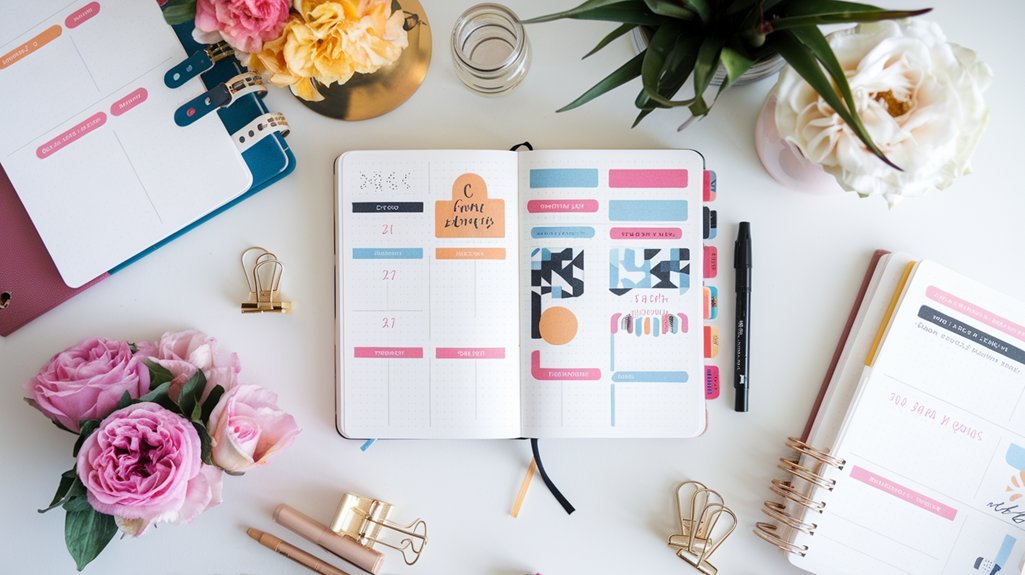
Your personal style should guide your ruling choice. For minimalist journalers who prefer clean lines and lots of white space, dot grid is ideal. I recommend the Leuchtturm1917 dotted (80 GSM) if you use only fine-liner pens like Micron 05. The numbered pages and table of contents are a bonus. A minimalist weekly spread—just dates, tasks, and a small habit tracker—takes 15 minutes. For artistic journalers who use brush pens, watercolor, or stamps, a thick paper dotted notebook is essential. Archer & Olive’s 160 GSM dotted notebooks are my go-to. I can layer Tombow Dual Brush pens without ghosting, and the dots are light enough to disappear under paint. A full artistic monthly cover takes 45 minutes, but the results are Pinterest-worthy. For functional journalers who prioritize productivity over aesthetics, grid notebooks shine. The pre-printed lines make it easy to create tables for meal plans, expense trackers, or project timelines. I use a Scribbles That Matter grid notebook (120 GSM) for my work bullet journal. A weekly spread with time-blocking takes 12 minutes—the grid eliminates the need to draw horizontal lines. Avoid lined notebooks for bullet journaling unless you exclusively write long-form entries. I’ve seen people make lined work for gratitude logs or reading lists, but for any spread that requires boxes, charts, or drawings, the lines become a liability. A functional weekly spread in a lined notebook would take 20 minutes and still look messy.
- Minimalist: Leuchtturm1917 dotted (80 GSM), Micron 05 pen. Spread time: 15 min.
- Artistic: Archer & Olive dotted (160 GSM), Tombow Dual Brush. Spread time: 45 min.
- Functional: Scribbles That Matter grid (120 GSM), Micron 05 + mildliner. Spread time: 12 min.
I’ve cycled through all three styles over the years. Currently, I keep two journals: an Archer & Olive dotted for creative monthly spreads and a Scribbles That Matter grid for daily task management.
My Personal Journey: 22 Journals and Counting—What Worked and What Didn’t
My first bullet journal was a Moleskine lined notebook—a classic mistake. The dark lines competed with my handwriting, and the 70 GSM paper bled through with any marker. I lasted three months before switching to a Leuchtturm1917 grid. The grid was better for trackers, but the lines felt cluttered during doodling. Then I discovered dot grid with a Rhodia Webnotebook (90 GSM). The dots were light grey at 5 mm spacing—perfect. I used it for eight months, but the paper couldn’t handle my
Your Weekly Dose of Inspiration
Journaling ideas, family tips, and gentle inspiration.