# Bullet Journal Beginner Guide: Complete Step-by-Step System for Organization
Did you know that the average person checks their phone 96 times per day? We're drowning in digital distractions, yet 67% of us still struggle with basic organization and time management. I've been there – frantically switching between apps, losing track of goals, and feeling like my thoughts were scattered across a dozen different platforms.
That's when I discovered bullet journaling seven years ago, and honestly? It changed everything.
Bullet journaling isn't just another planning system. It's a mindful, analog approach that combines productivity, creativity, and self-reflection into one customizable notebook. You don't need artistic skills, expensive supplies, or hours of setup time. What you need is a willingness to slow down and be intentional with your planning.
Here's what this guide will teach you: the fundamentals of the bullet journal method, how to choose the right supplies, step-by-step setup instructions, and practical tips to avoid the mistakes I made when starting out. By the end, you'll have everything needed to start your own bullet journal practice.. For more, see our comprehensive guide to bullet journal spreads for freelancers.. For more, see our essential guide to building bullet journal systems for multiple goals.
Let me address the elephant in the room first – bullet journaling isn't as complicated as Instagram makes it seem. You don't need perfect handwriting or artistic spreads. The most effective bullet journals I've seen are often the simplest ones.
## What Is a Bullet Journal? Understanding the Core System
### The Origins and Philosophy Behind Bullet Journaling
Ryder Carroll created the bullet journal method out of necessity. Struggling with attention deficit disorder, he needed an organizational system that could adapt to his changing needs and thinking patterns. What started as a personal solution became a global movement.
The core philosophy revolves around intentional living. Instead of passively filling pre-made planner pages, you actively decide what deserves your time and mental energy. Every page serves a purpose. Every entry gets evaluated and migrated or discarded.
I love this approach because it forces you to confront what's actually important versus what feels urgent in the moment.
### Core Components of the Bullet Journal Method
The bullet journal method has four essential components that work together:
**The Index** functions like a table of contents, helping you locate specific information quickly. I number every page and log important spreads here.
**The Future Log** captures events and tasks months in advance. Think doctor appointments, birthdays, or project deadlines that aren't immediate concerns.
**Monthly Logs** provide an overview of the current month. I include a calendar view and a running task list here.
**Daily Logs** are where rapid logging happens. This is your capture system for thoughts, tasks, events, and notes as they occur.
The magic happens through rapid logging – using simple symbols to categorize information quickly. A dot (•) represents tasks. An X marks completed tasks. A circle (○) indicates events. A dash (-) captures notes. An exclamation point (!) highlights important items.
### How Bullet Journaling Differs from Traditional Planners
Unlike pre-made planners, bullet journals adapt to your life. Busy week? Create more daily pages. Planning a wedding? Dedicate 10 pages to vendor research. Travel frequently? Design a packing checklist spread.
Digital planners offer convenience, but they lack the cognitive benefits of handwriting. Studies show that writing by hand improves memory retention and processing. When I write something down, I remember it better than when I type it.
The reflection aspect sets bullet journaling apart too. Monthly reviews help you identify patterns, celebrate wins, and adjust systems that aren't working.
## Essential Supplies: What You Need to Get Started
### Choosing the Right Notebook
Your notebook choice impacts your entire bullet journal experience. After testing dozens of options, here's what matters most:
**Page format** is crucial. Dotted pages offer the perfect balance – enough structure for clean layouts without the rigidity of lined paper. The dots provide subtle guidance for drawing boxes, creating headers, or maintaining straight text.
**Size considerations** depend on your lifestyle. A5 (5.8″ x 8.3″) works well for most people – portable enough for daily carry but spacious enough for detailed spreads. If you're always on the go, consider B6 or pocket-sized options.
For **specific recommendations**: Leuchtturm1917 and Moleskine offer quality dotted notebooks with numbered pages and built-in indexes. However, don't let budget concerns stop you. I've created successful bullet journals in $3 composition books from the grocery store.
The key features I always look for: lay-flat binding, thick enough paper to prevent bleed-through, and a size I'll actually want to carry around.
### Pens, Markers, and Writing Tools
Keep it simple initially. One good black pen will serve you better than a collection of fancy supplies you don't know how to use yet.
I recommend starting with a Pilot G2 or Uniball Signo – both write smoothly and dry quickly. Avoid gel pens that might bleed through pages or ballpoints that skip.
For color coding, add 2-3 colored pens gradually. I use blue for events, green for health-related items, and red for urgent tasks. This system evolved over time – don't feel pressured to establish complex color codes immediately.
Highlighters can enhance organization, but use them sparingly. Heavy highlighting makes pages look cluttered and can cause bleeding issues.
### Optional Accessories for Enhanced Organization
Resist the urge to buy everything at once. These accessories enhance the experience but aren't essential:
– A ruler helps create clean boxes and headers
– Washi tape adds decoration and can mark important pages
– Sticky notes work great for temporary reminders
– A monthly calendar stamp saves time on monthly setups
The bullet journal community loves supplies, and that's wonderful for inspiration. Just remember that the system works because of the method, not the materials.
## Setting Up Your First Bullet Journal: Step-by-Step Process
### Creating Your Index and Key
Start with page numbering. Number every page as you use it – this might feel tedious initially, but it makes the index invaluable later.
Reserve the first 2-4 pages for your index. As you create new spreads, log them here with page numbers. For example:
– Future Log: 5-6
– January Monthly: 7-8
– Habit Tracker: 9
– Book List: 15
Create your key on the first or second page. Start with the basic symbols, then add personal ones as needed. My key includes the standard symbols plus a star (★) for priorities and a heart (♡) for self-care items.
Don't overthink this step. Your key will evolve as you discover what information you track most frequently.
### Setting Up Future Log and Monthly Spreads
The future log spans 6-12 months and captures long-term items. I prefer a simple three-column layout with four months per page. Each column gets a month header, then I list events and tasks underneath.
When January arrives, I'll migrate relevant items from my future log to my January monthly spread. This migration process ensures nothing falls through the cracks.
For monthly logs, I use a two-page spread. The left page contains a calendar grid where I write events and appointments. The right page lists monthly goals and a running task list.
Some people prefer different monthly layouts – a calendar view combined with weekly breakdowns, or a simple list format without calendar grids. Experiment to find what serves your needs best.
### Daily Log Structure and Best Practices
Daily logs are the heart of bullet journaling. I don't pre-make daily pages. Instead, I create them as needed, which prevents waste and accommodates varying daily needs.
Start each daily log with the date, then use rapid logging throughout the day. Don't worry about perfect formatting – the goal is quick capture.
Here's what a typical daily log looks like for me:
**Tuesday, January 15**
• Grocery shopping
• Call dentist office
○ Team meeting 2pm
– Interesting article idea about productivity myths
! Mom's birthday next week
• Draft blog post outline
At day's end, I review incomplete tasks. Some get an X if completed. Others get migrated to tomorrow or next month if still relevant. Tasks that no longer matter get crossed out entirely.
This migration process is powerful because it forces regular evaluation of commitments. You'll quickly identify tasks you keep migrating but never complete – often they weren't important to begin with.
## Essential Bullet Journal Spreads for Beginners
### Habit Trackers and Goal Setting Pages
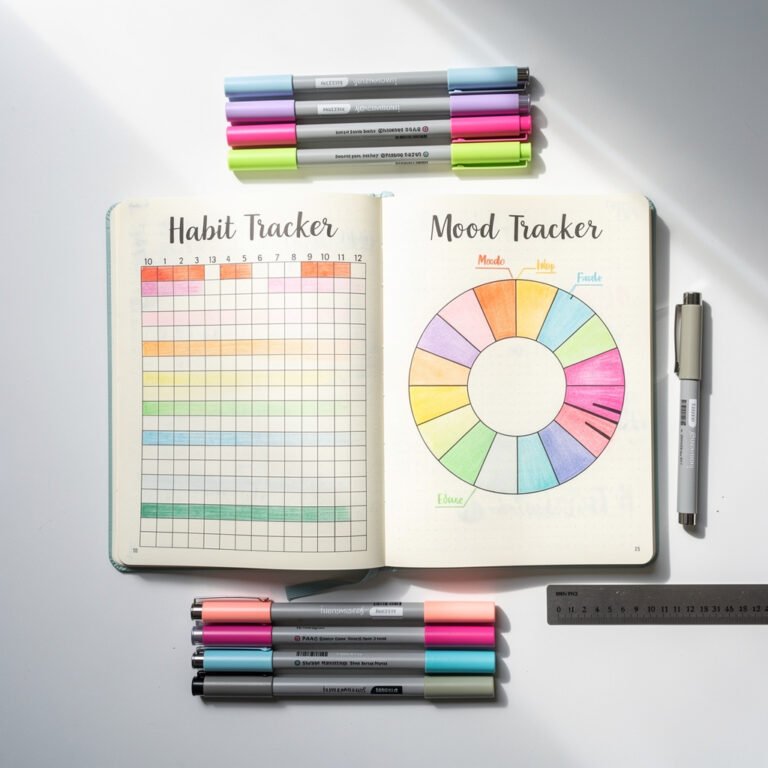
Habit trackers help build consistency with small, daily actions. Start simple – track 3-5 habits maximum. I learned this the hard way after creating elaborate trackers for 15 habits that became overwhelming quickly.
Create a grid with habits listed vertically and days listed horizontally. Fill in squares when you complete each habit. The visual chain motivates consistency.
Good beginner habits to track: water intake, exercise, reading, meditation, or taking vitamins. Choose habits you're already doing somewhat consistently rather than completely new behaviors.
For goal setting, I use a quarterly review system. Every three months, I assess progress and set 2-3 specific goals for the next quarter. Breaking annual goals into smaller chunks feels more manageable and allows for regular course corrections.
### Collections and Brain Dumps
Collections are themed lists that live in your bullet journal. They're incredibly useful for organizing information you reference repeatedly.
Popular collections include:
– Books to read
– Movies to watch
– Gift ideas for family members
– Restaurant recommendations
– Travel destinations
– Favorite quotes
Brain dumps serve a different purpose – clearing mental clutter by transferring swirling thoughts onto paper. When I feel overwhelmed, I'll create a brain dump page and write everything on my mind. This practice provides immediate relief and often reveals patterns or solutions.
Don't worry about organizing brain dumps perfectly. The act of writing creates the benefit, not the final format.
### Meal Planning and Budget Tracking
Meal planning spreads save time and money while reducing decision fatigue. I create a simple weekly grid with breakfast, lunch, and dinner slots. Underneath, I list grocery items needed.
This system prevents the 5pm “what's for dinner” panic and reduces food waste significantly.
Budget tracking can start very simply. Create monthly categories (rent, groceries, entertainment) and track spending in each area. I prefer a simple list format over complex charts when starting out.
The goal isn't perfect tracking – it's awareness. You'll make better financial decisions when you see spending patterns clearly.
## Developing Your Personal Bullet Journal System
### Finding Your Style and Preferences
Your bullet journal should reflect your personality and needs. I started trying to copy elaborate spreads I saw online, but those layouts didn't match my minimalist preferences or busy schedule.
Some people thrive with decorative elements – colorful headers, doodles, and artistic borders. Others prefer clean lines and efficient layouts. There's no wrong approach.
Pay attention to which spreads you actually use versus which ones you create because they look nice. If you never reference your mood tracker, stop making it. If you constantly flip back to your book list, give it more prominent placement.
Your style will emerge through experimentation. Don't rush this process.
### Time Management and Productivity Techniques
The bullet journal integrates beautifully with proven productivity methods. I use time-blocking by sketching simple schedules in my daily logs. This prevents overcommitting and ensures important tasks get dedicated time slots.
Priority matrices help when feeling overwhelmed. Draw a simple four-square grid: urgent/important, important/not urgent, urgent/not important, neither urgent nor important. Sort your tasks accordingly.
Weekly reviews have become non-negotiable for me. Every Sunday, I spend 15 minutes reviewing the past week and planning the next one. This practice prevents reactive scheduling and ensures I'm making progress on meaningful goals.
Monthly reviews dig deeper – what worked well? What felt stressful? Which commitments aligned with my values? This reflection guides system adjustments.
### Maintaining Consistency and Building Habits
Consistency matters more than perfection. I've missed days, weeks, and even months of bullet journaling over the years. The key is returning without guilt or elaborate restart rituals.
Start with minimal viable systems. Better to maintain a simple daily log consistently than abandon a complex setup after two weeks.
Build bullet journaling into existing routines. I review my journal with my morning coffee and do daily planning before bed. Attaching new habits to established ones increases success rates.
When motivation wanes, remember why you started. For me, it's the clarity and intentionality the system provides. Your reasons might differ, but reconnecting with your “why” usually rekindles motivation.
## Common Beginner Mistakes and How to Avoid Them
### Overcomplicating Your First Journal
The biggest mistake I see beginners make? Trying to track everything immediately. Sound familiar? You don't need elaborate weekly spreads, habit trackers, mood charts, water intake logs, and budget pages in week one.
Start with the basics: future log, monthly log, and daily logs. Add other spreads only when you identify specific needs they'll address.
I remember spending hours creating beautiful layouts I never used. That time would've been better spent actually planning and reflecting on my days.
### Perfectionism and Comparison Traps
Instagram and Pinterest showcase stunning bullet journal spreads that can intimidate beginners. Remember that you're seeing curated highlights, not daily reality.
My most functional spreads aren't photogenic. My handwriting varies depending on how rushed I am. Some pages have coffee stains or crossed-out sections. That's real life, and real life is messy.
Embrace imperfection as part of the process. Mistakes teach you what works and what doesn't. Perfect spreads sitting unused aren't better than messy spreads you reference daily.
### Inconsistent Usage Patterns
Life happens. You'll miss days or weeks of bullet journaling. This doesn't mean you've failed or need to start over with elaborate new spreads.
When returning after a break, resist the urge to catch up by filling in missed days. Instead, start fresh with today's date. The bullet journal should serve your current needs, not become a source of guilt about past inconsistency.
I've restarted my practice dozens of times without ceremony. The system works because it's forgiving and adaptable.
## Advanced Tips for Long-term Success
### Seasonal Reviews and System Evolution
Every few months, evaluate what's working and what isn't. I do thorough reviews in January, April, July, and October, aligning with natural seasonal transitions.
During these reviews, I ask myself:
– Which spreads do I reference most frequently?
– What information do I wish I was tracking?
– Are my goals still relevant?
– How has my lifestyle changed since the last review?
These assessments guide system adjustments. Maybe you need weekly meal planning now that your schedule's busier. Perhaps habit tracking feels overwhelming and should be simplified.
Your bullet journal should evolve as you do. The system I use now looks completely different from my first journal, and that's exactly how it should be.
### Integration with Digital Tools
Bullet journaling doesn't require abandoning all digital tools. I use my phone calendar for appointments with alerts and my bullet journal for planning and reflection.
Google Calendar handles scheduling because my family needs shared access. My bullet journal captures thoughts, goals, and project planning that don't belong in digital calendars.
Some people photograph their pages for backup or easier searching. Others use apps like Todoist alongside their analog journals for recurring reminders.
Find the balance that works for your situation. The goal is seamless information flow, not artificial constraints.
### Building a Sustainable Practice
Sustainability comes from matching the system to your actual lifestyle, not your ideal one. If you travel constantly, elaborate weekly spreads won't work. If you have young children, simple is better than beautiful.
Be honest about your available time and energy. A basic daily log used consistently beats an elaborate setup abandoned after a month.
The downside is that it requires daily commitment – but that's also what makes it so powerful. Consider your journal a thinking tool, not just a planning tool. Use it for problem-solving, gratitude practice, or working through decisions. This broader application increases its value and your commitment to maintaining it.
## Your Bullet Journal Journey Starts Now
Bullet journaling isn't about perfect spreads or artistic talent. It's about creating a system that helps you live more intentionally. The magic happens through the daily practice of writing things down, reflecting on what matters, and adjusting course as needed.
Start simple. Get a notebook and a pen. Set up an index, future log, and monthly spread. Begin rapid logging your days. Everything else can evolve naturally.
Don't wait for the perfect notebook or the ideal life circumstances. Your bullet journal will be most valuable during busy, chaotic periods when clarity feels elusive.
The most successful bullet journalists I know aren't the ones with the prettiest pages – they're the ones who use their journals consistently to make better decisions and live more purposefully.
Your first journal won't be perfect, and that's completely fine. Every page you fill teaches you something about your preferences, habits, and goals. Every month you complete brings more clarity about what systems serve you best.
This won't work if you expect perfection from day one. In my experience, the transformative power isn't in the perfect setup – it's in the daily commitment to showing up, writing things down, and paying attention to your life.
Ready to get started? Grab that notebook, turn to the first page, and write “Index” at the top. Your bullet journal journey begins with that simple first step.
Worth it? Seven years later, I can tell you that commitment pays dividends you can't imagine yet.
What are you waiting for? Your future, more organized self will thank you for starting today.
Related Posts
Recommended for You
🛒 Dotted Journal Notebook
As an Amazon Associate we earn from qualifying purchases.

Exercise Routine Trackers for Consistent Workouts
Tracker Library
Password Tracker Pages That Keep Your Accounts Safe
Eye-Catching Bullet Journal Habit Spreads Worth Copying

Recommended for You
🛒 Fine Tip Pens For Journaling
As an Amazon Associate we earn from qualifying purchases.