- In This Article
- Key Takeaways
- The “Why” Behind My Journaling Habit: More Than Just Pretty Pages
- Layout Deep Dive: The Functional Weekly Spread That Actually Works
- The “Worth It” Habit Tracker: Simplicity Beats Complexity
- Budget-Friendly Bullet Journaling: You Don't Need Fancy Supplies
- The Time Factor: Balancing Creativity with Real Life
- When Bullet Journaling Isn't “Worth It” (And That's Okay!)
- Conclusion: Making Your Bullet Journal Truly Valuable
- Frequently Asked Questions
- What are the absolute essential supplies for a beginner bullet journaler?
- How much time should I realistically expect to spend on my bullet journal each week?
- I see so many beautiful, artistic bullet journals online. Do I need to be artistic to bullet journal effectively?
- Related Posts
- Related Posts
This article contains affiliate links. We may earn a commission at no extra cost to you. Full disclosure.
Have you ever stared at a beautifully curated bullet journal spread on Pinterest, complete with intricate doodles, perfect lettering, and seemingly endless lists, and wondered, “Is all this effort *really* worth it?” I’ve been there, my friend. After filling over 20 journals since 2017, I’ve experimented with every layout imaginable, from minimalist trackers to elaborate artistic spreads that took hours to complete. I've learned that the “worth” of a bullet journal isn't in its aesthetic perfection, but in its ability to genuinely serve *you*. It’s about finding that sweet spot between function and form, between a quick 5-minute setup and a weekend-long creative project. Today, I want to share my honest take on what makes a bullet journal truly valuable, backed by years of personal experience, specific measurements, and, yes, even a few spectacular failures. We'll explore how to make your journal a powerful tool for organization, personal growth, and creative expression without falling into the comparison trap.
12 min read
In This Article
- The “Why” Behind My Journaling Habit: More Than Just Pretty Pages
- Layout Deep Dive: The Functional Weekly Spread That Actually Works
- The “Worth It” Habit Tracker: Simplicity Beats Complexity
- Budget-Friendly Bullet Journaling: You Don't Need Fancy Supplies
- The Time Factor: Balancing Creativity with Real Life
- When Bullet Journaling Isn't “Worth It” (And That's Okay!)
- Conclusion: Making Your Bullet Journal Truly Valuable
- Frequently Asked Questions
Key Takeaways
- The “Why” Behind My Journaling Habit: More Than Just Pretty Pages
- Layout Deep Dive: The Functional Weekly Spread That Actually Works
- The “Worth It” Habit Tracker: Simplicity Beats Complexity
- Budget-Friendly Bullet Journaling: You Don't Need Fancy Supplies
The “Why” Behind My Journaling Habit: More Than Just Pretty Pages
For me, the bullet journal started as a way to manage a chaotic freelance schedule and a growing family. I craved order, a place where I could see everything at a glance without being overwhelmed. Early on, I fell for the Instagram aesthetic. I'd spend hours trying to replicate elaborate floral borders and hand-lettered titles, only to find that by the time I finished, the week had already passed, and the spread felt more like a museum piece than a functional tool. One particular “Memory Log” spread I attempted in my 2020 journal was a prime example. It was a double-page spread, about 20cm x 25cm, meticulously divided into 14 boxes, each meant to capture a daily highlight. I used my Tombow Dual Brush Pen (color 993, a lovely deep teal) for headings and a Micron 05 for the tiny details. It looked stunning, honestly. But after day three, I realized I was dreading filling it in. The pressure to have something “worthy” of a box each day felt immense. It wasn’t capturing genuine memories; it was forcing them. This experience taught me a crucial lesson: the “why” must always come before the “how.”
⭐ Bullet Journal
Affiliate link
⭐ Kindle Unlimited
Top-rated Kindle Unlimited — check latest deals.
Affiliate link
My journaling evolved when I shifted focus from replicating others' art to solving my own problems. I started asking myself: What do I *need* this journal to do for me? Do I need to track my water intake? My mood? My spending? My project deadlines? The answer was usually a mix of all of the above. This led me to prioritize layouts that were quick to set up and even quicker to use. The most effective spreads in my journals are often the simplest. For instance, a basic weekly spread that takes me about 10 minutes to draw out, using a ruler and a black Micron 05 pen, has served me far better than any artistic masterpiece. The true value lies in consistency and utility, not in the complexity of the design. It’s about creating a system that supports your life, not one that adds to its demands.
It’s about creating a system that supports your life, not one that adds to its demands.
Layout Deep Dive: The Functional Weekly Spread That Actually Works
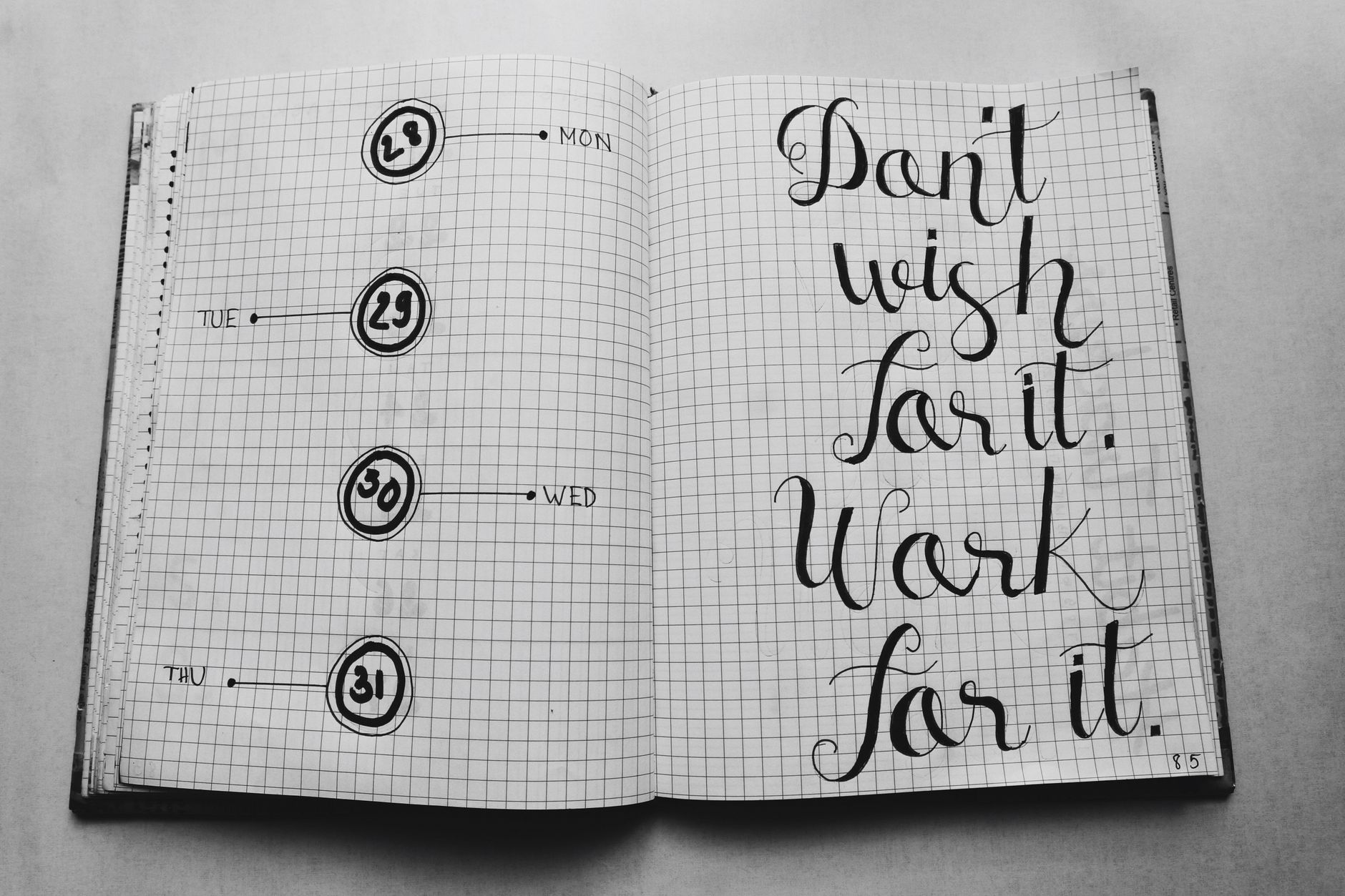
Let’s talk about a weekly spread that has been a consistent workhorse in my bullet journaling for years. This isn’t about elaborate headers or decorative elements, but pure, unadulterated functionality. I typically set up a 7-day spread across two facing pages, so each page is roughly 12.5cm x 21cm (for a standard A5 journal). On the left page, I dedicate about 10cm x 21cm to the days of the week (Monday-Thursday), with each day getting a roughly 2.5cm x 21cm vertical column. This leaves a 2.5cm x 21cm sidebar on the left for notes, tasks, or a small habit tracker. On the right page, I dedicate the remaining 12.5cm x 21cm to Friday-Sunday, plus a larger sidebar area (about 5cm x 21cm) for weekly goals, meal planning, or a gratitude log. This setup is incredibly flexible. The key is the generous vertical space for each day, allowing me to jot down appointments, to-do items, and quick notes without feeling cramped. It takes me approximately 15 minutes to draw out this basic structure with a ruler and my trusty black Micron 05 pen (fine point is essential for neatness!).
I often use a simple color-coding system within this spread. For example, appointments might be in blue (using a Tombow Dual Brush Pen in color 407, a nice sky blue), urgent tasks in red (Tombow 772, a vibrant scarlet), and personal notes in green (Tombow 175, a calming forest green). This visual cue helps me process information quickly. The sidebar areas are where I inject a bit of personalization. Sometimes it’s a 7-day habit tracker (e.g., water intake, exercise, reading) with boxes that are 1cm x 1cm, making it quick to fill in. Other times, it’s a dedicated space for “Weekly Wins” or “Things to Remember.” The beauty of this layout is its adaptability. If I have a particularly busy Monday, I can use the entire column for notes. If a day is light, I can use that space for sketching or journaling a longer thought. This flexibility is what makes it “worth it” for me, as it adapts to my life’s ebb and flow, rather than forcing my life to fit its structure.
This flexibility is what makes it “worth it” for me, as it adapts to my life’s ebb and flow, rather than forcing my life to fit its structure.
The “Worth It” Habit Tracker: Simplicity Beats Complexity
Habit trackers are a classic bullet journal element, and I've experimented with my fair share. The elaborate ones, like a monthly calendar grid where each day is a tiny square meant for a different habit, often fall by the wayside. Why? Because they demand too much mental energy. Trying to remember which color or symbol corresponds to which habit, and then meticulously filling in 30+ tiny squares every single day, quickly becomes a chore. I distinctly remember a “Yearly Habit Tracker” I designed in my 2021 journal. It was a beautiful mosaic of squares, 12 columns for months and 31 rows for days, totaling 372 tiny squares. I used a fine-liner pen and colored pencils to make it visually stunning. Within two weeks, I was skipping days, and by the end of the month, it was a forgotten mess. The sheer visual density was intimidating.
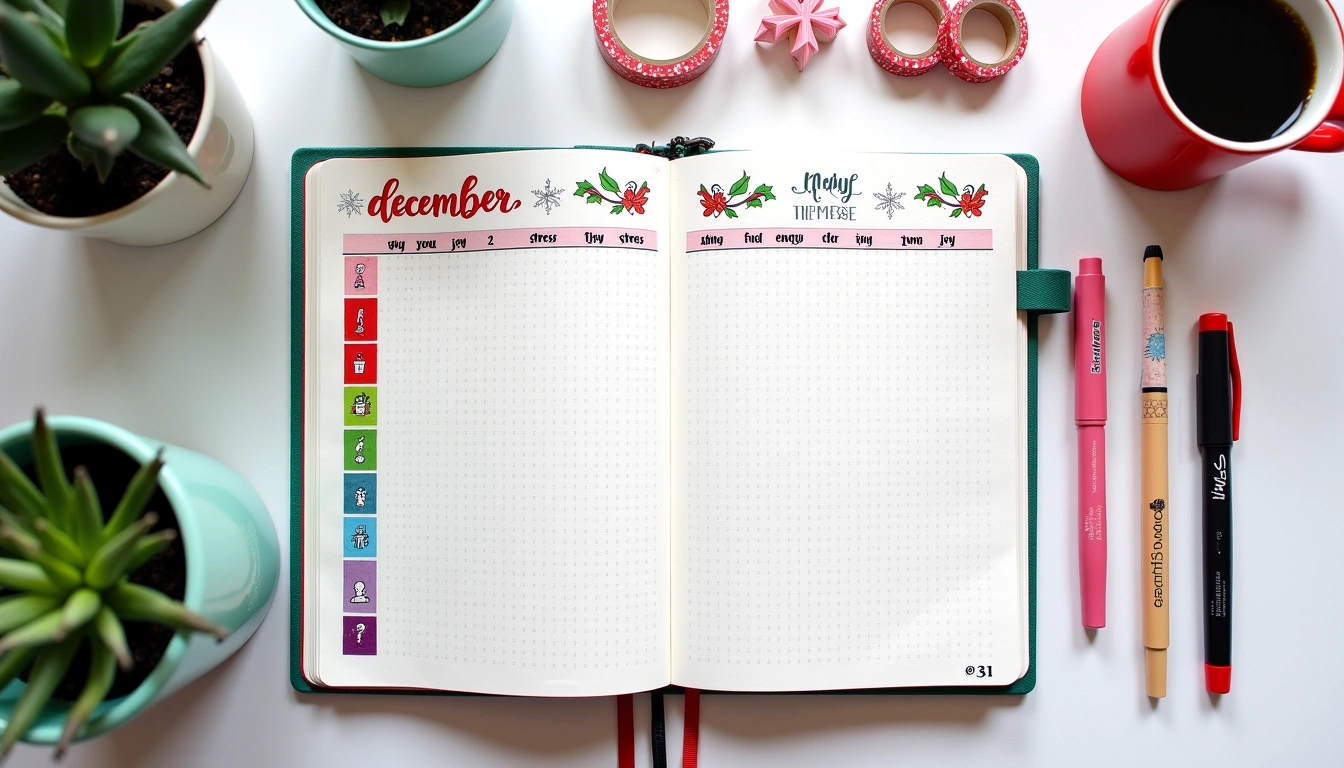
My most successful habit trackers have been the simplest. A common layout I return to is a vertical list on a single page or sidebar. For a monthly tracker, I’ll list 5-7 habits down the left side, each taking up about 1.5cm of vertical space. Across the top, I’ll have the dates 1-31. This creates a grid of roughly 1.5cm x 1cm boxes. Filling this in takes less than 30 seconds per day. I use a single pen, usually my black Micron 05, to simply fill in the box if I completed the habit. Sometimes, I’ll use a subtle color like a light grey (using a Tombow Irojiten colored pencil, shade ‘Ash Grey') to mark completion, but often, just a simple checkmark or a filled-in box suffices. This takes me about 5 minutes to set up at the beginning of the month. The “worth” here is in the immediate feedback and the low barrier to entry. I can see at a glance where I'm succeeding and where I might be slipping, without feeling overwhelmed by the data. This focus on quick, consistent logging is far more valuable than a visually complex tracker that I abandon after week one.
This focus on quick, consistent logging is far more valuable than a visually complex tracker that I abandon after week one.
Budget-Friendly Bullet Journaling: You Don't Need Fancy Supplies
One of the biggest myths about bullet journaling is that you need expensive notebooks and a rainbow of high-end pens to do it “right.” I’ve seen countless people shy away from starting because they feel they can’t afford the Tombow Dual Brush Pens or the Leuchtturm1917 notebooks that are so prevalent online. Let me tell you, my first bullet journal was a spiral-bound notebook from a drugstore, costing less than $5, filled with a cheap ballpoint pen. And you know what? It worked perfectly fine! The core principles of the bullet journal system – rapid logging, symbols, collections, and trackers – don't require premium materials. In fact, many of my most cherished spreads were created with budget-friendly supplies. For example, a collection page I made for “Books to Read” in my 2019 journal used a plain lined notebook and a Bic Cristal pen. I simply wrote the book titles and authors, with a small checkbox next to each. It took me 5 minutes to set up and served its purpose beautifully.
If you're on a budget, I highly recommend starting with what you already have. A standard notebook (even college-ruled!) and a reliable black pen are all you truly need. If you want to add a touch of color, consider affordable gel pens or even basic colored pencils. Many craft stores offer budget-friendly notebooks and pen sets that are perfectly adequate for journaling. For instance, the “Composition Notebook” brand from Target, typically costing around $1-$3, is a surprisingly durable option for beginners. You can also find multi-packs of black gel pens for under $10 that write smoothly. The key is to focus on the *system* and your *intentions* for the journal, rather than the perceived quality of your supplies. As you get more into the hobby, you can gradually invest in nicer tools if you wish. But don't let the perceived cost be a barrier to entry. The most valuable spreads are those that help you organize your thoughts and life, regardless of whether they were created with a $3 pen or a $40 marker.
The most valuable spreads are those that help you organize your thoughts and life, regardless of whether they were created with a $3 pen or a $40 marker.
The Time Factor: Balancing Creativity with Real Life
This is where the “is it worth it?” question truly hits home for many. We see these elaborate spreads that clearly took hours to create, and we wonder if we have that kind of time. I’ve certainly been guilty of letting my journaling consume too much time. In my 2020 journal, I dedicated a full two-page spread (approx. 25cm x 20cm) to a “Monthly Goals and Intentions” layout. It involved hand-lettering each goal in a different font, adding decorative borders, and even incorporating small watercolor elements. It looked gorgeous, and I felt a surge of pride when I finished it. However, the reality was that it took me nearly 3 hours to complete. And because it was so precious, I was hesitant to actually *use* it or mark against it. It felt too perfect to mess with. This is a common pitfall: spending so much time on the setup that you lose the momentum for actually *using* the journal throughout the month.
My approach now is all about efficiency and intention. I ask myself: How long does this *need* to take? For daily logs or weekly spreads, I aim for under 15 minutes of setup. Habit trackers take less than 5 minutes. Collections, like a list of movies to watch or gift ideas, might take 10-20 minutes depending on the complexity. I’ve learned to embrace “quick logs” – brief notes written in plain text without elaborate formatting. A simple bullet point with a short description is often enough. I also batch my journaling tasks. Instead of decorating every single day, I might dedicate 30 minutes on a Sunday evening to prepare the next week’s spreads, drawing lines and adding basic headers. This way, I’m not spending 20 minutes each morning decorating. This time-conscious approach makes the bullet journal sustainable. It ensures that the time invested directly translates into tangible benefits, like better organization or clearer goals, rather than just pretty pictures that don't serve a practical purpose. The “worth” is in the time saved later through better organization, not in the hours spent decorating.
When Bullet Journaling Isn't “Worth It” (And That's Okay!)
It's important to be honest: bullet journaling isn't a magic bullet for everyone, and there will be times when it feels like more of a burden than a blessing. I’ve experienced this firsthand. During particularly stressful periods in my life – say, when I was dealing with a major family illness or navigating a significant career change – the idea of meticulously planning and tracking felt exhausting. In my 2018 journal, I tried to maintain a detailed “Gratitude Log” every single day, even when I was feeling low. I’d force myself to write something, anything, down. It felt performative and inauthentic, and it added another layer of pressure to days that were already difficult. This experience taught me that sometimes, the most valuable thing you can do is simplify. Pushing through when it feels like a chore often leads to burnout and abandonment of the system altogether.
There are also specific needs that a bullet journal might not be the best fit for. If you need a highly structured, collaborative planning system for a large team, a digital project management tool like Asana or Trello might be far more efficient. If your primary goal is purely artistic expression without any organizational component, a dedicated sketchbook might be more suitable. The “worth” of a bullet journal is intrinsically tied to its ability to meet *your* specific needs. If you find yourself constantly fighting against the system, feeling overwhelmed by the effort required, or realizing that a digital alternative is genuinely serving you better, then it's perfectly okay to step back. It doesn’t mean you’ve failed; it means you’ve learned what works best for *you* at this point in time. My own journaling practice ebbs and flows. Some months are packed with elaborate spreads, while others are barely touched. Both are valid. The key is to listen to your needs and adjust accordingly, ensuring your journal remains a tool that empowers you, rather than a source of stress.
Conclusion: Making Your Bullet Journal Truly Valuable
So, is it worth it? My resounding answer, after years of practice, is a qualified yes. It is absolutely worth it when you tailor it to your unique needs and priorities. It's worth it when you prioritize function over fleeting trends, when you embrace simplicity, and when you allow it to evolve with you. The true value of a bullet journal lies not in its Instagram-worthy aesthetics, but in its power to bring clarity, organization, and intention to your daily life. It’s about creating a personalized system that supports your goals, reduces stress, and fosters self-awareness. Don't get caught up in the pressure of perfection; focus on progress and practicality.
Here are three concrete steps to make your bullet journal undeniably worth it:
- Define Your “Why”: Before you even open a notebook, ask yourself what problems you want your journal to solve. Are you trying to be more organized? Track habits? Manage finances? Focus on 1-3 core goals for your journal.
- Embrace Simplicity First: Start with basic layouts. A simple weekly spread taking 10-15 minutes, a list-based habit tracker requiring 30 seconds daily. Use a basic black pen and a ruler. You can always add flair later if you feel inspired and have the time.
- Listen to Your Needs: Pay attention to how you *actually* use your journal. If a spread feels like a chore, change it. If you're consistently skipping a tracker, ditch it or simplify it. Your journal should serve you, not the other way around.
My ultimate recommendation? Start with a simple, functional weekly spread and a basic habit tracker. Use a reliable black pen like the Sakura Pigma Micron 05 (around $3) and any notebook you have on hand. Give it a solid month, focusing on consistency over complexity. If it helps you feel more organized and less stressed, then congratulations – it's already worth it!
Small changes, real momentum
Get practical guides and templates you'll actually use — a few thoughtful emails a month.
Frequently Asked Questions
What are the absolute essential supplies for a beginner bullet journaler?
You truly only need two things to start: a notebook and a pen. For the notebook, any ruled, dotted, or blank journal will work; a standard A5 size is popular, but use what you have. For a pen, a reliable black fine-liner is ideal for neatness. The Sakura Pigma Micron 05 is a fantastic, widely available choice, costing around $3. Avoid overly expensive supplies initially; focus on the system itself. Budget-friendly options like a basic composition notebook and a pack of Bic pens can be just as effective for learning the ropes.
How much time should I realistically expect to spend on my bullet journal each week?
This varies greatly depending on your style, but for a functional approach, aim for efficiency. Setting up a basic weekly spread should take around 10-15 minutes. Daily logging or habit tracking should take less than a minute or two each day. If you enjoy decorative elements, you might allocate an extra 30-60 minutes per week for creative additions, but this is entirely optional. Prioritize consistency over elaborate design; a quick, functional log is far better than a beautiful, abandoned spread.
I see so many beautiful, artistic bullet journals online. Do I need to be artistic to bullet journal effectively?
Absolutely not! Artistic skill is not a prerequisite for effective bullet journaling. Many of the most successful and functional bullet journals are minimalist and text-based. The core bullet journal system relies on rapid logging, symbols, and organization, not drawing or calligraphy. While artistic elements can enhance a journal's aesthetic appeal, they are secondary to its primary purpose: helping you organize your life and thoughts. Focus on clear layouts and useful trackers; beauty can be found in simplicity and function.
Related Posts




Related Posts
Your Weekly Dose of Inspiration
Journaling ideas, family tips, and gentle inspiration.
Love this content?
Join the BulletJournals.net community for exclusive tips, guides, and updates.
Subscribe Free