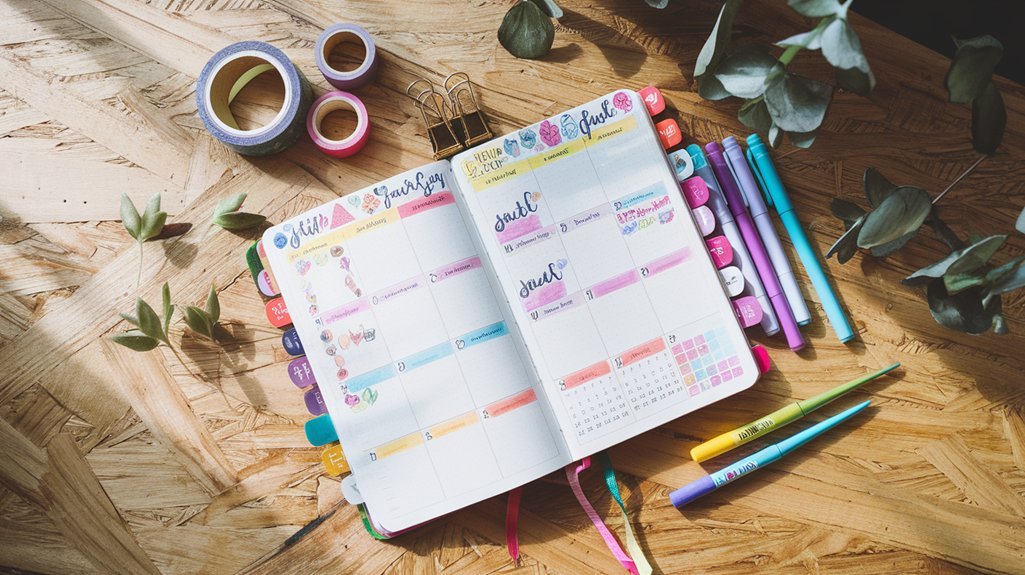
Last month, I found myself staring at a blank page in my bullet journal, completely stumped. I'd already created the usual monthly spread, but something felt missing. That's when I discovered the magic of monthly collections – those specialized pages that track everything from books you want to read to places you dream of visiting.
Here's the thing: collections aren't just pretty pages to fill up your journal. They're powerful tools that help you stay connected to your goals, remember important details, and actually see your progress throughout the month. After experimenting with dozens of different collection ideas over the past two years, I've discovered which ones actually make a difference in daily life.
Whether you're a seasoned bullet journaler or just starting out, these 50 collection ideas will breathe new life into your monthly spreads. I've organized them from simple one-page layouts to more complex tracking systems, so you can find something that matches your current skill level and time commitment.
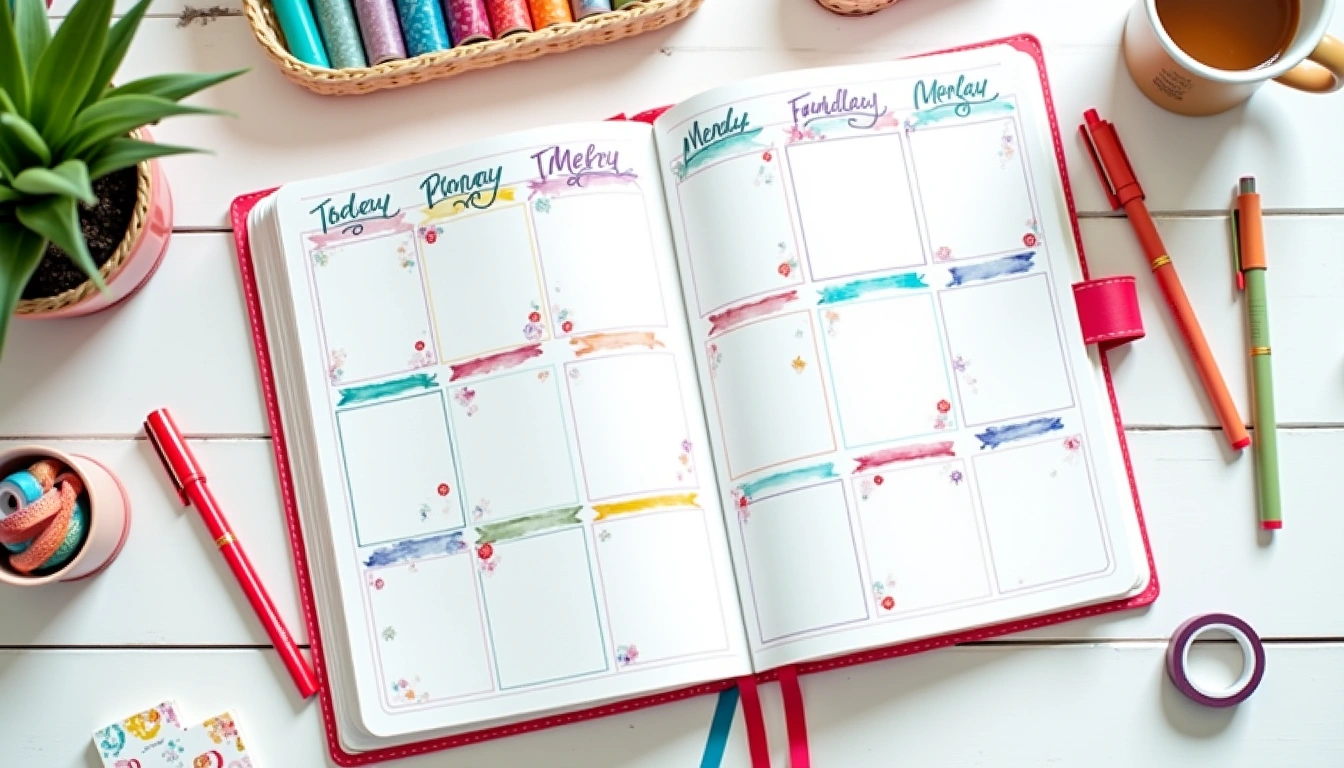
Essential Collection Types for Every Bullet Journaler
Not all collections are created equal. Some you'll reference daily, while others serve as long-term memory keepers. Understanding these different types helps you choose which collections deserve precious space in your journal.
Daily Reference Collections
These are your workhorses – collections you'll flip to constantly throughout the month. They need to be functional first, pretty second.
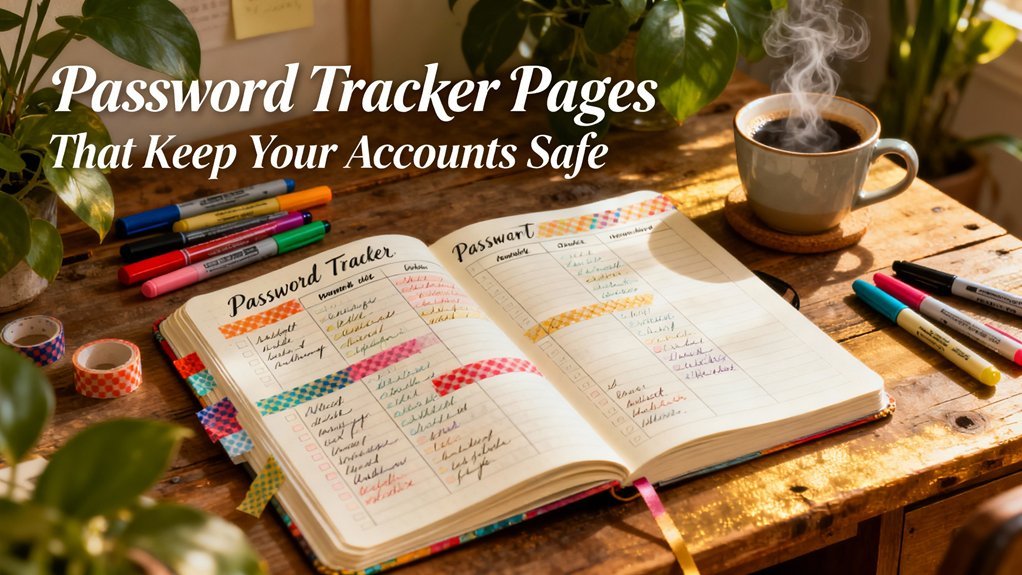
- Password Tracker: Because honestly, who remembers all those login details?
- Important Dates: Birthdays, anniversaries, and deadlines that can't be missed
- Meal Planning Grid: Saves my sanity every single week
- Budget Overview: Track spending categories at a glance
- Daily Water Intake: Simple circles to fill in – surprisingly motivating
Goal-Tracking Collections
These collections turn your journal into a personal accountability coach. I've found they work best when you can see patterns over time.
- Reading Log: Track books with ratings and favorite quotes
- Fitness Progress: Workouts, measurements, how you felt
- Habit Tracker Grid: The classic – but make it specific to your goals
- Skill Development: Language learning, instrument practice, coding sessions
- Gratitude Collection: Three good things that happened each day
Memory-Keeping Collections
Six months from now, you'll flip back through these pages and smile. They capture the small moments that make each month unique.
- Photo Memory Page: Print and paste favorites from your phone
- Monthly Highlights: Best moments, achievements, funny stories
- Weather Tracker: More interesting than you'd think!
- New Things Tried: Restaurants, recipes, routes to work
- Favorite Purchases: What you bought and whether it was worth it
Layout Examples That Actually Work
Pretty Pinterest layouts are inspiring, but let's be real – you need collections that work with your actual lifestyle. Here are battle-tested layouts I use regularly.
The Simple List Layout
Sometimes the most effective layout is just a well-organized list. I use this for:
- Books to Read: Title, author, who recommended it, checkbox when finished
- Podcast Episodes: Show name, episode title, key takeaway
- Gift Ideas: Person's name, occasion, idea, price range, where to buy
- Restaurant Wish List: Name, cuisine type, location, who wants to go
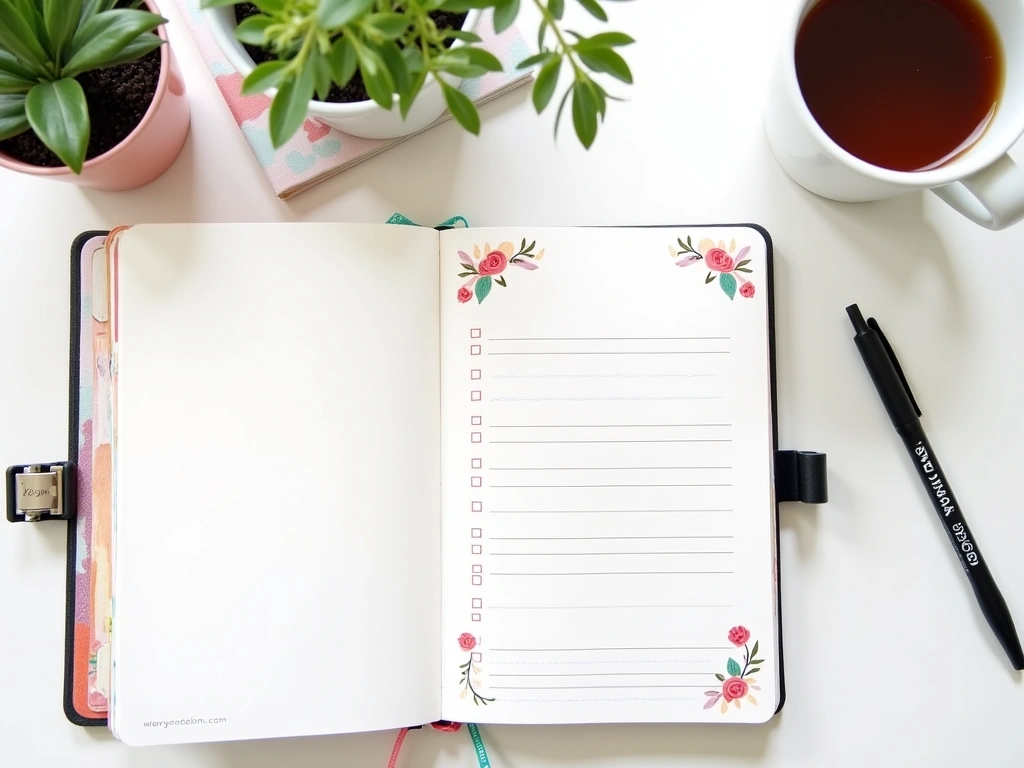
The Grid System
Perfect for tracking habits, moods, or anything that changes daily. Create a simple grid with dates across the top and categories down the side.
Mood Tracker Grid: I use different colors for different emotions. After three months of tracking, I discovered I'm consistently happier on days when I walk outside before noon.
Expense Categories: Food, transport, entertainment, misc. Each square gets a small dot for every $10 spent. Visual spending patterns emerge quickly.
Social Media Usage: Track time spent on different platforms. This one was eye-opening and not in a good way!
Sakura Pigma Micron Pens Set
These archival quality pens create crisp lines perfect for detailed collection layouts.
- Multiple tip sizes for headers and details
- Waterproof and fade-resistant ink
- Perfect for intricate tracking grids
The Visual Progress Layout
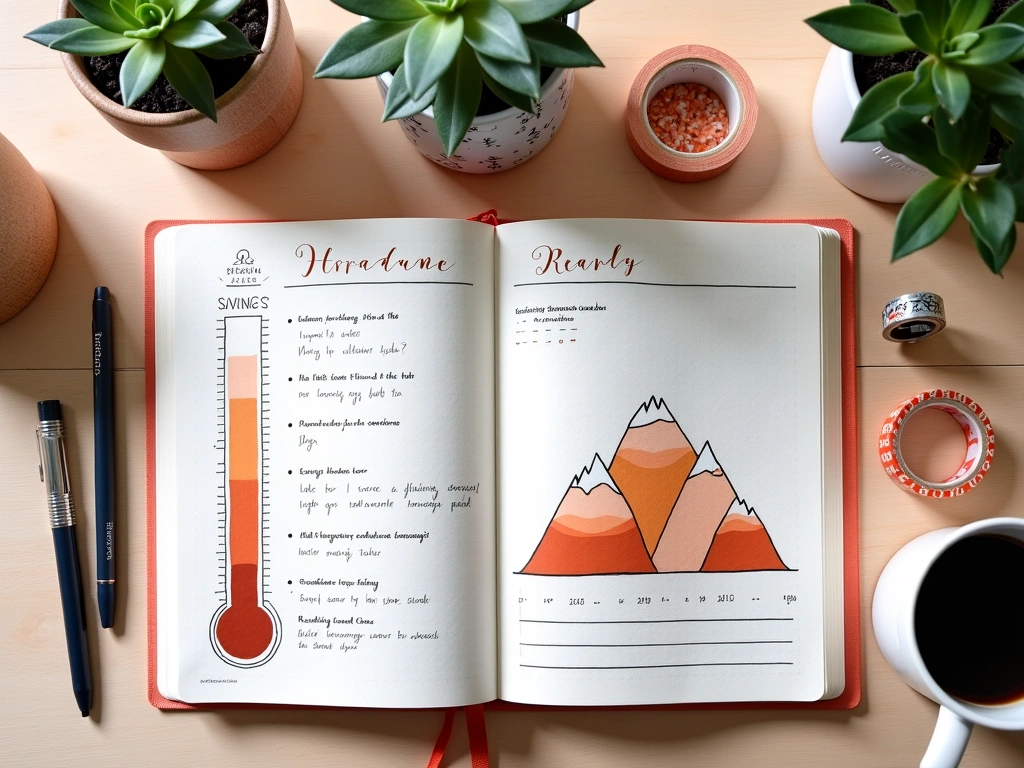
Some goals are better tracked visually. These layouts make progress tangible:
Savings Thermometer: Draw a thermometer and fill it in as you save toward a goal. Seeing that red line climb is surprisingly motivating.
Reading Challenge Mountain: Create a mountain outline with book spines forming the climb to the summit.
Workout Completion Calendar: Use stickers, stamps, or colored squares to mark completed workouts. Empty spaces become obvious.
Smart Organization Systems
Here's what I learned the hard way: beautiful collections are useless if you can't find them or forget to update them. Organization matters more than aesthetics.
The Index System
Your bullet journal's index isn't just for monthly spreads. Create specific entries for collections:
- “Books – Wishlist: p.23, p.67, p.112”
- “Meal Planning: p.15-16, p.45-46, p.78-79”
- “Habit Tracker: Monthly overview p.98”
This system saved me countless minutes of flipping through pages looking for that perfect recipe I wrote down somewhere.
Color Coding Strategy
I use the same three colors throughout my entire journal:
- Blue: All headers and titles
- Green: Completed items, positive progress
- Orange: Important dates, urgent items, warnings
This consistency makes information processing faster. Your brain learns the system and automatically knows what to look for.
Collection Maintenance Schedule
Different collections need different update frequencies:
- Daily: Habit trackers, mood logs, expense tracking
- Weekly: Meal planning, workout progress, reading updates
- Monthly: Goal reviews, photo memories, monthly highlights
- As Needed: Gift ideas, password updates, travel planning
Creative Collection Ideas That Actually Matter
Let's go beyond the basic habit tracker. These creative collections add genuine value to your planning while keeping things interesting.
Personal Development Collections
Compliment Collection: Write down nice things people say about you. On tough days, flip to this page. It works better than any motivational quote.
Problem-Solving Log: When you face a challenge, document the problem, solutions you tried, and what worked. Creates a personal troubleshooting guide.
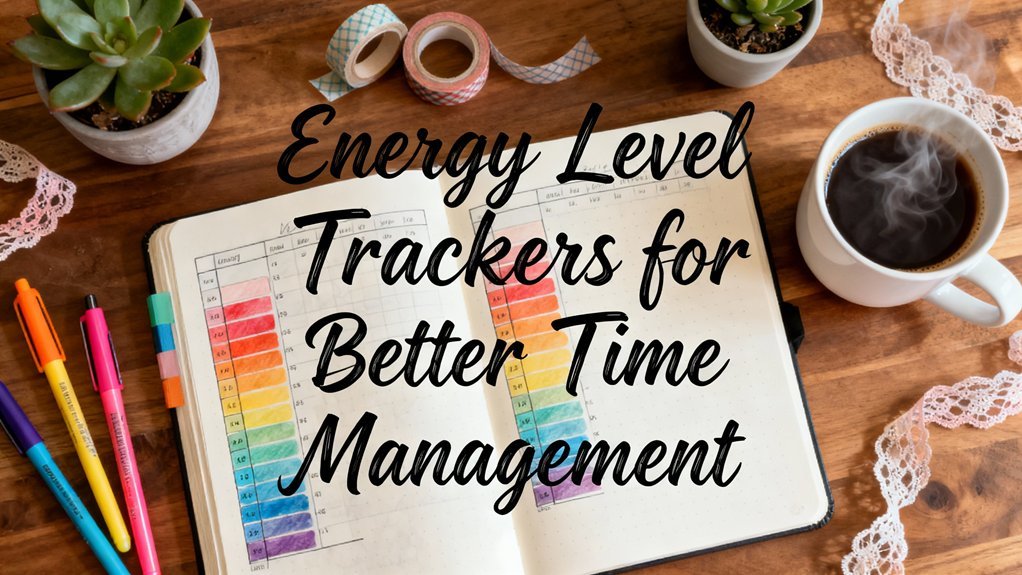
Energy Level Tracker: Rate your energy 1-10 throughout the day. After a month, patterns emerge about your natural rhythms.
Learning Wins: New skills acquired, concepts understood, “aha!” moments. Proof that you're growing, even when it doesn't feel like it.
Pilot G2 Retractable Gel Pens
Reliable, smooth-writing pens perfect for daily collection updates without breaking the bank.
Relationship Collections
Friend Check-In Tracker: List important people in your life. Mark when you last had meaningful contact. Prevents relationships from accidentally fading.
Conversation Starters: Interesting questions, current events to discuss, shared interests. Never run out of things to talk about.
Gift-Giving Intel: Things people mention wanting, favorite colors, sizes, allergies. Makes you look incredibly thoughtful.
Date Night Ideas: Both free and paid options, indoor and outdoor, tried and untried. Eliminates the “I don't know, what do you want to do?” problem.
Lifestyle Optimization Collections
Morning Routine Experiments: Try different wake-up times, activities, breakfast options. Track how each affects your day.
Wardrobe Tracking: What you wore and how you felt in it. Identifies clothes you never wear and combinations that make you feel confident.
Sleep Quality Log: Bedtime, wake time, how rested you feel, what might have affected sleep. More useful than step counters for many people.
Productivity Experiments: Different work environments, time blocks, tools. Find your peak performance conditions.
Financial Awareness Collections
Subscription Audit: List all recurring charges. Review monthly. You'll be shocked what you're paying for and not using.
Value Purchase Log: Things you bought that exceeded expectations. Reference before making similar purchases.
Impulse Purchase Tracker: Write down what you want to buy and wait a week. If you still want it, buy it. If not, add the money to savings.
Free Activities Collection: Local events, free museum days, hiking trails, library programs. Proves fun doesn't require spending.
Health and Wellness Collections
Symptom Tracker: Headaches, energy levels, digestive issues. Helps identify patterns and triggers.
Recipe Success Rate: New recipes tried, family ratings, modifications needed. Build a custom cookbook of proven winners.
Exercise Enjoyment Scale: Rate how much you enjoyed different types of workouts. Focus on movement you actually like.
Mental Health Check-ins: Weekly rating of anxiety, stress, happiness. Simple but powerful tool for awareness.
Creative and Learning Collections
Inspiration Capture: Quotes, color combinations, design ideas, song lyrics that resonate. Feed your creative side.
Skills Practice Log: Time spent on instruments, languages, drawing, coding. Seeing accumulated hours motivates continued practice.
Documentary and Podcast Notes: Key takeaways from educational content. Turn passive consumption into active learning.
Travel Planning: Places to visit, estimated costs, best seasons to go. Transform daydreams into actionable plans.
Tombow Dual Brush Pens
Professional-grade brush pens perfect for adding beautiful color accents to your collection layouts.
Seasonal and Special Event Collections
Holiday Planning: Gift lists, menu planning, decoration ideas, budget tracking. Stay organized during busy seasons.
Garden Journal: What you planted, when, harvest dates, what worked well. Essential for next year's success.
Home Improvement Ideas: Pinterest inspiration, cost estimates, priority order. Turn house dreams into room-by-room reality.
Birthday Month Special: Create collections celebrating your birth month – goals, treats to try, experiences to have.
Making Collections Sustainable
The most beautiful collection in the world is worthless if you abandon it after two weeks. Here's how to build collections you'll actually maintain.
Start Small Strategy
I used to create elaborate tracking systems with 15 different metrics. Guess how long they lasted? Three days. Now I follow the “minimum viable collection” approach:
- Start with the simplest version that provides value
- Use it consistently for one month
- Only then add complexity or additional elements
- If you miss updating for three days, simplify further
Integration with Daily Practice
Collections work best when they connect to existing habits. I update my collections:
- With morning coffee: Mood check-in, weather note
- After lunch: Expense tracking, meal rating
- Before bed: Gratitude, tomorrow's priorities, habit tracker
- Weekly planning time: Goal progress, collection reviews
Flexibility Over Perfection
Some months I'm religious about my habit tracker. Other months I barely touch it. That's fine. Your bullet journal should adapt to your life, not the other way around.
Give yourself permission to:
- Skip collections that aren't serving you
- Modify tracking methods mid-month
- Leave pages partially filled
- Try the same collection type multiple times until it clicks
🎯 Our Top Recommendation
After extensive testing, we recommend the Leuchtturm1917 Dotted Notebook for most readers because it offers the perfect balance of quality, functionality, and durability for collection tracking.
The key to successful bullet journal collections isn't perfection – it's consistency and intentionality. Choose collections that genuinely support your goals and lifestyle. Start with 2-3 that excite you most. Master those before adding more.
Remember, your journal is a tool for living better, not an art project for Instagram. Though honestly, if tracking your daily water intake in beautiful lettering brings you joy, go for it! The best collection is the one you'll actually use.
Frequently Asked Questions
How many monthly collections should I include in my bullet journal?
Start with 2-3 collections per month maximum. It's better to maintain a few collections consistently than to abandon multiple half-finished ones. Once you've successfully maintained 2-3 collections for several months, you can gradually add more if desired. Quality and consistency matter more than quantity.
What's the difference between a monthly collection and a habit tracker?
A habit tracker is one type of monthly collection that focuses specifically on daily habits you want to build or break. Monthly collections are broader – they can include wish lists, goal tracking, memory keeping, reference pages, and yes, habit trackers. Think of habit trackers as a subset of the larger collection category.
Should I recreate the same monthly collections every month?
It depends on the collection's purpose. Reference collections like meal planning or budget tracking often get recreated monthly. Memory-keeping collections like gratitude logs or photo pages might be ongoing across multiple months. Experiment to see which approach works better for each type of collection.
How do I remember to update my monthly collections regularly?
Link collection updates to existing habits. Update your expense tracker when you check your bank account, fill in your reading log when you finish a chapter, or complete your mood tracker during your evening routine. Set phone reminders for weekly collections like meal planning until the habit becomes automatic.
What should I do if I stop using a monthly collection halfway through?
Don't stress about it! Analyze why you stopped: Was it too complex? Did it serve its purpose? Was the timing wrong? Use this information to modify the collection for next month or try something different entirely. Abandoned collections are data points, not failures.
Can I use digital tools alongside my bullet journal monthly collections?
Absolutely! Many bullet journalers use hybrid systems. For example, you might track expenses digitally but create a monthly spending reflection page in your journal. Or use a phone app for habit tracking but journal about the patterns you notice. Choose the best tool for each job.
How detailed should my monthly collection layouts be?
Start simple and add complexity only if needed. A basic list with checkboxes often works better than an elaborate tracking system. Focus on capturing the information that actually helps you make decisions or reach goals. Pretty layouts are nice, but functional layouts are essential.