Why Self-Care Belongs in Your Bullet Journal
Your bullet journal is more than a productivity tool—it can be a powerful space for mental wellness and self-care. By intentionally tracking your wellbeing, you create awareness around your emotional patterns and build habits that support your mental health.
These 15 self-care spreads go beyond basic habit tracking to help you prioritize rest, reflection, and renewal. Whether you are managing stress, building better boundaries, or simply trying to be kinder to yourself, there is a spread here for you.
50 Bullet Journal Templates Pack
Ready-to-print spreads for habit tracking, weekly planning, mood logs, and creative layouts.
Mood and Emotional Wellness Spreads
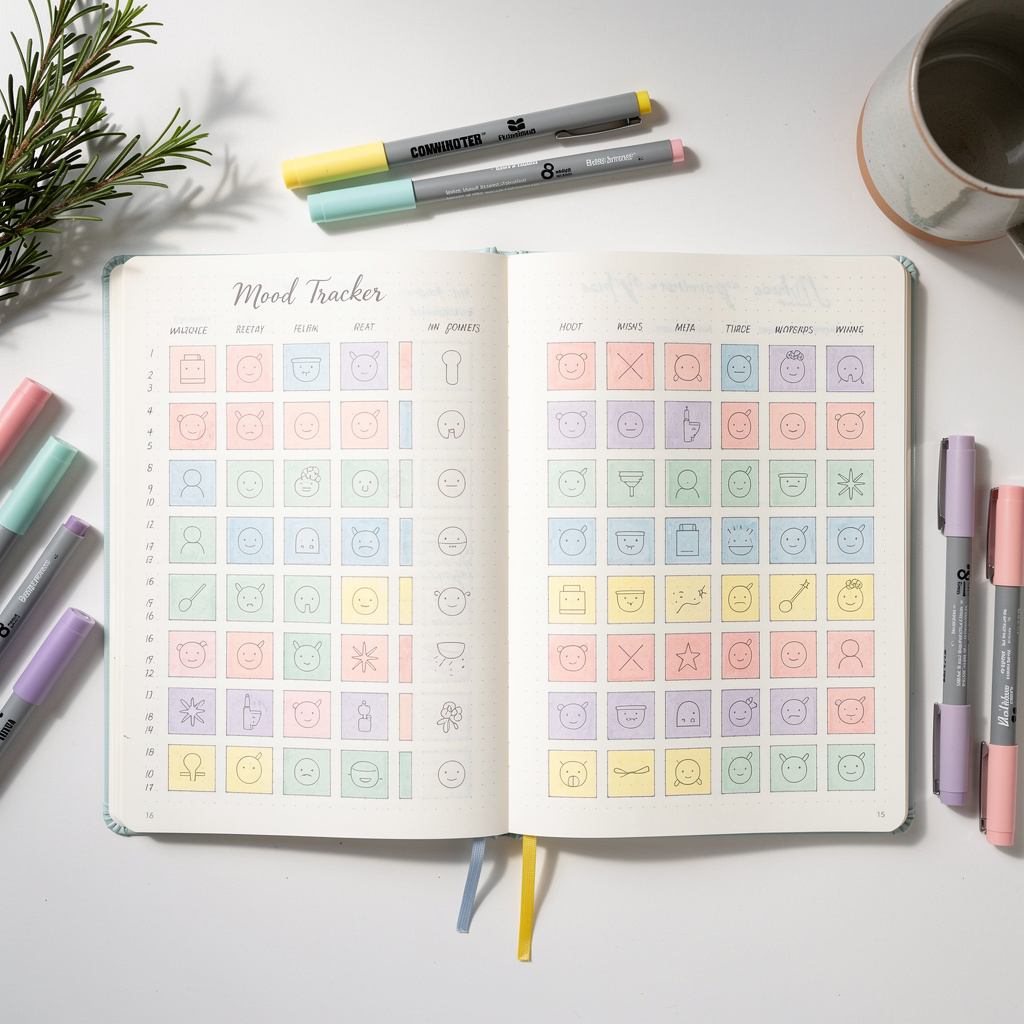

1. Daily Mood Tracker
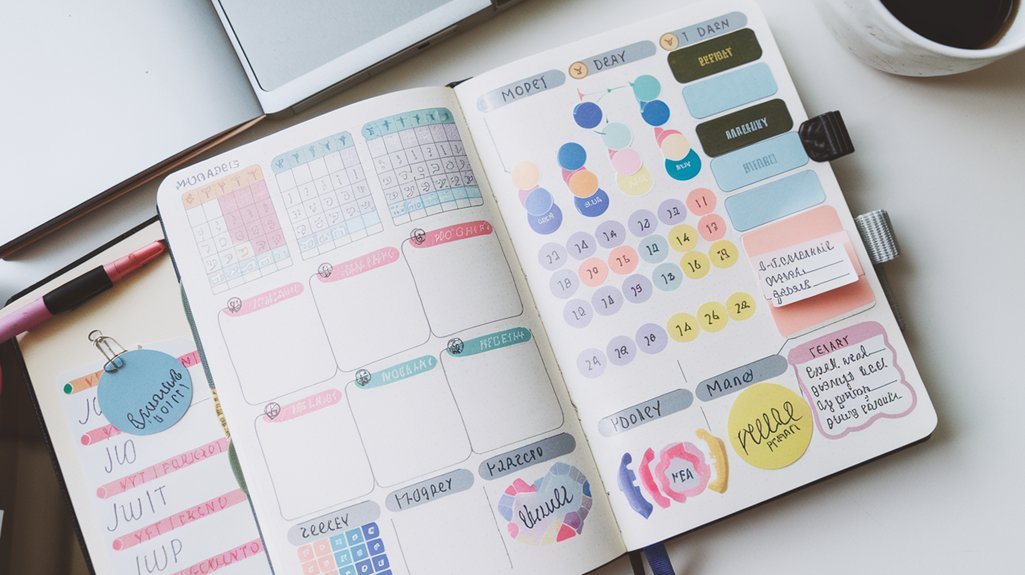
Track your emotional state each day using colors, emojis, or a simple scale. Over time, patterns emerge that help you understand what affects your mood—sleep, weather, social time, or work stress.
How to set it up: Create a monthly grid with days across the top. Each day, color in or mark your overall mood. Add a simple key (happy, calm, stressed, anxious, sad) for reference.
2. Emotion Wheel Log
Go deeper than “good” or “bad” by using an emotion wheel to identify specific feelings. This builds emotional vocabulary and helps you process complex feelings.
How to set it up: Draw or paste an emotion wheel on one page. On the facing page, keep a running log where you note the date and the specific emotion you identified.
3. Anxiety Trigger Tracker
Identify what triggers your anxiety by logging anxious moments along with the situation, physical symptoms, and any patterns you notice.
Columns to include: Date, Situation, Physical feeling, Thoughts, What helped
Rest and Recovery Spreads

4. Sleep Quality Log
Track not just hours of sleep, but the quality. Note what time you went to bed, when you woke up, and rate how rested you feel. Track factors that affect sleep like caffeine, screens, or exercise.
Check out our tracker library for more sleep tracking ideas.
5. Energy Level Tracker
Monitor your energy throughout the day to find your natural rhythms. This helps you schedule demanding tasks during peak energy and protect low-energy times for rest.
How to set it up: Create three check-in points (morning, afternoon, evening) and rate energy 1-5 each day.
6. Rest Day Planning
Intentionally plan rest days just like you plan productive days. List activities that truly recharge you—not just passive scrolling, but genuine restoration.
Ideas to include: Reading, baths, nature walks, naps, creative hobbies, phone-free time
Gratitude and Positivity Spreads
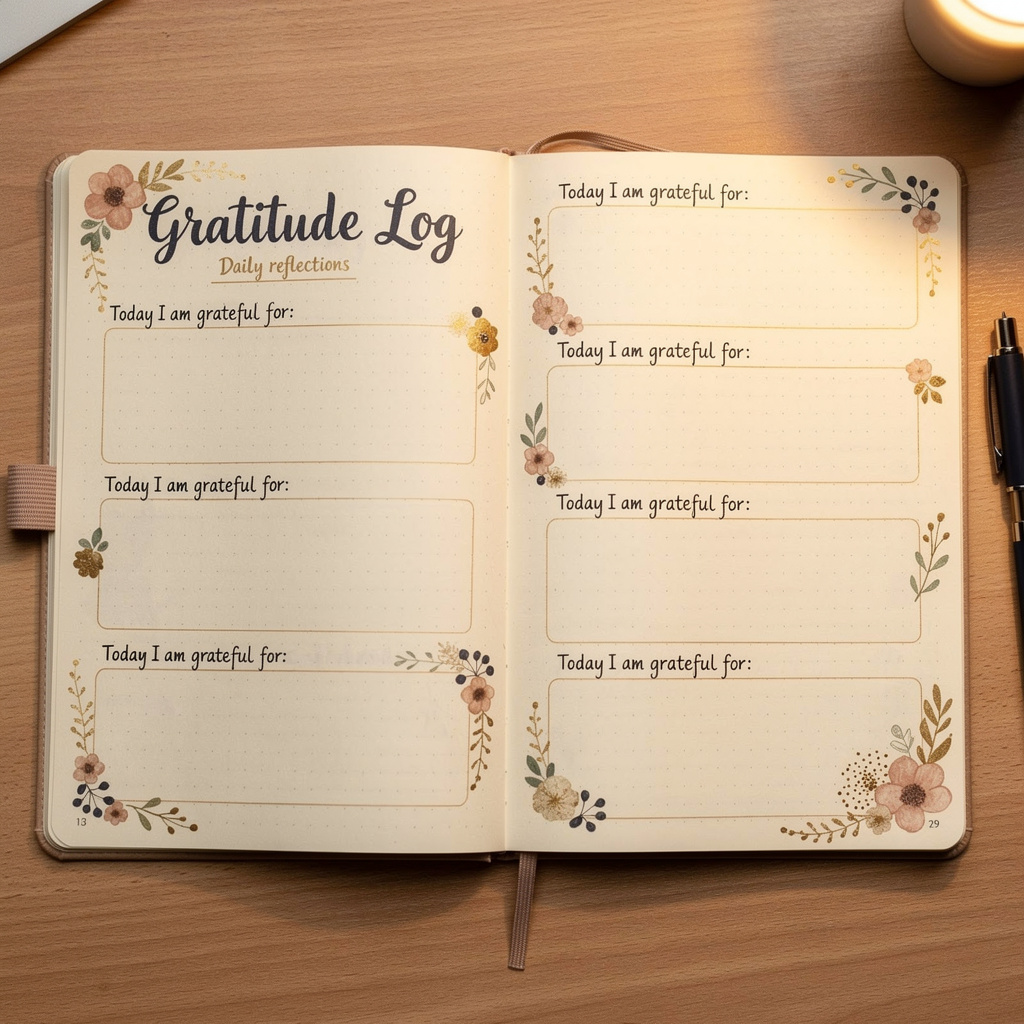

7. Daily Gratitude Log
The classic practice that works. Each day, write 1-3 things you are grateful for. Keep it specific—”the warm coffee this morning” rather than just “coffee.”
Variation: Try themed gratitude—this week focus on people, next week on small moments, then on things you often take for granted.
8. Wins and Victories Page
Document your accomplishments, no matter how small. On hard days, flip back to this page for evidence of your capability and growth.
Include: Work wins, personal growth moments, times you handled something difficult, compliments received
9. Joy List
Create a master list of things that bring you joy. When you are feeling low, you have a ready-made menu of mood boosters to choose from.
Categories: Free activities, Quick pick-me-ups (under 5 min), Activities with others, Solo activities
Boundaries and Self-Compassion Spreads

10. Boundary Tracker
Setting boundaries is a form of self-care. Track situations where you set boundaries, how it felt, and the outcome. Celebrate yourself for protecting your energy.
Columns: Date, Situation, Boundary I set, How I felt, Outcome
11. Self-Compassion Prompts
Dedicate a page to prompts that help you practice self-compassion when your inner critic gets loud.
Prompts to include:
- What would I tell a friend in this situation?
- What do I need right now?
- How can I be gentle with myself today?
- What is one thing I did well today?
12. Things I Am Letting Go
Recommended for You
🛒 Dotted Journal Notebook
As an Amazon Associate we earn from qualifying purchases.
Write down what you are releasing—grudges, unrealistic expectations, comparison, perfectionism. The act of writing helps process and release.
Physical Wellness Spreads
13. Body Check-In Log
Your body holds stress and emotion. Regular check-ins help you notice tension, pain, or discomfort before it becomes chronic.
How to set it up: Draw a simple body outline. Each week, note where you feel tension or discomfort and any possible causes.
14. Hydration and Nourishment Tracker
Basic needs matter. Track water intake, whether you ate regularly, and how food makes you feel. This is not about restriction—it is about noticing patterns.
15. Movement Log
Track movement that feels good, not punishing. Include walks, stretching, dancing, yoga—any way you moved your body with intention.
For more fitness tracking ideas, visit our tracker library.
Tips for Self-Care Journaling
Start Small
Pick one or two spreads to start. Overwhelming yourself with too many trackers defeats the purpose of self-care.
No Judgment
These spreads are for awareness, not criticism. A week of low moods is information, not failure.
Review Regularly
Set a monthly date to review your self-care spreads. Look for patterns and adjust your self-care practices accordingly.
Make It Yours
Modify any spread to fit your needs. Your self-care practice should feel supportive, not like another task on your to-do list.
Getting Started
Choose one spread from this list that resonates with where you are right now. Set it up in your bullet journal this week. Remember: the goal is not perfection but awareness and gentle progress toward better self-care.
Your mental wellness matters. Your bullet journal can be a tool for nurturing it.
Related Resources
- Start Here – New to bullet journaling? Begin here
- All Trackers – Browse our complete tracker library
- Spreads Library – More layout inspiration
- Bullet Journal 101 – Learn the fundamentals