
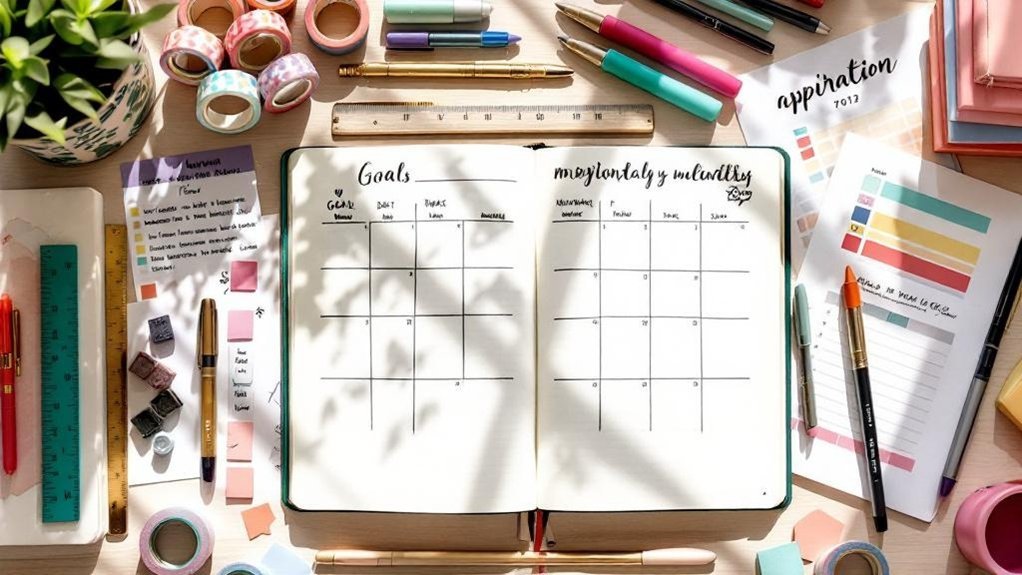
Table of Contents
Staring at a blank page can feel daunting, right? But when you finally fill that spread with colorful layouts and actionable goals, it’s pure magic. Here’s the secret: by turning your dreams into specific, tracked objectives, you’ll create accountability that sticks. I’ve used this simple goal-setting system for three months, and it’s transformed my journaling. You’ll learn how to structure your pages and track your progress in a way that truly works. Start messy—progress is what counts! Let’s turn your bullet journal into a powerful tool for achieving your dreams.
Key Takeaways
- Set 3 S.M.A.R.T. goals each month to clarify your ambitions and create actionable steps, keeping your focus sharp and progress measurable.
- Use daily logs for 10 minutes to track your tasks and priorities, ensuring you align your actions with your long-term objectives.
- Create a goal tracker with 5 sections for check-ins, allowing you to monitor progress weekly and hold yourself accountable.
- Break projects into 5 smaller tasks to make them manageable; this keeps motivation high and reduces feelings of overwhelm.
- Use 2-3 colors or stickers in your layouts to enhance engagement; visual elements make tracking progress more enjoyable and keep you motivated.
- Keep layouts simple and flexible to avoid burnout; a streamlined approach ensures you can adapt your goals as needed.
Introduction

Ever find yourself drowning in a sea of tasks and goals? I totally get it! I’ve been there too. That’s where the Bullet Journal Method comes in. Created by Ryder Carroll, it’s a fantastic way to turn those big dreams into bite-sized, achievable steps. You can embrace both the artistic side and the practical side of journaling without the pressure of perfection.
Here’s the beauty of it: you can break down those ambitious goals into smaller, short-term targets. You’ll learn to keep track of them with Daily, Weekly, and Monthly logs. Trust me, it’s such a game-changer. I’ve used this method for ages, and it lets you check your progress regularly, making it easy to adjust your strategies if something isn’t working. Bullet journal habit tracking is a powerful tool to enhance your goal-setting journey.
Break down ambitious goals into smaller targets and track progress with Daily, Weekly, and Monthly logs—it's a total game-changer.
Supplies You'll Need:
- Notebook: Leuchtturm1917 A5 Dotted ($20) or a budget-friendly alternative like the Scribbles That Matter Dotted Notebook ($15).
- Pens: Micron 05 ($2.50) or the budget-friendly Papermate Flair Pens ($1.50).
- Highlighters: Stabilo Boss ($2) or Crayola Super Tips ($5 for a pack).
- Ruler: Westcott 12-inch Clear Acrylic Ruler ($5) or a simple plastic ruler ($1).
Skill Level: Beginner
What I love about this method is that it’s not just about crossing off tasks. It encourages meaningful reflection. You’re connecting your goals to what truly matters to you. It's like having a personal compass guiding you through the chaos.
Getting Started
Ready to try it out? Start messy! Grab your supplies, find a cozy spot, and let’s create those logs. Here’s what I do:
- Daily Log: Draw a box that’s 4cm high and 6cm wide, 1cm from the left margin. Use a Micron 05 for clean lines. Inside, jot down the date and your tasks for the day.
- Weekly Log: Set up a spread that’s 2 pages wide. Draw a vertical line down the center of the left page, creating two columns. Each column should be 7cm wide. Label each section with the days of the week.
- Monthly Log: Reserve a two-page spread for this. On the left, create a calendar by drawing a grid of 4 rows and 7 columns. Each box should be 3cm x 3cm. On the right, list your goals for the month.
Feel that? It’s all starting to take shape!
Reflection and Connection
Now, don’t forget to take a moment to reflect. I’ve tried both fancy spreads and simple lists, and honestly, I find that the simpler I keep it, the more I actually use it. Don’t stress over aesthetics; done is better than perfect!
Engagement Break: What’s your biggest challenge with goal-setting? Maybe it’s staying consistent or finding the right layout?
The Power of Visuals
Incorporate visuals! Use your favorite colors to highlight tasks or goals. I like to use different color pens for different categories—work, personal, health. It not only looks pretty but helps you scan your page quickly. When I switched to color coding, I noticed I’d actually stick to my goals better.
Common Mistake: The mistake most beginners make is overcomplicating their layouts. Keep it functional! A beautiful spread is lovely, but if you can't use it, what's the point?
Final Thoughts
Goals Often Remain Unachieved
You've probably noticed that your goals often slip away despite your best intentions. Without clear direction and structured planning, distractions and self-doubt can easily derail your progress.
This challenge affects millions annually; in fact, only 8% of people achieve their New Year's resolutions. Understanding why goals falter is crucial, but what happens when you take a deeper look into the underlying reasons?
This exploration reveals not just the obstacles but also actionable strategies to reclaim your focus and drive. In 2025, goal setting spreads have emerged as effective tools for enhancing accountability and structure in your planning.
Why This Matters
Why This Matters
Ever set a goal and felt that initial spark, only to watch it fizzle out because you didn’t have a solid plan? I’ve been there too! Vague intentions can be so frustrating. You’re left feeling confused, wondering what to do next. Without clear steps, it’s tough to measure progress, and that can really dampen your motivation.
Did you know that around 80% of New Year's resolutions fall flat by February? That’s a huge chunk of us! This pattern suggests a common hurdle: many of us don’t have a clear framework for chasing our goals. It’s like trying to navigate a new city without a map—super stressful, right?
This is where a fresh approach to planning comes in. Here’s what I love about structured goal-setting: it helps align your daily actions with your deeper values and long-term dreams. Turning those wishy-washy thoughts into specific, trackable objectives creates the accountability and visibility we need to actually reach what we’re aiming for.
Ready to dive in? Let’s make goal-setting feel more like a fun adventure than a chore!
Supplies You’ll Need:
- Notebook: Leuchtturm1917 A5 Dotted ($20) or a budget-friendly alternative like the Muji A5 Notebook ($5)
- Pens: Tombow Dual Brush Pens ($10 for a set) or Crayola Super Tips ($5 for a set)
- Ruler: Any basic ruler ($1) or a clear acrylic ruler for easy measuring ($6)
- Stickers or Washi Tape: For decoration, go for a fun sticker pack ($5) or a roll of washi tape ($3)
Skill Level: Beginner – no experience needed, just your usual supplies!
Let’s Get Started!
- Define Your Goals: Grab your notebook and jot down what you really want to achieve this month. Make it specific! Instead of saying, “I want to get fit,” try “I’ll walk for 30 minutes three times a week.”
- Create a Visual Layout: Draw a box that’s 10cm x 15cm, centered on the page. Inside, write your goals in a bold font. Feel free to get creative with colors! I like to use a blue Tombow pen for the box and black for the text.
- Break It Down: For each goal, write 2-3 actionable steps you can take. If your goal is to walk more, maybe one step is to set a reminder on your phone. This makes the big goal feel less overwhelming.
- Add Some Flair: Use washi tape along the top of your page to add a splash of color. Choose a tape that resonates with the month—maybe something autumnal for October or bright and fresh for spring!
- Track Your Progress: Create a small tracker right under your goals. Draw a simple grid or a series of dots to mark off each day you complete your steps. I like to color in a dot with a green pen once I’ve hit my goal for the day. It feels so satisfying!
Engagement Break
What I’ve Noticed: A common mistake many beginners make is setting too many goals at once. It can feel overwhelming and lead to burnout. Focus on one or two key objectives, and really dive into those!
Personal Reflection
I’ve tried both the all-in approach and a more focused strategy. Trust me, keeping it simple works wonders! I used a similar layout for three months last year, and it really helped me stay on track with my fitness goals.
Try This Today!
Grab your supplies and set aside a few minutes to create your goal layout. Remember, it doesn’t have to be perfect—start messy. That counts! You’ve got this!
Who It Affects

Who It Affects
Ever sat down to set goals and felt completely lost? You're not alone! I’ve been there, and let me tell you, 92% of people ditch their New Year’s resolutions because their goals are too vague or poorly planned. Whether you're an entrepreneur, a creative, or someone just trying to make sense of it all, this can be super frustrating.
Unstructured goal-setting isn’t just a minor hiccup; it can trip up anyone who lacks intentional direction. Without a solid framework like S.M.A.R.T. goals, it’s easy to drift between competing priorities, and suddenly, you’re stuck in decision paralysis. Feel that? Your brain just can’t seem to find a clear path forward.
That’s where a bullet journal can really change the game. I’ve tried all sorts of methods over the years, but what I love about this is how it brings accountability and clarity. By jotting down specific, measurable goals that reflect your personal values, you take the first step toward progress.
Supplies You’ll Need:
- Bullet Journal: Leuchtturm1917 A5 Dotted ($20) or Budget Option: Scribbles That Matter A5 Dotted Notebook ($10)
- Pens: Tombow Dual Brush Pens ($10) or Budget Option: Crayola Super Tips ($7)
- Fineliner: Micron 05 ($2) or Budget Option: Faber-Castell PITT Artist Pen ($5)
Skill Level: Beginner
Getting Started
Here’s a simple yet effective way to set your goals: Start by mapping out your objectives. Grab your bullet journal, and let’s create a layout that’s both functional and pretty.
- Draw a Title Box: Create a 5cm x 2cm box at the top of your page, about 1cm from the top. Use a Micron 05 pen to outline it.
- List Your Goals: Below the box, write down your goals for the month. Keep them specific! Instead of “get fit,” try “exercise three times a week.”
- Add Color: Use your Tombow Dual Brush Pens to highlight each goal. Pick a color that resonates with you—maybe something calming like a soft blue or energizing like a bright yellow.
- Check-In Section: Leave space at the bottom for weekly check-ins. This can be a simple bullet point list.
What I’ve found is that regular task migration—moving tasks that didn’t get done—keeps your goals in line with what you actually prioritize. You’re not just writing things down; you’re actively engaging with them.
Common Mistakes
One mistake I made early on was thinking I'd to make every spread perfect. The pressure of perfection can totally stifle your creativity. Remember: done is better than perfect!
If you find this spread gets overwhelming, try breaking your goals into smaller, bite-sized tasks. Maybe aim for two or three goals a week instead of a long list for the month.
A Quick Check-In
Feeling stuck? Here’s an alternative approach: Instead of a monthly spread, try a weekly layout. Design a simple week-at-a-glance to see your goals in real-time. This way, you can adjust as you go.
Final Thoughts
What I love about bullet journaling is how it bridges the gap between aspiration and execution. I’ve used this layout for three months, and it really helped me stay focused on what mattered most.
The Psychology Behind Procrastination

Understanding the roots of procrastination highlights the emotional barriers we face, but recognizing these patterns is just the beginning. Additionally, utilizing bullet journaling techniques can help manage anxiety and clarify your goals, making it easier to overcome procrastination.
Root Causes
Understanding Procrastination: Reasons & Remedies
You ever sit down to work and just… stare at the page? Yeah, I’ve been there too. Procrastination isn’t just about being lazy; it runs much deeper. What I love about figuring this out is that once you understand what’s holding you back, you can tackle it head-on.
Fear of Failure & Perfectionism****
Sometimes, the fear of not being good enough can freeze you in place. You might think it’s safer to avoid the task than risk feeling inadequate. Sound familiar? Perfectionism can make you feel like you need everything to be just right before you even start. Here’s a little secret: done is better than perfect. You can always refine later!
Emotional Regulation
Ever notice how some tasks just feel heavy? If you’re struggling with uncomfortable feelings tied to your to-dos, it’s easy to push them off. Instead of facing the work, you might just escape. Recognizing this is the first step to changing it. Feel that? It’s the weight lifting just a bit!
Task Aversion
Let’s be real: some assignments are just plain boring. If you find yourself avoiding tasks because they seem dull, you’re not alone. That’s where creativity comes in! Spice things up in your bullet journal. Use colors, doodles, or fun layouts to make even the mundane feel exciting.
The Zeigarnik Effect
You know that feeling when you can’t stop thinking about an unfinished task? That’s the Zeigarnik Effect at play. It creates this tension that makes you want to avoid the task even more. Try breaking tasks into smaller steps. It makes starting easier and reduces that mental clutter.
How to Tackle Procrastination
Now that you know why procrastination happens, let’s talk about how to address those root causes in your bullet journal:
1. Identify Your Triggers
Start by jotting down what tasks you tend to procrastinate on. Is it because they’re overwhelming? Boring? Not interesting? Knowing this will help you design your spreads around these insights.
2. Create a Mood Tracker****
Add a simple mood tracker to your journal. Use colors that resonate with you — maybe a bright yellow for a good day or a calming blue for when you’re feeling low. This can help you see patterns in your emotions related to procrastination.
3. Set Up a Task Breakdown****
Instead of writing down a big project, break it into bite-sized pieces. For example, instead of “Write report,” try “Outline report,” then “Draft introduction.” This method not only makes it less daunting but also gives you that satisfying feeling of checking things off.
4. Incorporate Fun Elements
Use your favorite supplies! I love Tombow Dual Brush Pens for a burst of color, but if you’re on a budget, Crayola Super Tips work just as well. Add doodles or stickers to make your journal feel inviting. Remember, the goal is to make your journal a place where you want to spend time.
Common Mistakes
The mistake most beginners make is overcomplicating their layouts. Trust me, I’ve been there! A beautifully intricate spread might look stunning but can take forever to set up. Keep it simple, especially when you’re just starting.
Try This Today
Grab a blank page in your bullet journal. Write down one task you’ve been avoiding. Now, break it into three smaller steps and commit to completing one today. You’ll be amazed at how good it feels to tick that off your list! Remember, progress over perfection. You’ve got this!
Contributing Factors
Understanding Procrastination in Your Bullet Journal
You know that feeling when you have a million things to do, but you just can't get started? It’s frustrating, right? I've been there, too! Over the years, I’ve learned that procrastination often stems from a mix of psychological forces. Let's break them down so you can tackle them in your bullet journal.
1. Fear-driven avoidance – Ever find yourself avoiding a task because you want it to be perfect? That fear of failure can be paralyzing! It creates a cycle of hesitation.
I used to spiral into this, but I learned that starting messy can lead to progress. Done is better than perfect, right?
2. Reward disconnect – Some tasks just don’t give you that immediate high, and your brain resists them. It’s so easy to gravitate toward easier, more rewarding activities.
What I love about bullet journaling is that you can create small rewards for yourself. Maybe add a fun sticker or doodle when you complete a task!
3. Mental tension spirals – Those unfinished tasks? They can create a mental weight that makes you want to avoid them even more.
I’ve tried ignoring them, but it just deepened the procrastination loop. Instead, I found that visually mapping out tasks in my journal can help ease that discomfort.
Supplies You’ll Need:
- Bullet Journal: Leuchtturm1917 A5 Dotted ($20) or a budget-friendly option like a simple grid notebook ($5).
- Pens: Micron 05 for fine lines ($2) or a set of gel pens for color ($10).
- Stickers: Try some from Etsy or DIY with printable sticker paper ($15 for a pack).
Skill Level: Beginner
Getting Started with Your Bullet Journal
Ready to turn these insights into action? Here’s a simple layout to help you tackle procrastination:
- Create a Trigger Map: Draw a 10cm x 15cm rectangle on the top half of your page. Inside, jot down tasks you’re avoiding. Use different colored pens for each task to visually separate them.
- Add Emotional Notes: Below the tasks, leave space to write why you’re avoiding them. This can be a single word or a phrase. Use a lighter color for this section to keep it visually distinct.
- Reward Yourself: At the bottom, sketch a small box for rewards. Keep it fun! Maybe it’s a coffee break or an episode of your favorite show after completing a task.
What I love about this layout is how it gives you a clear view of what’s holding you back. It also encourages self-reflection, which can be a powerful motivator.
Engagement Break: Common Mistakes
Ever fill a page with tasks and then ignore them? The mistake most beginners make isn't breaking down those tasks into smaller, manageable bits.
If a task feels daunting, it’s easy to push it aside. Try breaking it into steps in your journal. This can make it feel less overwhelming!
Wrapping It Up
So, here’s your challenge: Create your trigger map today! Start with one task you’ve been avoiding.
Don’t worry about making it perfect—just get it down on paper. You'll be surprised at how much lighter you feel once you do!
Studies Show Goal Specificity Matters
When you set specific goals, you're tapping into decades of research that consistently demonstrates their superiority over vague aspirations—experts universally agree that clearly defined objectives dramatically increase your success rates.
With researchers like Locke and Latham highlighting how specificity enhances effort and persistence, you might wonder how to best apply this in your own goal-setting.
This leads us to explore various structured approaches, including the popular SMART framework, and how they can cater to your unique style.
Key Findings
Key Findings
Hey there, fellow journaling enthusiast! Have you ever set a goal and felt it slip away because it was just too vague? Trust me, I’ve been there! Here’s a little secret: when you get specific with your goals, you’re way more likely to achieve them—like 70% more likely! How cool is that?
I’m all about using my bullet journal to keep things clear and focused. Research shows that writing down your goals can boost your chances of success by 42%. That’s why I think a bullet journal isn’t just pretty pages; it’s a powerful tool for turning thoughts into reality.
Supplies You’ll Need:
- Notebook: Leuchtturm1917 A5 Dotted ($20) or any dotted notebook ($5)
- Pens: Tombow Dual Brush Pens ($15 for a pack) or Crayola Super Tips ($10 for a pack)
- Ruler: Metal Ruler ($5) or any straight edge ($2)
Skill Level: Beginner to Intermediate
Now, let’s dive into the S.M.A.R.T goal-setting method—Specific, Measurable, Achievable, Relevant, Time-bound. You’ll feel a surprising boost in commitment—about 25%—when your goals are crystal clear. I love this approach because it really sharpens my motivation and focus.
How to Set S.M.A.R.T Goals:
- Specific: Write down exactly what you want to achieve. Instead of saying “I want to get fit,” try “I’ll run 3 times a week.”
- Measurable: Define how you’ll track your progress. Maybe it’s logging your runs in your bullet journal.
- Achievable: Make sure your goal is realistic. If you’re starting from zero, don’t aim for a marathon right away!
- Relevant: Your goal should matter to you. Ask yourself, “Why do I want this?”
- Time-bound: Set a deadline. “I want to run 5K by the end of the month” gives you a clear timeframe.
Engagement Break: Have you tried setting goals before? What worked for you? I’ve tried vague goals, and honestly, they just left me feeling frustrated.
Regularly tracking your progress can really amp up your success—by about 33%! I keep a simple monthly tracker in my bullet journal, and it works wonders. Here’s how I set it up:
Monthly Progress Tracker:
- Draw a 12cm x 12cm square in the top-left corner of your page.
- Divide it into 4 equal boxes, each 6cm x 6cm. Use a black pen for clear lines.
- Label each box with a week number (1 through 4).
- Add a small section for notes underneath each week to jot down any challenges or victories.
I used this layout for three months straight, and it kept me accountable without being overwhelming.
The Mistake Most Beginners Make:
They often think that if a spread doesn’t look perfect, it’s not worth doing. Remember, start messy! Done is better than perfect.
As you create your spreads, think about functionality. Every doodle or decorative element should help you scan and track your goals easily.
So, ready to give this a shot? Grab your supplies, set those S.M.A.R.T goals, and watch how your bullet journal transforms your intentions into achievements!
Try this today: pick one goal, make it S.M.A.R.T, and jot it down in your journal. You got this!
Where Experts Agree
Supply List:
- Pen: Micron 05 (or a budget-friendly option like the Sakura Pigma Micron)
- Notebook: Leuchtturm1917 A5 Dotted (or a budget-friendly alternative like the Scribbles That Matter notebook)
- Markers: Tombow Dual Brush Pens (or Crayola Super Tips for a budget choice)
Skill Level: Intermediate
—
You know that feeling when you jot down a goal but it fades into the background? Ugh, I’ve been there! It's frustrating, right? That's why I love getting specific with my goals.
Research shows that having clear, defined targets boosts your chances of actually hitting them. For example, Locke and Latham found that specific goals can make you 90% more likely to succeed.
What I love about this is that it’s not just about writing something down; it’s about creating a plan. Instead of saying, “I want to get healthier,” how about “I’ll exercise three times a week”? That’s the kind of clarity that helps you take action.
Feel that? That shift from vague to specific can make all the difference. The American Psychological Association backs this up, too. They found that when you set specific objectives, your motivation and persistence get a serious boost.
Let’s Create a Goal Tracker
- Draw Your Header: At the top of a new page, write “My Goals” in big, bold letters. Use a Tombow Dual Brush Pen in a vibrant color. I usually go for an endearing teal or a bright pink. Make it fun!
- Create a Table: Draw a table with 3 columns. Each column should be about 5cm wide. Leave a gap of 1cm between columns. Label them: “Goal,” “Action Steps,” and “Progress.”
- Fill It In: In the “Goal” column, write down those specific goals—like “Run a 5K” or “Read 12 books this year.” In the “Action Steps,” break it down. For example, under “Run a 5K,” you might write “Follow a training plan” and “Join a local running group.”
- Track Progress: In the “Progress” column, use a checkbox or a simple date to mark when you complete an action step. I love using colorful markers or stickers to make this visually appealing and motivating!
Pro Tip: If you find that this method gets overwhelming, simplify! Maybe just focus on one goal at a time. That's totally okay.
Common Mistake Alert
The mistake most beginners make is trying to set too many goals at once. Trust me, I’ve been there. It can make tracking feel daunting.
Focus on 1-3 goals, and you’ll see better results.
Ready to try this today? Grab your supplies, and start with one clear goal. Break it down into actionable steps, and watch how this transforms your journaling experience.
Remember: Done is better than perfect. So start messy, and embrace the process! You’ve got this!
Where They Disagree
Where They Disagree: Finding Your Balance in Goal-Setting
Ever sat down with your bullet journal, ready to set some goals, but felt overwhelmed by all the advice out there? Trust me, I’ve been there! Here’s the scoop: while many goal-setting experts rave about the magic of specificity, they don’t quite see eye to eye on how strict you should be with it. Some swear by the S.M.A.R.T. method, saying it boosts your chances of success by 30%. Others believe that being too rigid can squash your creativity—something we all need for those innovative ideas!
What I love about this debate is finding that sweet spot. Traditionalists will tell you that clear objectives can lead to a whopping 90% achievement rate, while vague goals? Only about 35%. But the progressive thinkers? They argue that if you cage your goals too tightly, you might miss out on some fantastic opportunities. Why not aim for clarity without feeling boxed in?
Supplies You’ll Need
- Notebook: Leuchtturm1917 A5 Dotted ($20) or a budget-friendly alternative like the Scribbles That Matter Dotted Notebook ($15).
- Pens: Tombow Dual Brush Pens ($10 for a set) or Crayola Supertips ($7 for a set).
- Ruler: A simple 30cm clear ruler ($1) or a more stylish metal one ($5).
- Stickers (optional): A pack of decorative stickers ($5) or DIY stickers made from printed designs ($1).
Skill Level: Beginner to Intermediate
The Hybrid Approach
Here’s where your bullet journal shines! Use it to jot down specific goals but keep things flexible enough to adjust as life unfolds. I’ve tried both the rigid and loose approaches, and honestly? My go-to is a mix.
Start by writing down your goals in a clear, structured way—maybe a box layout that’s 4cm x 6cm, 1cm from the left margin, using a black pen. Then, leave some space to add notes or doodles. This isn’t just about looking pretty; it helps you track progress and pivot when inspiration strikes.
Feel that? That’s the freedom of being specific yet adaptable. Plus, it keeps your pages looking organized without feeling stuffy.
Common Mistake to Avoid
The mistake most beginners make is overcomplicating their spreads. Don’t let perfectionism hold you back! Start messy—maybe just a list of goals with a few doodles around them. You can always refine it later.
Remember, done is better than perfect.
Engaging with Your Goals
Every now and then, take a moment to reflect. What’s working? What’s not? This is where you can really embrace the fluidity of your goals.
Maybe you started out wanting to read 12 books this year, but now you’re excited to explore a new hobby—like painting! That’s totally okay. Adjust those goals and keep moving forward.
Try This Today
Grab your bullet journal and set aside 10 minutes. Write down one specific goal you want to achieve this month.
Then, underneath it, jot down a couple of flexible paths that could get you there. Maybe you want to start running—list out a few different routes or times you might go. Keep it light and playful! You’ve got this.
Bullet Journal Goal Framework

Once you’ve established your S.M.A.R.T. goals and broken them down into 90-day projects, you may wonder how to keep that momentum going.
Instead of overwhelming yourself with vague objectives or trying to tackle everything at once, consider how visual trackers and task migration can play a vital role in maintaining your clarity and motivation.
This flexibility will ensure you can adapt your priorities as life evolves, empowering you to stay true to your values while navigating the challenges ahead.
What You Can Do
What You Can Do
Hey there, fellow creative! Have you ever felt that rush of excitement when you set a big goal, only to get lost in the details of how to actually achieve it? Yep, me too! That’s where the S.M.A.R.T. framework comes in. It helps turn those dreams into actionable steps.
Think about it: when your goals are Specific, Measurable, Achievable, Realistic, and Time Bound, it’s like having a clear map for your journey. No more vague aspirations—just pure clarity!
Now, let’s break it down a bit more. I love to segment each goal into three focused projects, each aligned with a 90-day sprint. Why 90 days? It keeps the momentum going and helps you avoid that dreaded goal fatigue. Feel that?
Here’s how to tackle it:
Supply List:
- Notebook: Leuchtturm1917 A5 Dotted (about $20) or a budget-friendly alternative like the Scribbles That Matter Notebook ($10).
- Pens: Tombow Dual Brush Pens (around $10) or Crayola Supertips ($5).
- Ruler: A simple plastic ruler ($2) or any straight edge you have at home.
Skill Level: Intermediate
(Comfortable with rulers and hand lettering)
- Brainstorm Tasks: For each project, jot down tasks that feel doable. Don’t stress about perfection—just get your ideas on paper. I often start messy. That counts!
- Design Planning Sheets: Before you transfer everything into your journal, sketch out your planning sheets. Use your ruler to create a clean layout. Maybe a 4cm x 6cm box for each project? I like to keep it simple, with headings that stand out.
- Track Your Progress: Use visual elements like graphs or fun doodles. I’ve tried both elaborate trackers and minimal ones, and honestly, it depends on my mood. I love celebrating those little wins!
Engagement Break
What’s your go-to method for tracking progress? I’ve found that some techniques just don’t stick for me. For instance, I once tried a complex color-coding system that ended up being more stress than it was worth. Keep it simple, and you’ll enjoy the process more!
By applying this method, your bullet journal transforms from just a notebook into a powerful goal-achievement tool. You’re not just listing intentions; you’re engineering real results with structure and visibility.
Here’s a Tip
The mistake most beginners make is overcomplicating their goals. Remember, it’s about progress, not perfection. If a spread takes you more than 30 minutes, consider simplifying it.
What to Avoid
What to Avoid in Your Bullet Journal
You know that moment when you sit down to journal, and it all feels a bit overwhelming? You’re not alone! A lot of us get tripped up by common pitfalls that can stall our goal-setting efforts. So, let’s chat about how to keep your creative journaling journey flowing.
Ditch the Vague Goals
First off, don’t fall into the vague goal trap. Your objectives need to be S.M.A.R.T: Specific, Measurable, Achievable, Realistic, and Time-Bound.
I’ve tried both vague and specific goals, and trust me, clarity wins every time. What’s your big goal? Write it down in a few clear sentences. Feel that? That’s the power of specificity!
Prioritize Wisely
Next, let’s talk about clutter. Your journal isn’t a to-do list graveyard! Instead of cramming it with endless goals, prioritize ruthlessly.
What truly matters to you right now? My go-to approach is to pick just three main goals each month. It keeps me focused and motivated.
Celebrate the Small Wins
Now, I get it—there’s a temptation to go all-in or nothing at all. But that all-or-nothing mindset? It kills momentum.
Celebrate your incremental wins! Maybe you completed one small task today—great! That counts. Start messy, and let the process unfold.
Break It Down
Feeling overwhelmed by ambitious objectives? Break them into smaller, actionable tasks.
I love using a simple checklist format. For example, if your goal is to read a new book this month, list out chapters or pages you’ll tackle each week. This keeps things clear and helps you track progress effectively.
Embrace Flexibility
Finally, let’s talk about structure. Rigid plans can stifle your creativity.
Your bullet journal should evolve with you! As priorities shift and you grow, let your layouts adapt. I’ve often found that the designs I thought would work for ages ended up needing a refresh. Remember, flexibility fuels innovation!
Recommended for You
🛒 Dotted Journal Notebook
As an Amazon Associate we earn from qualifying purchases.
Supply List for Your Bullet Journal
- Notebook: Leuchtturm1917 A5 Dotted ($20) or Budget-Friendly: Scribbles That Matter A5 Dotted ($15)
- Pens: Tombow Dual Brush Pens ($20 for a set) or Budget-Friendly: Crayola Super Tips ($8 for a set)
- Ruler: Any standard 30cm ruler ($5) or Budget-Friendly: Plastic ruler from the dollar store ($1)
Skill Level: Intermediate
If you’re comfortable with rulers and hand lettering, you’re ready to tackle these ideas!
—
Engagement Break
What’s a common mistake I see beginners make? They start with too many goals and feel paralyzed by choice.
Focus on just a few, and you’ll feel lighter and more inspired.
—
Try This Today
Grab your journal and jot down one specific goal for the month. Then, break it into three small, actionable tasks.
You got this! Remember, perfect is the enemy of done—so just start!
Comparison of Approaches
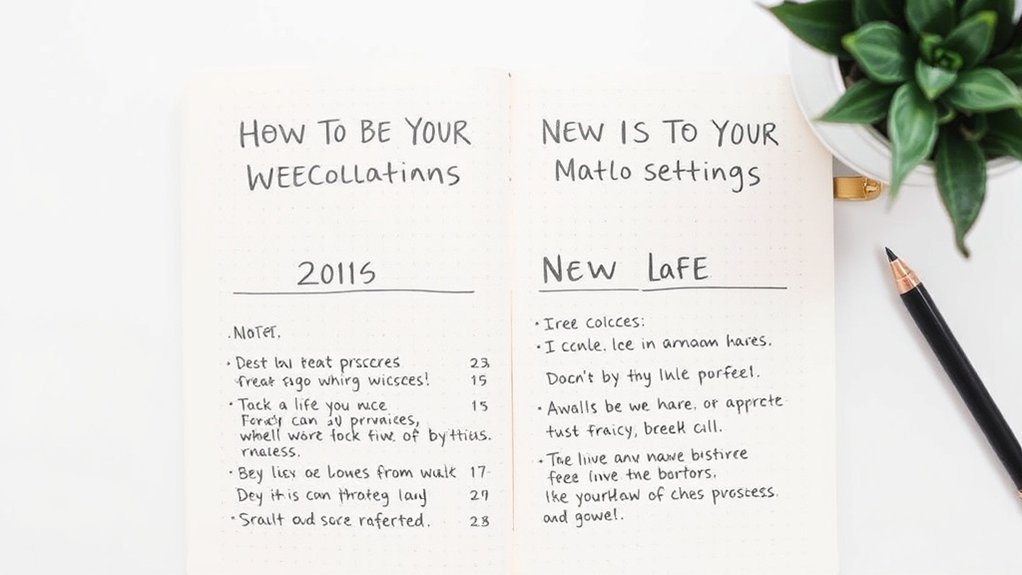
Discovering Your Perfect Planning Style
Have you ever felt overwhelmed by the rigid structures of traditional planners? I know I have! After years of experimenting with different journaling systems, I found that Bullet Journals are like a breath of fresh air. They offer the flexibility to mold the framework to fit your unique goal-setting style.
| Approach | Key Feature | Outcome |
|---|---|---|
| Bullet Journals | S.M.A.R.T integration | Crystal-clear, measurable goals |
| Free-form Journals | Expression-focused | Limited progress tracking |
| Digital Tools | Convenience-driven | Distraction-prone environments |
What I love about Bullet Journals is how they blend systematic task migration with reflective practices. You’re not just jotting down tasks; you’re creating a mindful space that traditional methods often overlook. You can start messy—it totally counts! Unlike those vague resolutions we often make, you’re embedding specificity into your layouts.
Supplies You'll Need
- Notebook: Leuchtturm1917 A5 Dotted (around $20) or a budget-friendly alternative like the Scribbles That Matter (around $15).
- Pens: Tombow Dual Brush Pens (set of 10 for about $30) or Crayola Super Tips (around $10).
- Fine Liner: Micron 05 (about $2 each) or a budget-friendly option like the Stabilo Fineliner (around $1 each).
Skill Level: Intermediate
You’ll want to be comfortable with rulers and hand lettering for this.
Getting Started
- Set Up Your Monthly Layout: Draw a 4cm x 6cm box 1cm from the left margin on your first page. This will be your monthly overview. Use a 0.5mm black pen for clean lines.
- Add Dates: Write the month’s name at the top in a fun, bold style. Then, create a grid beneath it with 7 columns for the days of the week, each 3cm wide.
- Incorporate S.M.A.R.T Goals: In the next section, jot down a few goals for the month. Use bullet points and keep them specific. For example, instead of “get fit,” write “exercise for 30 minutes, 3 times a week.”
- Design with Function: Use color coding for different goal categories (like personal, professional, and wellness). This adds a visual element that makes scanning your goals super easy!
- Reflective Space: Reserve a section at the bottom of the page for reflecting on your progress. A simple prompt like, “What worked well this month?” can lead to helpful insights.
Engage with the Community
The community aspect of Bullet Journaling is fantastic! You’re not alone on this journey. Sharing your spreads or even your struggles can make a huge difference. Have you tried connecting with others online?
Common Mistake Alert
The mistake most beginners make is overcomplicating their layouts. Trust me, simpler is often better. You don’t need to fill every inch with doodles or decorative elements. Focus on what serves your organization needs.
Try This Today
Why not start today? Grab your supplies and set up a simple monthly layout. Remember, perfect is the enemy of done. It’s all about progress, not perfection! You’ve got this!
Key Takeaways
Key Takeaways
Supplies You'll Need:
- Tombow Dual Brush Pens (Budget alternative: Crayola Super Tips)
- Leuchtturm1917 A5 Dotted Notebook (Budget alternative: Scribbles That Matter Dotted Journal)
- Micron 05 Black Pen (Budget alternative: Sharpie Pen)
Skill Level: Intermediate (comfortable with rulers and hand lettering)
—
Ever found yourself staring at an empty page, unsure where to start? I’ve been there! After you’ve set up your monthly layout and started embedding S.M.A.R.T. goals into your bullet journal, it’s time to dive deeper into what makes this method truly shine.
After setting up your monthly layout and embedding S.M.A.R.T. goals, dive deeper into what makes the bullet journal method truly shine.
Here's the thing: the Bullet Journal isn’t just about checking off tasks; it’s about crafting your future with intention. What I love about this approach is its strategic simplicity. Let’s break it down together:
- Chunk It Down: Instead of feeling daunted by huge aspirations, break them into three 90-day projects. Trust me, these bite-sized goals feel way more manageable. You’re building momentum, not stress. Feel that?
- Visualize Your Progress: Grab those colorful Tombow pens! Use bar graphs or even fun doodles to track your goals. Each little color change or doodle gives you that satisfying dopamine hit. It’s like a mini-celebration every time you look at your progress.
- Stay Flexible: Keep brainstorming tasks as you go. This isn’t a rigid system; it’s meant to adapt with you. Being agile while staying focused? Yes, please!
Now, here’s a little tip from my experience: I started using planning sheets before diving into my journal entries. It cuts out that pesky cognitive friction and helps capture ideas without the chaos. You’ll find it makes the process smoother.
Engagement Break: Ever tried a monthly theme? It can really change the vibe of your spreads. Instead of jumping from one goal to the next, embrace the season. For instance, a cozy autumn theme in October can inspire you to focus on gratitude projects.
Don't worry about perfection. Start messy. That counts! Remember, this system should evolve with your ambitions. It’s all about what works for you.
Each design choice should improve scanability and usability. Think about how you can make your layouts both pretty and functional. For example, using a 1.5cm margin around your spreads helps keep things tidy and organized.
The Mistake Most Beginners Make: They try to make everything perfect from the start. But here's the truth: perfect is the enemy of done. Just get started!
Try This Today:
Grab some stickers or washi tape and create a progress tracker for one of your goals. Make it colorful, make it fun—just don’t overthink it. You’ve got this!
Frequently Asked Questions
What Supplies Do I Need to Start a Bullet Journal for Goal Tracking?
What supplies do I need to start a bullet journal for goal tracking?
Any notebook works, but a dotted A5 gives you the most flexibility. Look for the Leuchtturm1917 ($20) or a budget-friendly option like the Scribbles That Matter ($12).
You’ll also want fine-tip pens in multiple colors to help organize priorities visually. Try Tombow Dual Brush Pens ($25 for 10) or Crayola Supertips ($6 for 20).
How much time does it take to set up my first bullet journal?
About 45 minutes for the first time, but once you have the layout figured out, you can set up new spreads in about 20 minutes.
Start with basic spreads like a monthly log or a habit tracker. You’ll find that filling them in daily only takes a couple of minutes!
Do I really need fancy pens and supplies?
You don’t need expensive supplies to get started! Just a few quality pens can make a big difference.
Fine-tip pens like the Muji 0.38mm ($2 each) or budget-friendly ones like Papermate Flair ($8 for 8) work well. Plus, your journal can still look great with simple tools.
How can I make my bullet journal look nice without spending a lot?
You can add flair without breaking the bank! Washi tape is a fun way to decorate — look for affordable packs on Amazon, like the MT Washi Tape set (around $12).
Just a few rolls can transform your pages.
How often should I update my bullet journal?
Aim to update your journal weekly, which takes about 30 minutes. You can check off goals, set new intentions, and reflect on your progress.
Daily updates might take just a minute or two, but don’t stress about perfection; it’s all about tracking what matters to you!
How Often Should I Review and Update My Bullet Journal Goals?
Q: How often should I review my bullet journal goals?
You’ll want to review your goals weekly for the best results! Spend about 15 minutes tracking your progress and celebrating wins.
For a deeper dive, set aside 30 minutes monthly to recalibrate your priorities. Don’t wait longer than three months for a thorough audit—this keeps you agile.
Try using the Leuchtturm1917 Dotted Notebook ($20) for flexible layouts.
Q: What do I do during my monthly review?
Focus on assessing your progress and adjusting your goals. You’ll need about 30-45 minutes for this.
Look at what’s working, what needs tweaking, and identify new opportunities. Regularly using the Moleskine Classic Notebook ($18) will help keep everything organized and accessible!
Q: How can I celebrate my wins effectively?
Celebrate your wins with a quick 10-minute reflection session each week! Jot down three things you accomplished, big or small.
You could even use colorful stickers from the Happy Planner ($15 for a pack) to make it fun and visually appealing. Remember, it’s all about recognizing your progress!
Can I Use a Digital App Instead of a Physical Bullet Journal?
Can I use a digital app instead of a physical bullet journal?
Absolutely, you can definitely use digital apps for your journaling!
Apps like Notion or Todoist let you track tasks and goals easily.
If you’re tech-savvy, you'll love how they sync across devices.
Try Notion for its flexibility, or Todoist for simple task management.
Just remember, while digital tools are great for organization, they don’t give you that satisfying pen-on-paper experience.
What's the Best Way to Track Progress on Long-Term Goals?
Q: How can I break down my long-term goals effectively?
You can make it manageable by splitting big goals into quarterly milestones.
Try setting up a simple layout in your journal that outlines these milestones. This setup should take about 15 minutes to create, and you’ll spend just a few minutes weekly checking in on your progress. A dotted A5 notebook like the Leuchtturm1917 ($20) is perfect for this!
—
Q: How often should I review my progress?
You'll want to check in weekly to see what’s working.
Set aside about 20 minutes each week to reflect and adjust your strategy. It’s a great way to stay on track and keep things fresh. A simple planner like the Moleskine Daily Planner ($25) can help keep your reviews organized.
—
Q: What metrics should I track?
Focus on metrics that actually matter to your goals, not just surface-level numbers.
Spend about 10 minutes each week deciding which metrics to track, and jot them down in your journal. You might want to use a bullet journal method for clarity. The Scribbles That Matter Bullet Journal ($20) is a great choice for this!
—
Q: What tools can I use for tracking?
Any notebook works — but a dotted A5 gives you the most flexibility.
If you prefer digital, apps like Notion or Trello are user-friendly and offer great tracking features. Setting up your first board or page might take about 30 minutes, but you'll save time in the long run with organized progress tracking.
—
Q: How do I keep myself accountable?
Creating an accountability system is key.
Spend about 10 minutes each week to share your progress with a friend or a community. This helps keep you motivated and on track. Consider joining a group on social media or finding an accountability buddy. It’s a fun way to stay engaged!
How Do I Handle Goals That Become Irrelevant or Need Adjustment?
Q: How often should I review my goals?
You’ll want to reassess your goals quarterly to keep them relevant. Set aside about 30 minutes to reflect on what’s working and what isn’t.
Grab a simple notebook like the Leuchtturm1917 A5 ($20) or a budget-friendly option like the Amazon Basics Notebook ($10) to jot down your thoughts.
—
Q: What should I do with goals that no longer serve me?
Cross them out instead of erasing—this gives you a visual record of your growth. It takes just a minute or two to mark them out!
Use a fun pen like the Papermate InkJoy ($5 for 10) to make it a little more exciting. Remember, it’s all part of your progress!
—
Q: How do I keep track of changes in my goals?
Document your reasons for adjustments in your journal. Spend about 15 minutes writing this down each time you make a shift.
A simple bullet journal or a dotted notebook works great for this. Try the Archer & Olive Dot Grid Notebook ($20) for a nice touch.
—
Q: What if I feel bad about changing my goals?
You’re not failing; you’re adapting! It’s totally okay to pivot when needed.
Remind yourself that growth is part of the process. Spend a quick 5 minutes reflecting on how far you’ve come and celebrate your flexibility. You can do this!
Conclusion
Start messy! Grab your journal and a single black pen. On the next blank page, draw a simple 2×3 grid — that’ll be your first weekly tracker. Fill in today’s column with a goal you want to tackle this week. Done beats perfect every time!
Once you’ve got that set up, how about adding a section for daily reflections? Just a few lines about what went well or what you learned can help keep your motivation high. You’re on your way to turning your aspirations into achievements, one step at a time. Happy journaling!
Related Posts






Related Posts
Related Posts
Related Posts
✨ Bring gentle magic into your home and family life:
- Herb Encyclopedia – Herbs for Home Protection & Harmony
- Family Horoscopes – Understand Your Loved Ones Through the Stars
- Quick Tarot Reading – Guidance for Family Decisions
Powered by Luna's Circle — Free Tarot, Spells & Spiritual Tools
Related Posts
Related Reading from Our Network
The Best Family Meal Planning System for Busy Weeknights (family-flourish)
Related Posts
Related Posts




Related Posts







✨ Our Recommendation
Editor's Pick: Dot grid journal for effective goal setting and organized bullet journaling.
Your Weekly Dose of Inspiration
Journaling ideas, family tips, and gentle inspiration.
