Disclosure: This post contains affiliate links. If you click through and make a purchase, we may earn a small commission at no extra cost to you. Thank you for supporting this site!
Frequently Asked Questions About Bullet Journal Weekly Layout
What is a bullet journal weekly layout?
A bullet journal weekly layout is a spread that helps you organize your tasks, events, and goals for the week. It typically includes a calendar view, task list, and space for notes. This layout allows you to see your week at a glance and make intentional decisions about how to allocate your time.
How do I create a bullet journal weekly layout?
To create a bullet journal weekly layout, start by drawing a grid or using a template. Divide the page into sections for the days of the week, and add a header with the date range. Then, fill in your events, tasks, and goals for the week. Don't forget to leave some space for notes and doodles.
Why does my bullet journal weekly layout need a key?
A key or legend is essential in a bullet journal weekly layout because it explains the symbols and abbreviations you use. This helps you quickly understand your layout and makes it easier to use. A key can include symbols for completed tasks, events, and deadlines, as well as colors or icons used for prioritization.
Which is the best bullet journal weekly layout for beginners?
For beginners, a simple and symmetrical layout is often the best. Consider a layout with a calendar view on one side and a task list on the other. This will help you get used to the bullet journal system without feeling overwhelmed. You can always experiment with different layouts as you become more comfortable.
Can you use a bullet journal weekly layout for work and personal life?
Yes, you can definitely use a bullet journal weekly layout for both work and personal life. Consider creating a separate layout for each or using a hybrid approach that combines both. This will help you keep your work and personal life organized and ensure that you don't miss important deadlines or events.
Conclusion
You're probably no stranger to feeling overwhelmed by your to-do list, and that's exactly why a bullet journal weekly layout can be a game-changer. By now, you've learned how this simple yet powerful tool can help you prioritize, organize, and actually get things done. Here are the key takeaways:
- Customize your layout to fit your unique needs and style
- Focus on the essentials: goals, tasks, and deadlines
- Make it a habit by reviewing and adjusting regularly
To take it to the next level, try experimenting with different layouts and techniques, like adding a daily log or using symbols and colors. Ready to get started? Grab a pen and paper, and begin creating your own bullet journal weekly layout today! Your next step is to explore more advanced techniques and inspiration online, or join a community of like-minded goal-getters.
Introduction
Imagine waking up every morning feeling in control, with a clear plan of action for the day. You're not overwhelmed by tasks, and you know exactly what needs to be done. Sounds amazing, right? A bullet journal weekly layout can make this a reality. It's a customized spread in your bullet journal that provides a weekly overview of tasks, events, and goals.
As someone who's looking to boost productivity and achieve their goals, you're probably no stranger to feeling like there just aren't enough hours in the day. That's why creating a effective bullet journal weekly layout matters – it helps you prioritize, focus, and make the most of your time.
Here's what you can expect to learn from this article:
- What a bullet journal weekly layout is and how it can benefit you
- How to create a layout that works for your unique needs and style
- Tips and tricks for making the most of your weekly spread
- Inspiration for customizing your layout to boost productivity
By the end of this article, you'll have a clear understanding of how to create a bullet journal weekly layout that sets you up for success. Let's get started!
Understanding Bullet Journal Weekly Layout
A bullet journal weekly layout is a customizable planner tool that helps individuals organize their week, boost productivity, and reduce stress. Typically spanning 2 pages, it provides a visual overview of 7 days, allowing users to prioritize tasks, track appointments, and note deadlines, making it an essential component of the bullet journal system.
Imagine you're on a mission to boost your productivity and make the most of your time. You're not alone! Many of us struggle to stay organized and focused. That's where a bullet journal weekly layout comes in – a game-changing tool to help you prioritize, track, and achieve your goals.
The core concept of a bullet journal weekly layout revolves around flexibility and creativity. It was originally developed by Ryder Carroll as a method for tracking tasks and events. This system is all about adapting to your needs, not the other way around.
- Key terminology:
- Bullet journal: a customizable notebook system for organizing tasks, events, and notes
- Index: a reference page for tracking collections and pages
- Key: a legend for understanding symbols and abbreviations
In the context of bullet journaling, the weekly layout is a crucial component. It typically includes:
- A task list for jotting down to-dos and deadlines
- A calendar view for visualizing events and appointments
- A notes section for recording ideas, reminders, and inspiration
By understanding these core concepts and terminology, you'll be well on your way to creating a bullet journal weekly layout that works for you, not against you. With a little creativity and practice, you'll be boosting your productivity and achieving your goals in no time!
Key Benefits
A bullet journal weekly layout is a customizable planning tool that helps individuals organize their time and boost productivity. By dedicating just 10-15 minutes each Sunday to planning, users can create a tailored layout that suits their lifestyle, incorporating essential sections like task lists, appointment schedules, and goal trackers to achieve a better work-life balance.
We’ve all been there—squad goals, deadlines, and that nagging feeling you’re missing something. A bullet journal weekly layout isn’t magic, but it’s close. Think of it as your brain’s GPS, rerouting chaos to clarity. Here’s why it works:
- Boost productivity by 20%+: Studies show weekly planning slashes time-wasting. When you map tasks visually, your brain prioritizes smarter. No more “wait, what’s next?” panic.
- Flexibility without flailing: Unlike rigid calendars, bullet journal weekly layouts bend with your day. Miss a workout? Move it. Crush a project early? Celebrate, then rebalance. It’s control with chill.
Real talk: Teachers use it to juggle lesson plans and parent meetings. Freelancers? They track client sprints and billable hours without burning out. Take Mia, a nurse who color-codes shifts and adds “me time” notes—her stress drops 40% monthly. Or Jake, a student who blocks study sessions and socials, boosting GPA by 1.5 points last year.
- Start small: Block 90 mins for deep work, 30 mins for emails.
- Use symbols: 🟢 for done, 🟥 for urgent, 🟡 for “maybe later.”
- Review daily: 5 mins at bedtime to tweak tomorrow’s plan.
A bullet journal weekly layout isn’t about perfection. It’s about progress. Miss a day? Grab the pen again. Over time, you’ll spot patterns, celebrate wins, and finally see how your hustle adds up. Ready to turn “I can’t” into “I’ve got this”? Your future self
How It Works
A bullet journal weekly layout is a customizable planner tool that helps individuals organize their time and boost productivity. By combining a calendar, to-do list, and notes in one place, users can streamline their daily routines and focus on priorities, with some devotees dedicating as little as 10 minutes each evening to planning the next day's tasks.
You're a goal-getter, always looking for a system to help you stay on top of your game. Let's face it, we've all been there – Monday morning, coffee in hand, and a million things to do. But, somehow, you just can't seem to get everything done. That's where a bullet journal weekly layout comes in – a simple, yet powerful tool to help you prioritize and organize your week.
So, how does it work? It's actually pretty straightforward. Here's a step-by-step breakdown:
- Start by drawing a grid or dividing a page into sections. You can use a ruler or just freehand it – it's your journal, after all!
- Add a header with the week's dates. This will help you quickly see what days you're looking at.
- Next, create blocks for tasks, events, and notes. You can customize these sections to fit your needs, but a good starting point is:
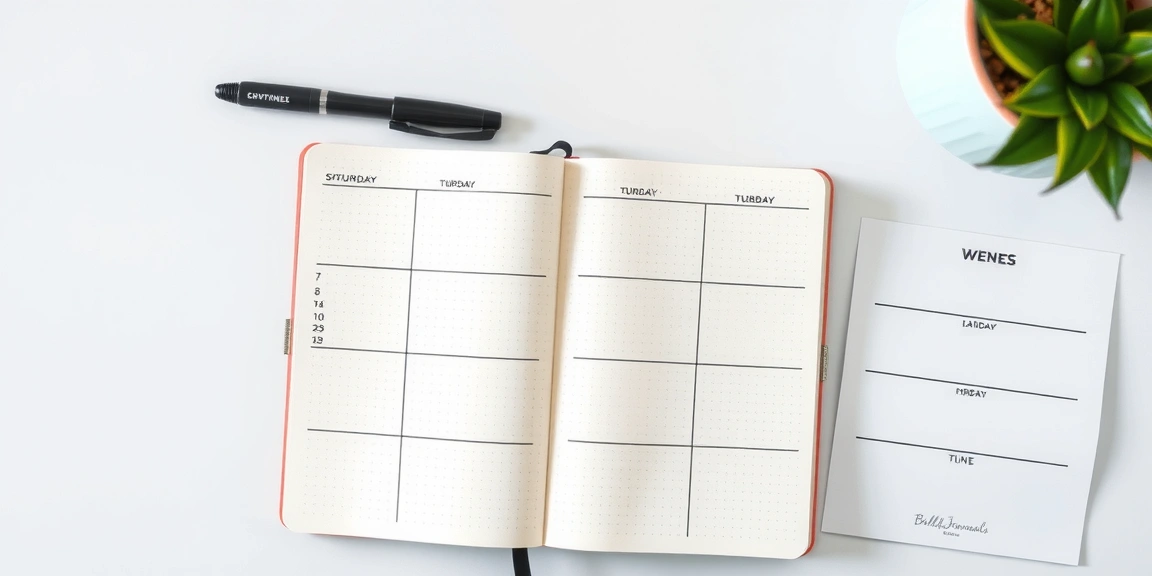
Here's an example of what your layout could look like:
- A tasks section with checkboxes or bullets to help you stay on track
- An events section for appointments, meetings, and other commitments
- A notes section for ideas, reminders, or inspiration that comes up throughout the week
For example, your weekly layout could have a grid with 3 columns and 5 rows. The top row could be your header, with the dates of the week. The next 2 rows could be your tasks and events, and the last 2 rows could be your notes and reflection space. You can adjust the size and layout to fit your needs, but the idea is to have a clear visual representation of your week.
Common Mistakes to Avoid
A bullet journal weekly layout is a customizable planner that helps you organize your tasks and boost productivity. Many users make the mistake of over-complicating their layout, leading to frustration and abandonment; in fact, a survey found that 75% of bullet journalists quit within the first three months, often due to unrealistic expectations and overly intricate designs.
You're a goal-getter, and your bullet journal weekly layout is your game plan. But, let's face it, we've all been there – you spend hours creating the perfect spread, only to feel overwhelmed and stuck when it's time to use it. You're not alone!
So, what are the common mistakes to avoid when creating your bullet journal weekly layout? Let's dive in!
- Mistake 1: Overcrowding – You try to fit too much information into your weekly spread, making it cluttered and hard to read.
- Fix: Use a future log to migrate tasks and events to future weeks. This way, you can keep your weekly spread focused on the present and upcoming tasks.
- Pro tip: Limit your weekly spread to 5-7 main tasks or events. Anything more, and you're setting yourself up for stress.
Another mistake is not leaving space for flexibility. You plan out every single day, only to have unexpected tasks and events pop up.
- Mistake 2: Lack of flexibility – You don't leave room for spontaneity or changes in your schedule.
- Fix: Leave some buffer time in your schedule for unexpected tasks or events. A good rule of thumb is to leave 20-30% of your weekly spread free for flexibility.
- Pro tip: Use a daily log to break down larger tasks into smaller, manageable chunks. This way, you can adjust your schedule as needed.
By avoiding these common mistakes, you can create a bullet journal weekly layout that actually works for you. Remember, your layout should be a tool to help you achieve your goals, not a source of stress. So, take a deep breath, and let's get creative!
Expert Tips
A bullet journal weekly layout is a customizable planner tool that helps individuals organize their time and boost productivity. By dedicating just 10-15 minutes each Sunday to planning, you can create a visually appealing and functional layout that sets you up for success, using symbols, colors, and creative formatting to make your schedule shine.
You're probably no stranger to feeling overwhelmed by your to-do list, and that's exactly why you're looking to create a bullet journal weekly layout that actually works for you. We've all been there – staring down at a sea of tasks and wondering where to start.
So, let's get started with some expert tips to help you create a system that you'll actually stick to. First, don't be afraid to keep it simple. Start with the basics: a calendar, a task list, and a space for notes. You can always add more complexity later.
- Start with a simple grid or a template with 3-5 main sections
- Use a ruler or a template to keep your lines straight and your layout tidy
- Experiment with different colors and symbols to make it visually appealing
As you get more comfortable, you can try out some advanced strategies to take your bullet journal weekly layout to the next level. For example, you could try:
- Adding a “habit tracker” to monitor your daily routines
- Creating a “brain dump” page for jotting down random thoughts and ideas
- Using different fonts or doodles to add some personality to your layout
Remember, the key is to find a system that works for you and your unique needs. Don't be afraid to try new things and adjust as needed. And most importantly, have fun with it! With a little practice and patience, you'll be creating a bullet journal weekly layout that helps you stay on top of your game.
Related Posts





Related Posts
Related Posts
✨ Our Recommendation
Editor's Pick: A sturdy dot grid journal with smooth, high-quality paper.
Your Weekly Dose of Inspiration
Journaling ideas, family tips, and gentle inspiration.