- The 5-Minute Grounding Grid: Your Emergency Reset Button
- The Ritual of Release: A Witchy-Inspired Shadow Work Spread
- Building a Grounding Habit Tracker That Actually Sticks
- The Sensory Inventory: A Deep Dive for High-Stress Moments
- Moon Phase Logging: Aligning Productivity with Natural Cycles
- Creating a Printable Grounding Toolkit
- Mistakes I've Made: When Grounding Spreads Add Pressure
- Frequently Asked Questions
- I'm new to bullet journaling. Which spread should I try first?
- Can I use these techniques digitally, in an app like GoodNotes?
- What if I miss a day on my habit tracker? Does it ruin the practice?
Ever feel like your brain is a browser with 50 tabs open, but your hands are just a tired mouse trying to close them one by one? That frantic, scattered energy is exactly what grounding techniques are designed to soothe. While exploring witchcraft 101 can introduce you to the powerful concept of energetic hygiene, you don't need a cauldron to center yourself—you just need a bullet journal and 10 minutes. I’ve filled over 20 journals in the last eight years, and I’ve learned that the most magical spreads aren't the most complex; they're the ones you actually use when anxiety starts whispering. This guide bridges that gap, offering printable-worthy inspiration with the practical “you can do this right now” reality, using tools you probably already own.
The 5-Minute Grounding Grid: Your Emergency Reset Button
When you're on the verge of overwhelm, a complicated spread is the last thing you need. The 5-Minute Grounding Grid is my absolute go-to. It’s a simple 4×4 grid, with each square measuring exactly 1.5 inches. I use a Leuchtturm1917 A5 notebook, and this fits perfectly on the top half of a page, leaving room for notes below. Time estimate? Three minutes to draw, two minutes to use. The key is speed and sensory engagement. I use my Tombow Dual Brush Pen in N95 (a cool, soft gray) to sketch the grid lines—it’s bold but not distracting. Then, with a Pigma Micron 05 in black, I label each square with a different sensory prompt. This isn't about deep introspection; it's about anchoring yourself in the present.
I tried a version of this with a 6×6 grid and tiny lettering, and it was a total failure. The squares were too small to write in comfortably, and the pressure to fit thoughtful responses made me more anxious, not less. The beauty of the 1.5-inch square is that it forces brevity. Your prompts should be immediate. For example:
- 1 Thing I See: The dust mote dancing in the sunbeam.
- 1 Thing I Hear: The hum of the refrigerator.
- 1 Texture I Feel: The smooth, cool surface of my desk.
- 1 Scent I Notice: The faint smell of coffee from my mug.
The Ritual of Release: A Witchy-Inspired Shadow Work Spread
Witchcraft 101 often discusses shadow work—the practice of confronting and integrating the parts of ourselves we suppress. This can feel daunting, but a structured journal spread makes it manageable. This two-page layout takes about 25 minutes to set up but can be used over a week. On the left page, create a “Release” section. Draw a large jar or cauldron shape, about 5 inches tall. This is where you'll “contain” difficult feelings or thoughts. I outline my cauldron with the Tombow N95 and use a Zebra Mildliner in Smoke Blue for subtle shading.
The right page is for “Integration.” I divide it into three columns, each 2.5 inches wide. Label them: “The Trigger,” “The Lesson,” and “A New Narrative.” The magic happens in the connection between the pages. When you feel a negative pattern emerge, you first write it down and “place” it in the cauldron on the left page—this is the act of acknowledgement. Then, you move to the right page and work through the columns. For “The Trigger,” be specific: “I felt a surge of panic when my manager emailed at 5 PM.” For “The Lesson,” dig deeper: “This reminds me I have a fear of not being prepared.” Finally, “A New Narrative” is where you rewrite the script: “I am capable, and an after-hours email is not an emergency.” Using the fine tip of the Micron 05 is crucial here for writing clearly in the columns. This spread turns abstract shadow work into a concrete, therapeutic process.
Building a Grounding Habit Tracker That Actually Sticks
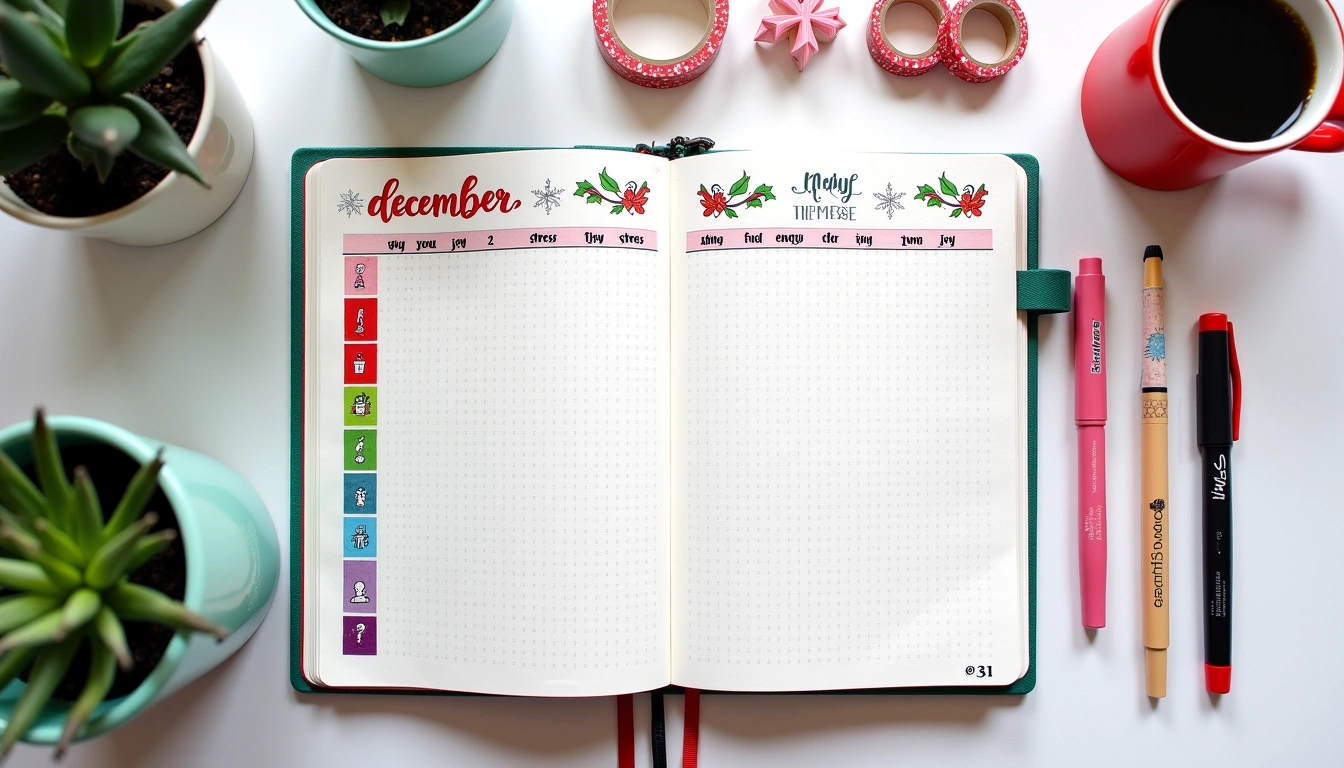
We all know we *should* practice grounding daily, but without a visual cue, it’s easy to forget. A traditional habit tracker with little squares never worked for me because it felt like another chore. The breakthrough came when I designed a tracker based on the five elements (Earth, Air, Fire, Water, Spirit)—a common concept in witchcraft that translates beautifully to mindful practices. This circular tracker takes about 15 minutes to draw. Using a compass, I draw a circle with a 3-inch diameter. I divide it into five equal wedges, like a pie, and assign each an element and a corresponding 2-minute grounding activity.
Each day, if I complete the activity, I color in the wedge for that day. The visual is powerful—over a month, you see a mandala of your consistency grow. My elemental associations are:
- Earth (Monday): Walk barefoot for 2 minutes. I color it with a Tombow Dual Brush in 992 (Light Green).
- Air (Tuesday): Practice 2 minutes of box breathing. I use Tombow 553 (Light Blue).
- Fire (Wednesday): Write down one thing I’m passionate about. Tombow 856 (Red).
- Water (Thursday): Drink a glass of water mindfully. Tombow 452 (Blue).
- Spirit (Friday): State one gratitude aloud. Tombow 620 (Pink).
The Sensory Inventory: A Deep Dive for High-Stress Moments
For those times when the 5-Minute Grid isn't quite enough, the Sensory Inventory provides a deeper anchor. This is a full-page spread I dedicate to moments of intense dissociation or panic. It takes about 10 minutes to complete in the moment, but the setup is simple. I divide the page into five sections, one for each sense, using my Tombow gray pen. Each section gets a header and then three prompts that go from broad to specific. The act of moving your hand and focusing on the physical sensation of writing with the Micron 05 is part of the grounding process itself.
For example, the “Sight” section might look like this:
- Name three colors you see.
- Find two objects that are circular.
- Notice one source of light and describe its quality.
Moon Phase Logging: Aligning Productivity with Natural Cycles
Incorporating a lunar calendar into my bullet journal was a game-changer for managing my energy, not just my time. Witchcraft 101 emphasizes the moon's phases as a template for cycles of growth and release. I set up a two-page monthly spread that features a large circle divided into the eight main phases. Each phase has a small, dedicated box (about 2×2 inches) for notes. It takes about 20 minutes to set up at the start of the month. I use a silver Gelly Roll pen to draw the moon phases for a subtle, magical touch, and my Micron 05 for the text.
The practical application is in planning tasks according to the moon's energy. During the New Moon, I focus on setting intentions and starting new projects. The Waxing Moon is for building momentum and taking action. The Full Moon is for celebration and completing tasks, and the Waning Moon is for review, release, and administrative cleanup. I aligned a major project launch with the waxing moon last quarter and was amazed at how the natural sense of building energy supported the project's momentum. This isn't mystical fluff; it’s a structured way to honor your own natural productivity ebbs and flows, preventing burnout. I reference the free lunar calendar on timeanddate.com to accurately plot the phases each month.
Creating a Printable Grounding Toolkit
Maybe you’re short on time or want a foolproof starting point. That’s where printables come in. I designed a downloadable “Grounding Toolkit” PDF that includes templates for the 5-Minute Grid and the Sensory Inventory. The key to a good printable is leaving enough white space for easy writing. I designed the grids with 1.5-inch squares and a clean, minimalist border. For printing, I always recommend 32lb premium paper—it’s thick enough to prevent bleed-through from most fineliners and brush pens, unlike standard 20lb copy paper.
When testing printables, I initially made the lines too dark, which made the page feel cluttered and intimidating. The final version uses a light gray hex color (#E0E0E0) for the template lines, which is visible enough to guide writing but recedes into the background. You can use these printables as a trial run before committing to drawing a spread, or keep a stack in a folder for instant access. Pair them with a dedicated pen like the Micron 05, which has archive-quality, waterproof ink that won't smear. This creates a portable anxiety-first-aid kit you can keep in your bag or at your desk.
Mistakes I've Made: When Grounding Spreads Add Pressure
It's easy to fall into the trap of making your bullet journal another source of performance anxiety. I learned this the hard way. A few years ago, I created an incredibly elaborate “Anxiety Arc” spread that mapped my mood against sleep, caffeine, and weather patterns. It had multiple trackers, color-coded keys, and required daily data entry. It took me 45 minutes to set up and about 10 minutes each day to maintain. Guess what? I abandoned it after a week. It was simply too much. The very tool meant to reduce stress became a stressful obligation.
The lesson was clear: complexity is the enemy of consistency, especially with grounding practices. The most effective spreads are often the simplest. They have a low barrier to entry—requiring just a pen and a minute of your time. If you find yourself procrastinating on using a spread, it's not a failure on your part; it's a sign that the spread is too complicated. Simplify it. Reduce the number of elements. Use a pencil for the initial layout if you're worried about mistakes. Your journal should be a sanctuary, not a source of stress. This is why the 5-Minute Grid remains my most successful creation—it asks for very little but gives back so much.
Grounding yourself isn't about achieving a state of perpetual calm; it's about having reliable tools to find your center when you need it most. The three most important takeaways from these spreads are their immediacy, their tactile nature, and their flexibility. The 5-Minute Grid is your emergency tool, the Sensory Inventory is for deeper work, and the Habit Tracker builds long-term resilience. My specific recommendation is to start with the 5-Minute Grid. Draw it on the first blank page of your journal tonight. Pair it with a Pigma Micron 05 pen, which provides the perfect control for quick, clear writing. This small act prepares a powerful anchor for tomorrow's potential storms, transforming your journal from a planner into a personal compass.
Frequently Asked Questions
I'm new to bullet journaling. Which spread should I try first?
Start with the 5-Minute Grounding Grid. It requires minimal setup—just a ruler and a pen—and has an immediate payoff. The low time investment (about 3 minutes to draw) means you're not committing to a complex project before you know if it works for you. Use a reliable fineliner like the Sakura Pigma Micron 05, as its consistent ink flow is forgiving for beginners. If you make a mistake, just roll with it; perfection isn't the goal. The objective is to create a functional tool that helps you in the moment, and this grid is the perfect entry point for building that habit without feeling overwhelmed.
Can I use these techniques digitally, in an app like GoodNotes?
Absolutely, you can adapt these spreads for digital use, but be mindful of the trade-offs. In GoodNotes, you can create templates using the drawing tools. However, my experience is that the physical act of handwriting with a pen on paper is a significant part of the grounding effect for many people. The tactile feedback and the slower pace are inherently calming. If you go digital, use a stylus like an Apple Pencil (2nd generation) for precision, and try to replicate the process mindfully. I'd suggest testing both methods; you might find that a hybrid approach, using a simple paper journal specifically for grounding, works best to create a clear mental separation from your screen-based tasks.
What if I miss a day on my habit tracker? Does it ruin the practice?
Not at all. In fact, learning to be kind to yourself when you miss a day is part of the practice. The habit tracker is a tool for awareness, not a report card. If you skip a day, simply leave it blank and carry on the next day. The visual of an incomplete circle or missed square is just data—it tells you that life happened. Perhaps you were overly busy, or maybe you didn't need the practice that day. The goal is long-term consistency, not perfection. I've found that allowing for flexibility actually increases the likelihood that I'll return to the practice instead of abandoning it entirely out of guilt. The tracker serves you, not the other way around.
Your Weekly Dose of Inspiration
Journaling ideas, family tips, and gentle inspiration.
Love this content?
Join the BulletJournals.net community for exclusive tips, guides, and updates.
Subscribe Free