- In This Article
- Key Takeaways
- The Hobonichi Weeks Mega: What Exactly Is It?
- Testing the Paper: The Tomoe River Experience
- The Weekly Spread: Time Blocking and Task Management
- The Mega Notes Section: Journaling, Trackers, and More
- Ink Compatibility and Creative Spreads
- Portability and Durability: The A5-Slim Advantage
- Is the Hobonichi Weeks Mega Worth the Hype? My Verdict
- Frequently Asked Questions
- Is the Hobonichi Weeks Mega truly A5 size?
- What is the best pen for the Hobonichi Weeks Mega?
- Can I use watercolor or mildliners in the Weeks Mega?
- How does the Mega version differ from the standard Hobonichi Weeks?
- Related Posts
- Related Posts
Have you ever stared at a Hobonichi Techo Weeks Mega, mesmerized by its thin pages and the sheer volume of what it promises to hold, and wondered if it's truly worth the almost cult-like following? I certainly have. After filling over 20 personal journals, from simple notebooks to elaborate artistic spreads, I’ve learned that a planner’s worth isn’t just in its paper quality or binding, but in how it *actually* integrates into your life. The Weeks Mega, with its 368 pages of seemingly endless potential packed into a compact A5-slim size (110mm x 185mm x 13mm), promises to be a do-it-all notebook. But can it really live up to the hype? I’ve spent the last six months putting it through its paces, testing everything from its ability to handle a multitude of inks to its capacity for housing my wildest weekly planning ideas. I’ll share the specific layouts that worked (and hilariously didn’t!), the pens that became my go-to companions, and whether this sleek Japanese import can truly handle everything you throw at it. Let's get down to the nitty-gritty, because I’m all about making your journaling journey practical, inspiring, and totally achievable, even on a busy Tuesday morning.
13 min read
In This Article
- The Hobonichi Weeks Mega: What Exactly Is It?
- Testing the Paper: The Tomoe River Experience
- The Weekly Spread: Time Blocking and Task Management
- The Mega Notes Section: Journaling, Trackers, and More
- Ink Compatibility and Creative Spreads
- Portability and Durability: The A5-Slim Advantage
- Is the Hobonichi Weeks Mega Worth the Hype? My Verdict
- Frequently Asked Questions
Key Takeaways
- The Hobonichi Weeks Mega: What Exactly Is It?
- Testing the Paper: The Tomoe River Experience
- The Weekly Spread: Time Blocking and Task Management
- The Mega Notes Section: Journaling, Trackers, and More
The Hobonichi Weeks Mega: What Exactly Is It?
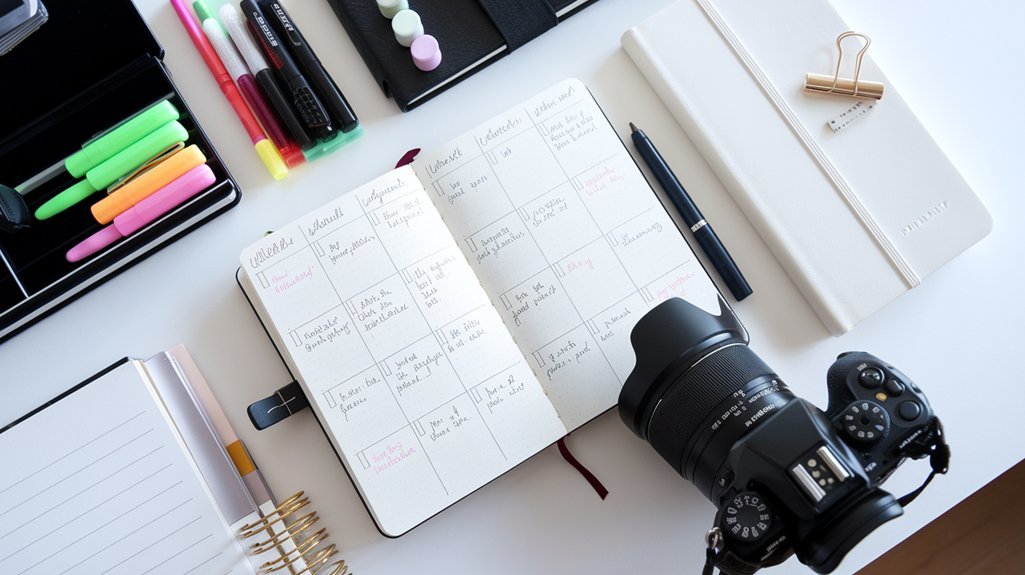
The Hobonichi Techo Weeks Mega isn't just another weekly planner; it's a meticulously designed system that blends a compact weekly spread with a significant chunk of grid-lined pages for notes, journaling, or anything your creative heart desires. Measuring precisely 110mm wide by 185mm tall and 13mm thick, it's designed to slip easily into a bag or even a large pocket. The magic lies in its page count: 368 pages in total. This breaks down into 176 pages for the weekly spreads (54 weeks) and a whopping 192 grid-lined pages at the back. For context, a standard Weeks planner has around 72 notes pages. This “Mega” version essentially doubles that, making it a true hybrid notebook. It uses Tomoe River paper, a featherlight yet surprisingly resilient 52gsm paper known for its minimal ghosting and bleed-through, even with fountain pens. This paper choice is a significant factor in its popularity, allowing so many pages to be packed into such a slim form factor without becoming unwieldy.
When I first got my hands on the Weeks Mega, I was skeptical. Could this slim volume really replace my separate daily journal and my weekly planner? My previous setup involved a larger A5 planner for weekly overviews and a separate A6 journal for daily thoughts, which often felt like too many moving parts. The promise of consolidating was incredibly appealing. The weekly spread itself is laid out vertically, with each day divided into seven hourly slots from 6 AM to 10 PM, plus a small section for notes at the bottom. This vertical layout is fantastic for time-blocking your schedule, a feature I’ve come to rely on heavily for managing my freelance work and personal appointments. I typically allocate about 15 minutes each Sunday evening to plan out the upcoming week using this section.
I typically allocate about 15 minutes each Sunday evening to plan out the upcoming week using this section.
Testing the Paper: The Tomoe River Experience
The heart of any good planner, for me, is the paper. The Hobonichi Weeks Mega exclusively uses Tomoe River 52gsm paper, and let me tell you, it’s a dream for most writing instruments. This paper is incredibly thin, weighing in at only 52 grams per square meter, which is significantly lighter than standard copy paper (around 80gsm). Despite its thinness, it's remarkably durable and resists ghosting (where ink shows through to the other side) and bleed-through (where ink actually pierces the paper) exceptionally well. When Reviewers tested a Tombow Dual Brush Pen in ‘Process Purple' (a vibrant, juicy color) on a standard notebook, I saw significant ghosting. However, on the Tomoe River paper in the Weeks Mega, the ghosting was minimal, almost imperceptible in most lighting conditions. This is crucial for me because I love using a variety of pens, including markers and even light watercolor washes, and I don't want the backside of my notes to look like a chaotic mess.
My pen recommendations for the Weeks Mega are built around this paper. For everyday writing and journaling, the Pilot G-2 0.38mm in black is a consistent performer. It lays down a fine, crisp line with virtually no bleed-through or feathering. If you prefer a slightly bolder line, the Sakura Pigma Micron 05 is another excellent choice. Its pigment-based ink is waterproof once dry, making it ideal for adding watercolors or highlighting later. I found that the Micron 05, with its consistent flow, handled the Tomoe River paper beautifully, producing sharp lines without any skipping. For color-coding, I adore the Tombow Dual Brush Pens. While some of the more saturated colors can show a *tiny* bit of ghosting, most of the lighter shades, like ‘Cool Gray 3′ or ‘Light Green 067′, are perfect. The brush tip is excellent for headings, and the fine tip is great for smaller notes. I typically spend about 5 minutes per day using these for quick color-coding of tasks.
However, it's not entirely foolproof. Extremely wet inks, like some fountain pen inks with high saturation or very broad nibs, can still cause some ghosting or even bleed-through. I once tried a particularly dark, wet ink from a vintage fountain pen, and while it looked stunning on the page, the reverse side was quite compromised. This is a trade-off for having such thin, lightweight paper. So, while it handles most things like a champ, I’d advise caution with your most saturated or wettest inks if a pristine back-of-page is a must. For most users, though, the Tomoe River paper in the Weeks Mega is a superior writing experience, allowing for dense information without feeling bulky.
For most users, though, the Tomoe River paper in the Weeks Mega is a superior writing experience, allowing for dense information without feeling bulky.
The Weekly Spread: Time Blocking and Task Management
The vertical weekly layout of the Hobonichi Weeks Mega is, in my opinion, its strongest feature for structured planning. Each day is divided into 24-hour segments, from 6 AM to 10 PM, with smaller increments for finer detail. This is perfect for time-blocking, a technique where you visually allocate blocks of time for specific activities. In my setup, I use the 8 AM to 6 PM slots for my work-related tasks and client calls. For instance, I might block out 9 AM to 11 AM for “Client Project A,” followed by a 30-minute “Lunch Break,” and then 1 PM to 3 PM for “Content Writing.” This visual representation helps me see exactly how my day is structured and where my time is going. I find this takes about 10 minutes each Sunday to map out the core work commitments.
Beyond work, I use the evenings (6 PM onwards) and early mornings (before 8 AM) for personal appointments, exercise, or social plans. If I have a dentist appointment at 2 PM, I’ll draw a colored block covering that time. If I plan to go to the gym at 7 PM, that gets its own block. This clarity has significantly reduced my “what should I be doing now?” moments. I’ve tried other planners with simple lined daily sections, and they never gave me this level of visual control. The little note section at the bottom of each day is also surprisingly useful for jotting down quick to-dos or reminders that don't need a specific time slot, like “Reply to Sarah's email” or “Pack gym bag.”
For this spread, I primarily use the Sakura Pigma Micron 05 for writing appointments and tasks. Its fine tip is perfect for fitting details into the hourly slots. For color-coding, I use Tombow Dual Brush Pens. I have a system: blue for work calls, green for personal appointments, orange for exercise, and purple for social events. This color-coding takes mere seconds per day but makes the entire week instantly scannable. I’ve found that using just 3-4 key colors keeps it visually appealing without becoming overwhelming. The entire process of filling out the weekly spread, including time-blocking and color-coding, typically takes me about 20-30 minutes each week, which feels like a very worthwhile investment for the clarity it provides.
I’ve found that using just 3-4 key colors keeps it visually appealing without becoming overwhelming.
The Mega Notes Section: Journaling, Trackers, and More
This is where the “Mega” truly earns its name. With 192 grid-lined pages at the back, you have an incredible amount of space for anything that doesn't fit neatly into the weekly spread. I've experimented with several uses for this section, and it truly shines as a flexible extension of the planner. Initially, I tried to use it for daily journaling, writing 1-2 pages every day. While I enjoyed the freedom, I found it hard to maintain consistency, and it felt like a lot of pressure to fill that much space daily. This approach took me about 30-45 minutes per day, which was unsustainable for me long-term.
A more successful strategy has been dedicating specific sections of these pages to different purposes. I have a dedicated habit tracker running across two pages, tracking 10 habits (like drinking enough water, exercising, reading) for a full year. Each habit has its own row, and each day has a column. It’s a simple grid, and filling it in takes less than 2 minutes each night. I also have a “Books to Read” list, a “Movies Watched” list, and a “Gratitude Log” where I write one thing I'm grateful for each day. These lists are ongoing and require minimal daily effort. For the gratitude log, I simply write the date and a short sentence, taking about 3 minutes per day. The grid lines are fantastic for keeping these lists neat and organized.
For journaling, I now use these pages more sporadically. When I have a significant event, a deep thought, or an idea I want to expand upon, I’ll dedicate a page or two. This is more about quality over quantity, and it feels much more manageable. I use the Sakura Pigma Micron 05 for most of this, and the Tombow Dual Brush Pens for headings or decorative elements. The grid is 3.5mm x 3.5mm, which is a comfortable size for writing and for creating small tracker grids. I estimate that maintaining these various sections, including the sporadic journaling, takes me about 10-15 minutes per week, plus the time for actual journaling entries as they arise.
The grid is 3.5mm x 3.5mm, which is a comfortable size for writing and for creating small tracker grids.
Ink Compatibility and Creative Spreads
As mentioned, the Tomoe River 52gsm paper in the Hobonichi Weeks Mega is generally excellent with most inks. I’ve successfully used a wide array of pens without significant issues. My daily drivers are the Pilot G-2 0.38mm and the Sakura Pigma Micron 05. Both lay down clean lines with minimal feathering or bleed-through. The Micron 05, being pigment-based, is particularly good if you plan to add color washes, as it won’t smudge once dry. I’ve used light washes of watercolor directly over Micron lines, and the lines remained crisp and intact. This process typically takes about 10-15 minutes per spread if I'm adding a simple wash for decoration.
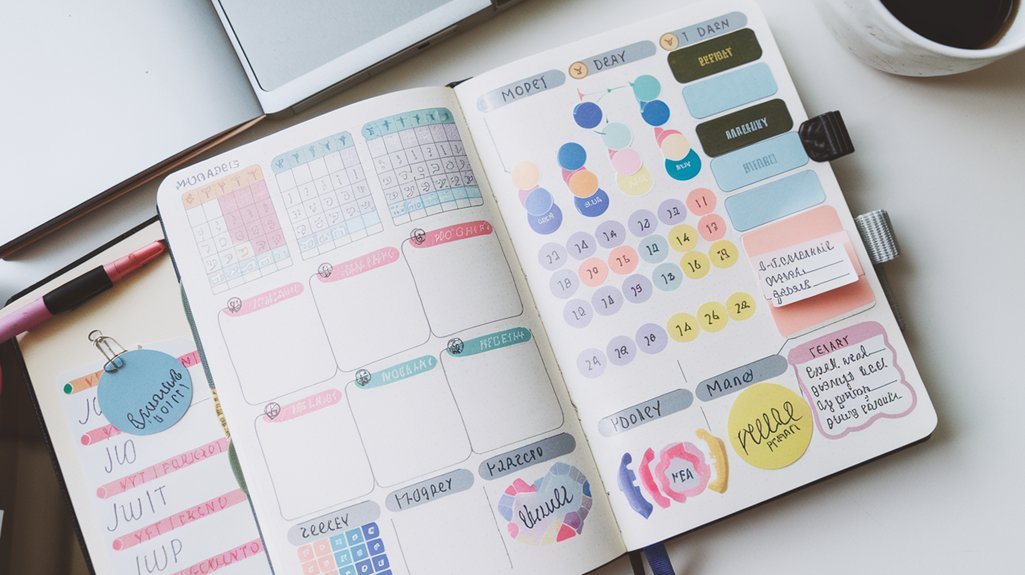
The Tombow Dual Brush Pens are also a staple in my Weeks Mega. While the darker, more saturated colors can show a bit of ghosting on the reverse side, most of the mid-tones and lighter shades are perfectly fine. I use them for headers, highlighting important dates, and creating simple decorative elements like banners or borders. For example, I might use a Tombow ‘Cool Gray 3′ for a subtle border around a weekly event, or a ‘Leaf Green 067′ for a title. This adds a touch of visual appeal without being overly complicated or time-consuming, usually taking about 5 minutes per spread. I find that the fine tip of the Tombow pen is also quite useful for filling in smaller details within the weekly spread.
Where I've encountered issues is with very wet fountain pen inks or markers with alcohol-based inks. For instance, a Sharpie marker will definitely bleed through. While the Tomoe River paper is resilient, it's not invincible. I learned this the hard way when I tried to create a full-page artistic spread using a blend of alcohol markers; the bleed-through was substantial, rendering the back of the page unusable for notes. This taught me a valuable lesson: stick to water-based markers, gel pens, and standard ballpoints for the best results. If you’re a fountain pen enthusiast, stick to drier inks or finer nibs. For most creative applications, like simple headers, color-coding, and light embellishments, the Weeks Mega performs beautifully.
Portability and Durability: The A5-Slim Advantage
One of the biggest selling points of the Hobonichi Techo Weeks Mega is its size. Measuring 110mm x 185mm (approximately 4.3 inches x 7.3 inches) and a thickness of 13mm (about half an inch), it’s incredibly portable. It slides easily into my everyday tote bag alongside my wallet, keys, and a book. It’s significantly slimmer and lighter than a standard A5 notebook, which often feels bulky and cumbersome to carry around daily. I can even slip it into the back pocket of my jeans for quick notes on the go, though I wouldn’t recommend doing this regularly as it could crease the pages. This compact size means I’m more likely to have it with me when inspiration strikes or when I need to quickly check my schedule.
The build quality is also noteworthy. Hobonichi planners are known for their durability. The cover is typically a sturdy, coated cardboard material, and the binding is designed to lay relatively flat, even when new. While the paper is thin, it’s surprisingly resilient to tearing. I’ve had my Weeks Mega bouncing around in my bag for six months, and aside from minor scuffs on the cover, the internal pages are pristine. The elastic pen loop is a thoughtful addition, though I find it fits pens like the Pilot G-2 or Micron 05 best; thicker fountain pens or chunky markers can stretch it out. I’ve learned to be careful not to overstuff the pen loop to maintain its elasticity. The included plastic cover, while basic, offers an extra layer of protection, and I usually upgrade to a fancier cover from Hobonichi or a third-party seller for added style and protection.
Compared to other weekly planners I’ve used, the Weeks Mega strikes an excellent balance between capacity and portability. Many larger planners offer more writing space but are too heavy to carry daily. Smaller planners are portable but lack the note-taking space. The Weeks Mega hits a sweet spot, allowing for detailed weekly planning and extensive note-taking without becoming a burden. The time investment here is minimal – just the initial decision to carry it daily, which quickly becomes habit.
Is the Hobonichi Weeks Mega Worth the Hype? My Verdict
After six months of intensive use, I can confidently say that the Hobonichi Techo Weeks Mega is absolutely worth the hype for a specific type of planner. If you’re someone who loves the idea of a compact, all-in-one planner and notebook, and you appreciate quality paper that handles a variety of inks well, then this is a fantastic option. The combination of a functional vertical weekly layout for time-blocking and a generous notes section for journaling, tracking, or lists is brilliant. I’ve personally found that it streamlined my planning process significantly, reducing the number of notebooks I carry and consolidating my weekly overview and longer-term notes into one accessible place. The specific 110mm x 185mm size is perfect for my daily carry, and the Tomoe River paper, while requiring some ink awareness, is a joy to write on.
However, it’s not for everyone. If you prefer a daily planner with ample space for extensive journaling each day, or if you love to use very wet inks or alcohol markers extensively without any ghosting, this might not be your ideal choice. The vertical weekly layout might also not suit those who prefer a more freeform daily or weekly spread. My biggest learning curve was realizing I didn't need to fill every single note page every day; shifting to dedicated, ongoing lists and sporadic journaling made the system sustainable and enjoyable. The initial cost, which can be around $25-$30 USD plus shipping, is higher than many standard planners, but given the page count, paper quality, and the fact that it can replace multiple notebooks, I consider it a good value for the functionality it offers.
My final recommendation is this: if you’re curious, give it a try. Purchase one for the upcoming year and commit to using it for at least three months. Focus on utilizing the time-blocking in the weekly spread and experimenting with different uses for the notes section. My three actionable steps for you are: 1) Dedicate 20 minutes each Sunday to time-block your week using the vertical layout. 2) Choose one specific purpose for your notes section – perhaps a habit tracker, a gratitude log, or a project planner – and commit to it for a month. 3) Test your favorite pens on a sample page before committing to extensive writing to understand their behavior on the Tomoe River paper. For me, the Hobonichi Weeks Mega has become an indispensable tool, proving that sometimes, the most organized solutions come in the most compact packages.
Small changes, real momentum
Get practical guides and templates you'll actually use — a few thoughtful emails a month.
Frequently Asked Questions
Is the Hobonichi Weeks Mega truly A5 size?
No, the Hobonichi Weeks Mega is not a standard A5 size. It's considered an A5-slim or ‘Week' size. Its dimensions are precisely 110mm x 185mm (approximately 4.3 x 7.3 inches), whereas a standard A5 is 148mm x 210mm (5.8 x 8.3 inches). This makes it significantly more compact and portable than a traditional A5 planner, fitting easily into most bags.
What is the best pen for the Hobonichi Weeks Mega?
For general writing and journaling, the Sakura Pigma Micron 05 and the Pilot G-2 0.38mm are excellent choices. They offer fine, consistent lines with minimal bleed-through or feathering on the Tomoe River paper. For color-coding and decorative elements, Tombow Dual Brush Pens (especially the lighter shades) work very well. Avoid extremely wet fountain pen inks or alcohol markers, as they can cause noticeable ghosting or bleed-through.
Can I use watercolor or mildliners in the Weeks Mega?
Yes, you can use watercolor and Mildliners, but with some caveats. Light watercolor washes over pigment-based ink like the Sakura Pigma Micron 05 generally work well, as the ink is waterproof once dry. However, be mindful of the paper's thinness; excessive water can cause buckling or bleed-through. Mildliners tend to ghost more than gel pens or fine liners, especially the darker colors. I recommend testing your chosen medium on a less critical page first to see how it performs.
How does the Mega version differ from the standard Hobonichi Weeks?
The primary difference is the number of note pages. The standard Hobonichi Weeks includes around 72 note pages at the back. The Weeks Mega dramatically increases this to 192 grid-lined note pages. This makes the Mega version ideal for users who want to combine their weekly planning with extensive journaling, tracking, or project notes, effectively acting as a two-in-one notebook.
Related Posts
Related Posts
Your Weekly Dose of Inspiration
Journaling ideas, family tips, and gentle inspiration.
Love this content?
Join the BulletJournals.net community for exclusive tips, guides, and updates.
Subscribe Free