
You don't need artistic skills to start a bullet journal—just grab any notebook and pen. Begin with a simple index page, then create a future log for upcoming months, a monthly calendar using basic numbers in a grid, and daily logs with bullet points for tasks, events, and notes. Use functional symbols like dots for tasks and X's for completions instead of decorative elements. The system's power comes from consistent logging, not pretty spreads, and focusing on what genuinely helps you organize your life will reveal even more ways to enhance your setup.
Key Takeaways


- Bullet journaling prioritizes function over aesthetics; you only need a notebook and pen to begin tracking tasks effectively.
- Use simple rapid logging with bullets, short sentences, and basic symbols instead of elaborate decorations or artistic designs.
- Start with essential components: an index for navigation, future log, monthly log, and daily log using minimalist layouts.
- Create practical spreads with plain grids, numbered calendars, and equal boxes rather than ornate headers or illustrations.
- Build consistency by anchoring brief five-minute journaling sessions to existing daily habits and addressing real-life needs.
Understanding the Core Bullet Journal Method: Function Over Aesthetics
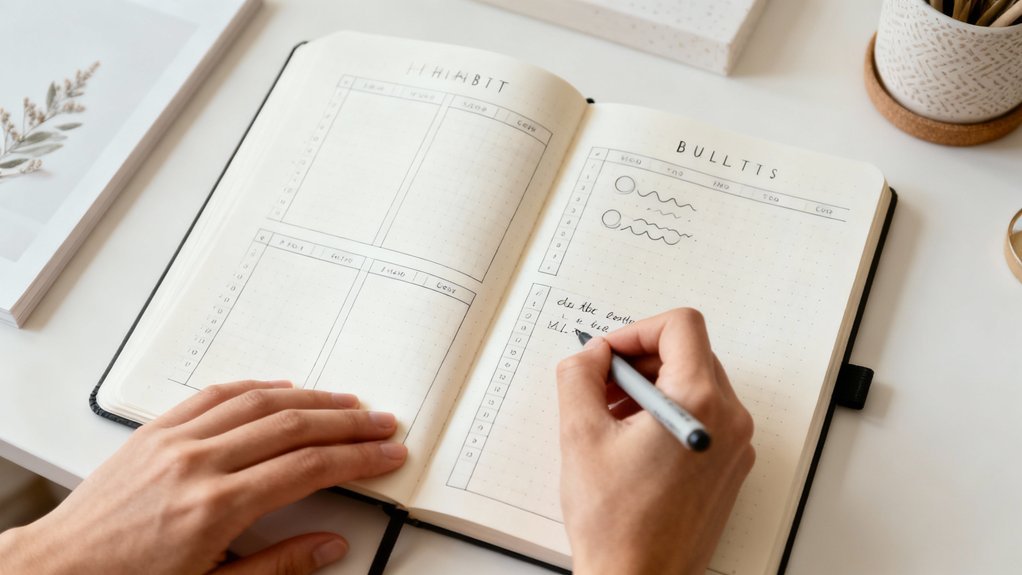
The Bullet Journal method strips away unnecessary complexity to reveal a simple, flexible planning system. Creator Ryland Carroll designed it as a functionality focus tool, not an art project. You're working with rapid logging: short sentences paired with bullets that categorize tasks, events, and notes. That's it.
This minimalistic design operates through three core components. First, you'll use an index to locate information quickly. Second, collections organize related entries by topic or project. Third, migration moves incomplete tasks forward, forcing you to evaluate what truly matters.
You don't need decorative headers, elaborate spreads, or color-coded systems to make this work. Those additions can improve your journal, but they're optional improvements, not requirements. The power lies in consistent logging and regular reflection.
When you prioritize function over form, you'll discover a system that adapts to your needs rather than constraining them. The method helps you slow down and clear mental clutter, reconnecting with what truly matters for clarity and focus. Start simple. Build complexity only where it serves you.
Essential Supplies You Actually Need (Spoiler: It's Less Than You Think)
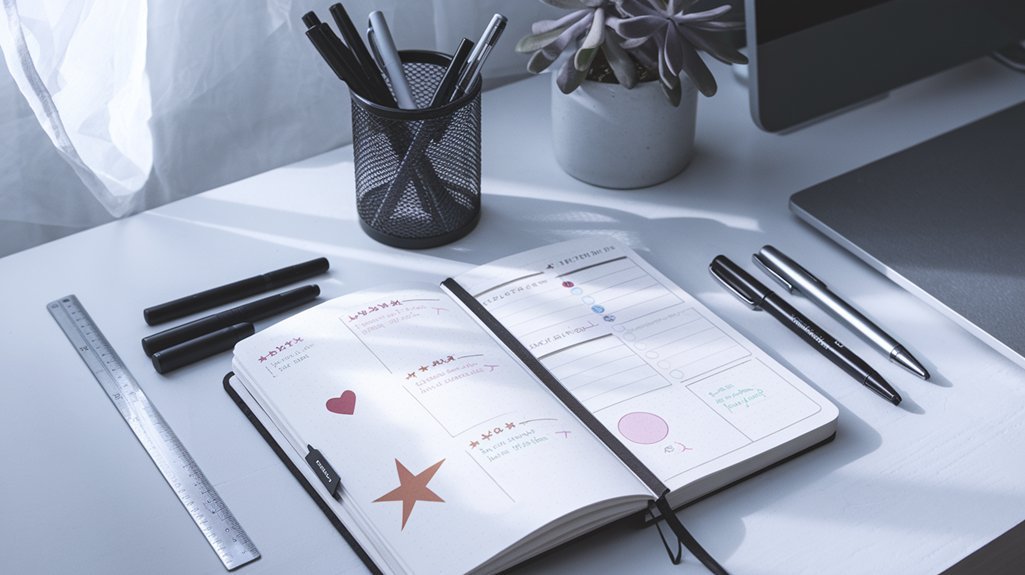
Contrary to what social media suggests, you need exactly two items to start bullet journaling: a notebook and a pen.
Notebook options range from basic composition books ($2) to premium leuchtturm1917s ($25). For budget-friendly choices, test paper quality with your preferred pen types first—bleed-through defeats the purpose.
Dotted grids offer the most versatility without constraining your layout innovation.
Pen types matter less than consistency. Pick one reliable pen and stick with it. Gel pens, ballpoints, or felt-tips all work.
Ergonomic tools become important if you're journaling extensively, but don't overthink this initially.
Essential accessories you'll eventually want: a ruler for clean lines and page flags for quick navigation. These organizational aids improve functionality without complicating your system.
Skip the washi tape, stencils, and elaborate minimalist supplies for now.
You're building a productivity system, not a portfolio. Start with two items. Add tools only when specific needs emerge.
If you want pre-made options to simplify your setup, stickers and printable spreads can make the process more enjoyable without requiring artistic skills.
Setting Up Your First Bullet Journal in Under 30 Minutes
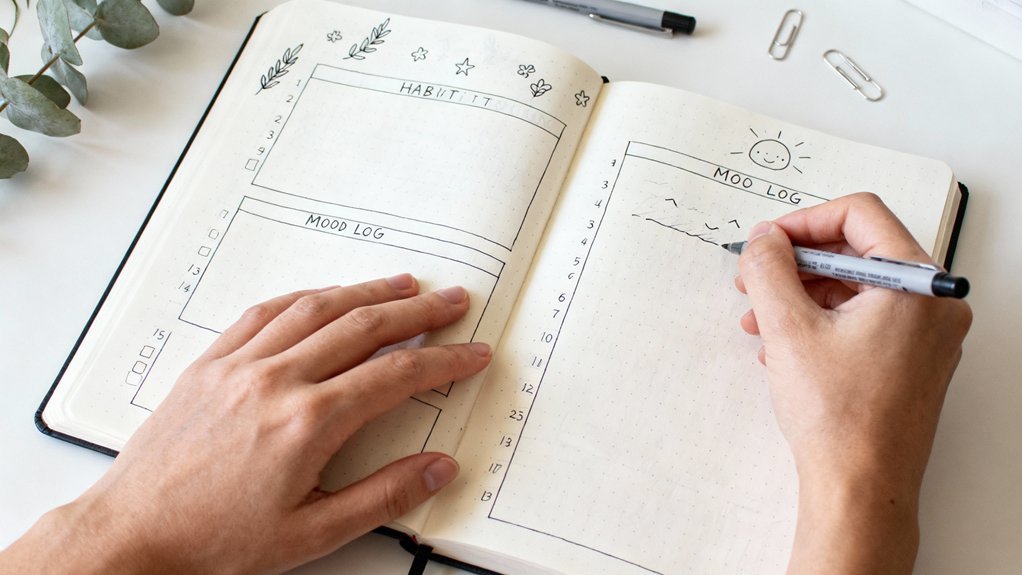
Your first bullet journal setup requires four core components: an index, a future log, a monthly log, and a daily log.
This quick setup simplifies the bullet journal basics into a functional system you'll actually use:
- Index (Pages 1-2): Number your pages as you create them, then list each section here with corresponding page numbers for instant navigation.
- Future Log (Pages 3-4): Divide four pages into six boxes—one per month—to capture upcoming events and tasks beyond your current month.
- Monthly Log (Pages 5-6): Create a calendar view on the left page and a task list on the right. This becomes your month-at-a-glance reference point.
- Daily Log (Page 7+): Write today's date and start logging tasks, events, and notes as they happen. No advance preparation needed.
You're now ready to capture everything. Start using it immediately—refinement happens through practice, not planning.
Simple, No-Art-Required Layouts That Actually Work
With your basic structure in place, you'll need layouts that organize information without turning journaling into an art project. Minimalist designs work because they prioritize function over decoration—straight lines, boxes, and columns handle 90% of your tracking needs.
Minimalist layouts prioritize function over decoration—straight lines, boxes, and columns handle most tracking needs without unnecessary complexity.
Start with these functional layouts: a simple monthly calendar using numbers in a grid, a weekly spread with seven equal boxes, and a task list with practical symbols (dots for tasks, X's for complete, arrows for migrated). These efficient tracking methods require only a ruler and pen.
Your daily pages need just three sections: scheduled items, tasks, and notes. No elaborate headers necessary. Simple organization means you'll actually maintain the system instead of abandoning it when time gets tight.
This approach preserves creative freedom—you're building a tool that adapts to your workflow, not creating museum-worthy spreads. Innovation happens when systems remove friction, not add complexity.
Making Your System Stick: Building a Sustainable Journaling Habit
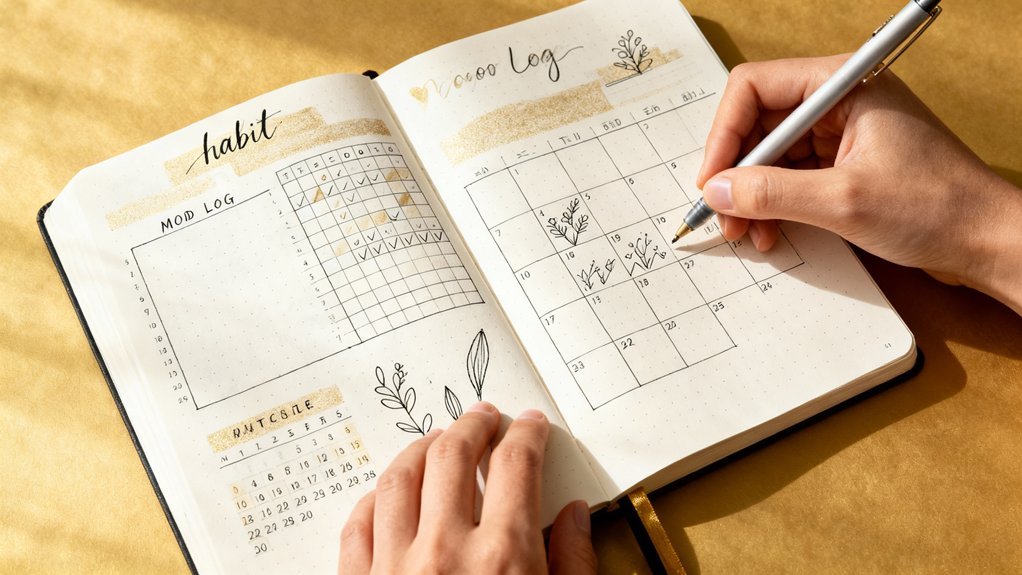
The best bullet journal system fails if you don't open it consistently. Change your journal from an abandoned notebook into a daily tool with these effective methods:
- Anchor your journaling to existing habits. Place your journal beside your morning coffee or evening routine. This time management approach utilizes habit tracking through environmental cues rather than relying on motivation techniques alone.
- Start with five-minute sessions. Use simple journaling prompts for personal reflections instead of elaborate spreads. Consistency tips emphasize that brief, regular entries beat sporadic perfection.
- Recruit accountability partners. Share your goal-setting progress weekly with someone who'll check in on your commitment.
- Track what matters to you. Design pages around your actual life, not Instagram aesthetics. When your journal solves real problems—managing tasks, processing thoughts, monitoring progress—you'll naturally return to it.
Your sustainable system prioritizes function over form, ensuring long-term engagement.
Frequently Asked Questions
Can I Switch From a Digital Planner to Bullet Journaling Mid-Year?
You can start your digital planner shift to bullet journaling anytime.
Begin by migrating your current commitments into a fresh journal spread. You'll immediately discover bullet journal benefits like increased mindfulness and reduced screen time.
Don't worry about perfection—simple layouts work brilliantly. Transfer only active tasks and appointments, leaving behind completed items.
This mid-year change actually creates a natural reset point, helping you establish more intentional productivity habits moving forward.
What Do I Do if I Miss Several Days of Journaling?
Like a telegraph operator moving forward, don't waste energy backfilling every missed day.
Here's your catch up strategies: create a single “reset” page summarizing what you missed, then jump straight to today's date.
This journaling tips approach keeps you moving forward without perfectionist paralysis. You can reference missed events through rapid logging or skip them entirely.
What matters isn't documenting every moment—it's maintaining momentum. Your journal adapts to your life, not the reverse.
How Do I Bullet Journal if I Have Messy Handwriting?
Messy handwriting won't hold you back—focus on legibility over perfection.
Try basic handwriting techniques like writing larger, using guidelines, or experimenting with all-caps. You'll discover creative layouts that minimize writing, incorporating more symbols, checkboxes, and abbreviated codes instead.
Consider using stencils, stamps, or typed labels for headers. Your bullet journal's purpose is functionality, not calligraphy.
Embrace your natural style and prioritize clear organization. The system works because it's adaptable to your unique needs, not because it's pretty.
Can Bullet Journaling Help With Anxiety or Mental Health Issues?
Think of bullet journaling as your mind's reset button. Yes, it'll greatly help with anxiety and mental health issues.
You're practicing mindfulness techniques each time you organize thoughts on paper, creating deliberate pauses in your day. The systematic act of tracking moods, gratitude, and triggers provides stress relief while revealing patterns you'd otherwise miss.
You'll change scattered worries into actionable data, giving you control when everything feels chaotic. It's therapeutic structure, not art therapy.
Should I Show My Bullet Journal to Others or Keep It Private?
Your bullet journal's privacy depends entirely on your sharing preferences and comfort level. If it's primarily for personal reflection, keeping it private protects your mental space and authentic expression.
However, you can create separate “public” pages showcasing productivity systems while maintaining private sections for deeper thoughts. There's no wrong choice—experiment with both approaches. You'll discover what energizes your practice.
Consider your journal's purpose: self-development tool or community connection? Let that guide your decision.
Conclusion
You've got everything you need to start your bullet journal today. Remember, don't let perfect be the enemy of good—your journal exists to serve you, not impress anyone else. Pick up your notebook, set up those basic spreads, and start tracking. You'll refine your system as you go, discovering what works through doing, not planning. The best bullet journal isn't the prettiest one; it's the one you'll actually use tomorrow.
Related Posts





Beginner Starter Kit
Disclosure: Affiliate links below. We earn from qualifying purchases.
Everything you need to get started:


Budget Option (~$20):
Premium Option (~$35):


Related Posts
Related Resources
- Best Supplies Buying Guide
- Beginner's Guide to Bullet Journaling
- Browse All Spreads
- Browse All Trackers
- Free Templates