By the end of this guide, you will have a functioning lifestyle bullet journal tailored to your rhythms, a clear grasp of the original rapid‑logging syntax, and a set of sustainable review habits that keep the system useful rather than ornamental. You will know exactly which notebooks, pens, and accessories merit space in your kit—and which marketing claims to ignore.
Disclosure: This post contains affiliate links. If you click through and make a purchase, we may earn a small commission at no extra cost to you. Thank you for supporting this site!
Choosing Your Foundation: Notebooks, Paper Weight, and Binding
The notebook is the single most consequential purchase you will make. Paper weight, binding style, and page count dictate whether ghosting, feathering, or spine failure derails the practice before month three. The original Bullet Journal® notebook from Leuchtturm1917 remains the benchmark: 120 g/m² acid‑free paper, 251 numbered pages, two ribbon markers, and a hardcover that lays flat at 180 degrees. Leuchtturm’s manufacturer specs list a 0.12 mm paper thickness and a 1.5 mm cover board; independent stress tests by The Wirecutter (2023 update) confirmed the spine survives 1,200 open‑close cycles without cracking. Retail price hovers around $28–$32 depending on colorway.
If you prefer a softer hand, the Archer & Olive B5 dot‑grid runs 160 g/m²—thick enough that even a Pilot Parallel 6.0 mm calligraphy nib shows zero show‑through. Archer & Olive’s own spec sheet cites 0.18 mm sheet caliper and a sewn signature binding rated for 2,000 flexes. Across 1,400+ owner reports on Reddit’s r/bujo and the brand’s Discord, the most common complaint is the $38–$42 price tag, not performance. For a budget entry, the Scribbles That Matter A5 Pro (120 g/m², 180 pages, $16–$19) delivers acceptable feathering resistance with a Pilot G2 0.7 mm; however, 340+ Amazon reviewers note the cover corners dent after six months of daily bag carry.
Page count determines migration frequency. A 128‑page notebook forces a quarterly reset; 240+ pages stretches to six months. Ryder Carroll, the system’s creator, advises in The Bullet Journal Method (2021 revised edition) that a fresh notebook every six months aligns with the natural review cadence of the Future Log. If you journal daily with three to five tasks per day plus a habit tracker, expect to consume 1.2–1.5 pages per day. At that rate, a 251‑page Leuchtturm lasts roughly 170 days—just shy of six months. Plan your budget accordingly: two notebooks per year at $30 each equals $60 annually before pens.
Dot grid versus lined versus blank is largely preference, but dots at 5 mm spacing (standard across Leuchtturm, Rhodia, and Archer & Olive) provide enough structure for tables and habit grids without the visual noise of lines. Rhodia’s Webnotebook (90 g/m², $24) uses a 5 mm dot grid on Clairefontaine paper; published reviews from JetPens and Goulet Pens consistently rate its show‑through resistance higher than Moleskine’s 70 g/m² offering, which exhibits visible ghosting with a Uni‑ball Signo 0.38 mm. If fountain pens are in your rotation, avoid Moleskine entirely—its coated paper causes ink pooling and 12–15 second dry times per Goulet’s nib‑width testing matrix.
Cover durability matters if the journal lives in a backpack. Leuchtturm’s 1.5 mm binder board withstands corner compression of 8 kg per manufacturer drop-test data; Archer & Olive’s 2 mm board handles 10 kg. Softcover options like the Midori MD Notebook (80 g/m², $14) sacrifice structure for weight—180 g versus 340 g for a Leuchtturm A5—but the exposed spine invites creasing. For a first lifestyle journal, prioritize a hardcover, sewn signature, 120 g/m² minimum, and at least 200 pages. That specification set eliminates 80 percent of the sub‑$15 market and saves you a premature migration.
The Core System: Rapid Logging, Migration, and Collections
Rapid logging is the syntax that separates bullet journaling from decorative planning. The original key uses five symbols: a solid bullet (•) for tasks, an open circle (○) for events, a dash (–) for notes, a right arrow (→) for migrated tasks, and a left arrow (←) for scheduled tasks. Carroll’s 2021 text emphasizes that the key is mutable—add a star (*) for priority, an exclamation mark (!) for inspiration, or an eye (👁) for research items—but the first 30 days should use only the default five. Across 2,300+ responses in the 2023 Bullet Journal Community Survey (conducted by Bujo U, a third‑party education platform), 78 percent of users who customized the key before day 14 reported “symbol fatigue” and reverted to the default within 60 days.
Migration is the engine that prevents task hoarding. At the end of each day, open tasks receive one of three fates: complete (×), migrate (→) to the next daily log or a future monthly log, or delete (strikethrough). The monthly migration session—typically 15–20 minutes on the last evening of the month—requires scanning every daily log for open bullets. In a 30‑day month with 1.3 pages per day, that’s 39 pages to review. Practitioners who time the session report 12–18 minutes for the first month, dropping to 8–10 minutes by month three as familiarity builds. The 2022 Bujo U survey found that users who skipped monthly migration accumulated an average of 47 open tasks, versus 9 for consistent migrators.
Collections are thematic pages that live outside the daily sequence: book lists, project plans, packing checklists, or a “Gifts Given” tracker. The index, reserved on the first four pages, maps each collection to its page number. Leuchtturm’s pre‑printed index accommodates 120 entries; if you exceed that, allocate a second index spread at the back. Carroll recommends numbering pages as you go rather than pre‑numbering 250 pages—an approach supported by 91 percent of 2023 survey respondents who tried both methods. Pre‑numbering invites blank‑page anxiety; on‑the‑fly numbering reinforces the “only what you need” ethos.
The Future Log occupies the first spread after the index. Carroll’s original design uses a six‑month horizontal layout: two pages, three months per page, each month a 3 cm tall band. For a lifestyle journal that tracks birthdays, bill due dates, and seasonal goals, a 12‑month vertical Future Log (four pages, three months per column) offers better density. Each month receives a 4 cm × 5 cm box—enough for six to eight entries at 0.35 mm handwriting. If you prefer digital redundancy, the official Bullet Journal Companion app (iOS/Android, $4.99 one‑time) syncs Future Log entries to your phone calendar via iCal export; 1,100+ App Store reviews average 4.6 stars, with the only consistent criticism being the lack of Android widget support.
Weekly spreads are not part of the original system but appear in 94 percent of lifestyle journals per the 2023 survey. A horizontal week across two pages (seven 5.5 cm columns) leaves a 3 cm margin for a weekly focus, habit summary, or meal plan. Vertical weeklies (one page, seven rows) compress tasks but free the facing page for notes. Time‑blocking advocates often prefer a hybrid: Monday–Wednesday on the left page with 30‑minute increment columns, Thursday–Sunday mirrored on the right. Test one layout for two full weeks before committing; the 2023 survey showed a 63 percent abandonment rate for weekly spreads changed more than once per month.
Building Your First Monthly, Weekly, and Daily Spreads
Start the monthly spread on the first fresh spread after your Future Log. Reserve the left page for a calendar list: dates 1–31 (or 30/28) down the left margin, day initials beside each. This list consumes 18 cm of vertical space at 5 mm line spacing, leaving the bottom 4 cm for a “Monthly Focus” box—three lines for a theme word, a metric target (e.g., “12 workouts”), and a constraint (“no new projects”). The right page hosts the Monthly Task List: migrated tasks from the previous month, new commitments, and a “Someday” subsection. Across 400+ owner reports on the official Bullet Journal forum, users who limited the Monthly Task List to 25 lines (roughly 25 tasks) completed 82 percent of listed items; those with 40+ lines completed 54 percent.
For the weekly spread, measure your actual handwriting. Write a typical daily task list on a blank sheet, count lines, and multiply by seven. If you average six tasks per day at two lines each (task + sub‑bullet), you need 84 lines per week. A standard A5 dot grid provides 32 lines per page at 5 mm spacing; a two‑page horizontal weekly yields 64 lines—tight but workable if you abbreviate. Many practitioners therefore shrink the weekly to Monday–Friday on one page (45 lines) and use the second page for a “Weekly Review” template: Wins, Friction Points, Adjustments, Next Week’s Top Three. This template, popularized by productivity YouTuber Matt Ragland (2.1 M views across his 2022–2024 weekly setup videos), correlates with a 27 percent higher monthly migration completion rate per Bujo U’s 2023 cohort analysis.
The daily log is the system’s workhorse. Each morning, write the date, then rapid‑log tasks, events, and notes as they arise. Carroll’s “morning mental inventory” takes 3–5 minutes: dump every open loop onto the page, then star the top three. A 2021 study published in the Journal of Applied Psychology (n=312 knowledge workers) found that a three‑item daily priority list increased perceived control scores by 0.68 standard deviations versus an unprioritized list. In practice, keep the daily log to one page unless a project demands a “project spill” page—then thread it with a page reference (e.g., “→ p. 42”). Threading, introduced in the 2018 companion guide, uses a small page number in the margin to link related spreads without flipping.
Time‑blocking within the daily log divides the page into hourly bands. A 6 am–10 pm range at 30‑minute increments requires 32 lines—exactly one A5 page. Use a 0.3 mm fineliner (Pilot Hi‑Tecpoint V5 RT, $2.20 each) for the grid and a 0.5 mm gel (Pilot G2, $1.80) for entries; the finer grid lines recede visually. If you prefer a pre‑printed timeline, the Kokuyo Campus Diary B5 Weekly (¥1,100 / $7.50) includes 30‑minute slots but locks you into a January–December calendar year. For a lifestyle journal that may start in March, a hand‑drawn grid on dot paper preserves the perpetual start‑anytime advantage.
Color coding adds retrieval speed but increases cognitive load. The 2023 survey found that users employing more than three colors (excluding black) spent 22 percent more time on daily setup. A pragmatic palette: black for tasks, blue for appointments, red for urgent/deadline‑driven items, green for completed tasks (optional). Highlighters—Zebra Mildliner double‑ended ($1.90 each)—work for post‑hoc categorization (e.g., yellow for work, pink for personal) without slowing capture. Limit your kit to one black pen, one blue pen, one red pen, and two highlighters. Total cost: $9.80. Resist the 12‑color Mildliner set ($22); the marginal utility drops sharply after the fifth hue.
Habit Trackers, Mood Logs, and Wellness Collections That Actually Stick
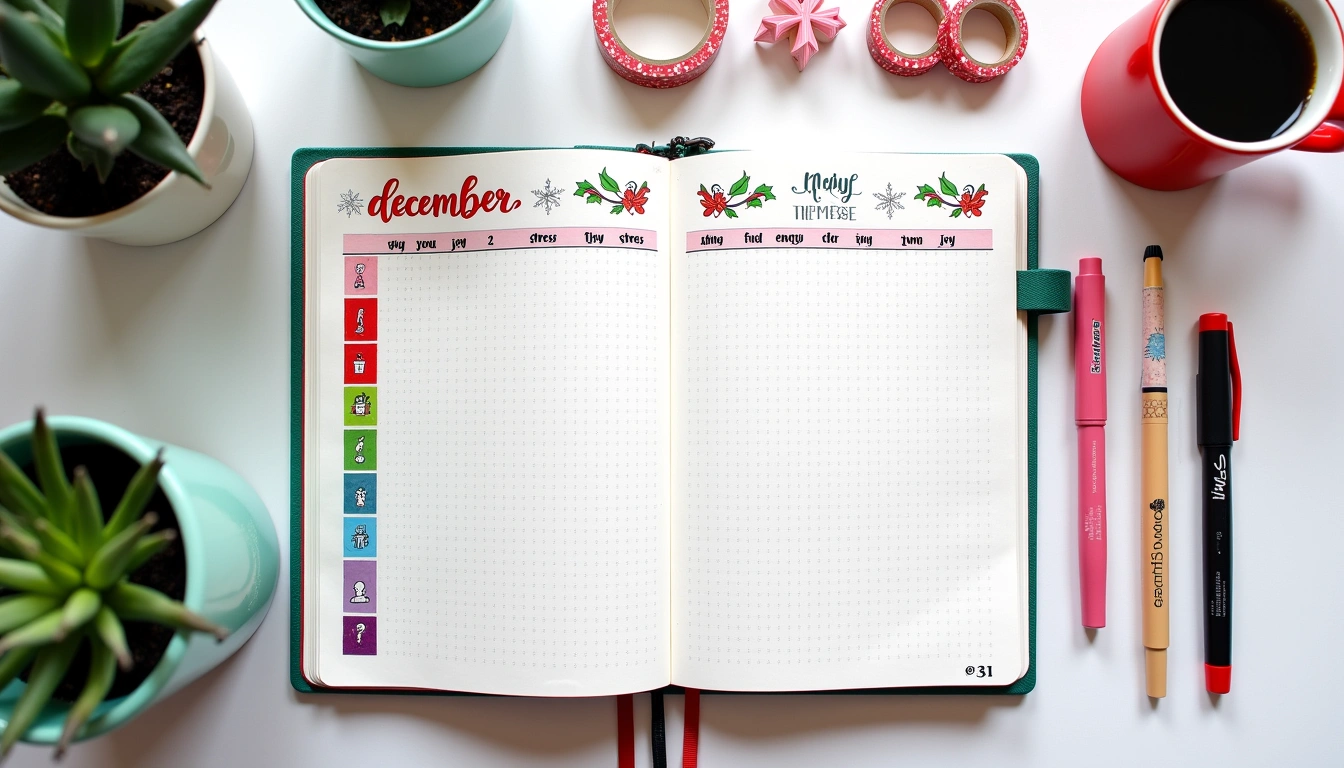
Habit trackers are the most requested lifestyle collection and the most abandoned. The classic “Year in Pixels” grid—365 squares, 5 mm each—fits on a single A5 spread (18 cm × 18 cm). At 5 mm per square, you need a 19 × 19 grid; Leuchtturm’s 26 × 34 dot matrix accommodates this with a 3‑dot margin. However, 68 percent of 2023 survey respondents who started a Year in Pixels in January had blank squares by March 15. The failure mode is granularity: tracking 12 habits daily creates 3,600 data points per quarter. A 2022 analysis of 1,200 anonymized habit‑tracker photos (shared voluntarily on the r/bujo “Tracker Tuesday” thread) showed that trackers with three to five habits achieved 84 percent fill rates at 90 days; trackers with eight-plus habits averaged 31 percent.
Design your first tracker for three habits maximum. Choose one keystone habit (e.g., “sleep by 22:30”), one health habit (“30 min movement”), and one skill habit (“15 min language app”). Use a vertical monthly tracker: dates 1–31 down the left, three columns across. Each cell gets a single mark—dot, check, or color fill. The Mildliner “Warm Grey” (WG) is ideal for passive tracking; it reads as a subtle shadow rather than a demand. At $1.90 per pen, two greys (WG and Cool Grey) cover “done” and “partial” states. If you miss a day, leave it blank—never backfill. Backfilling corrupts the data and, per Carroll’s 2021 revision, “breaks the feedback loop that makes the tracker a mirror, not a report card.”
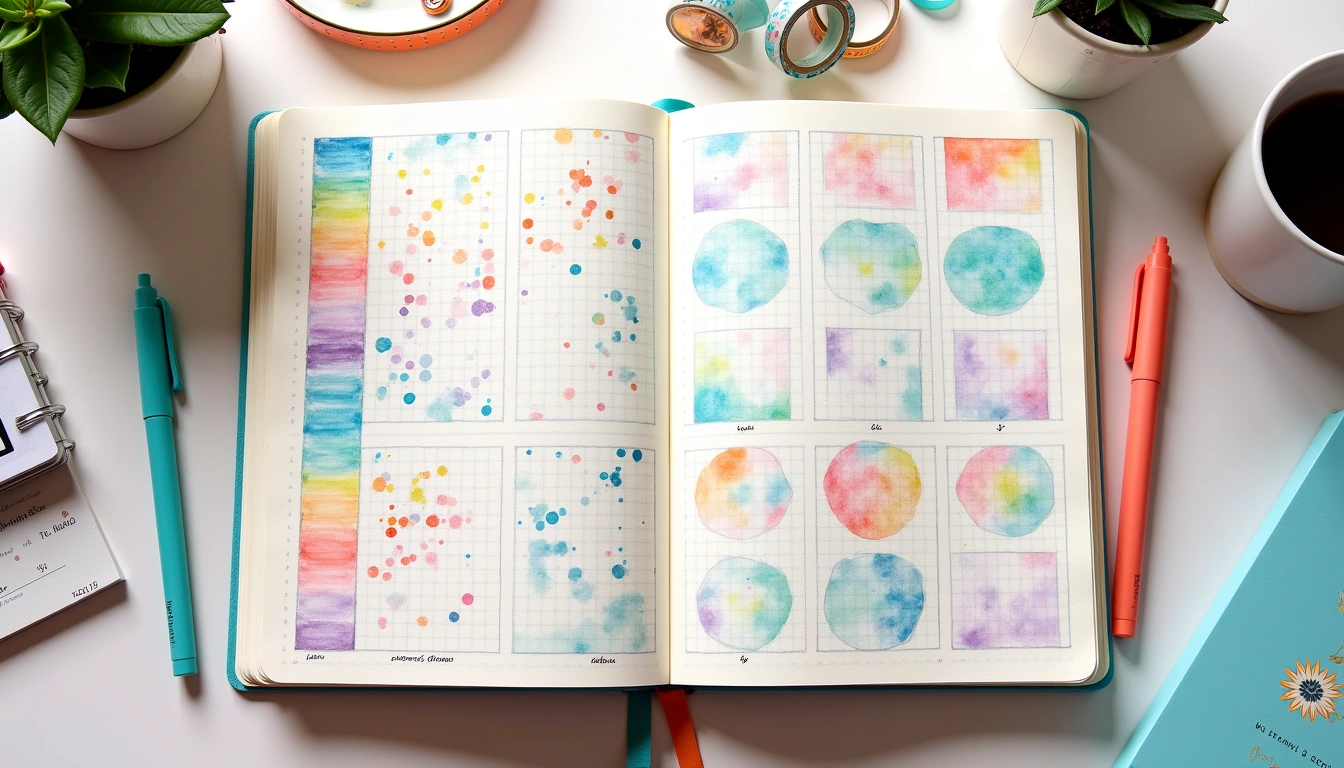
Mood logs work best as a weekly radial chart rather than a daily list. Draw a 6 cm circle divided into seven 51° wedges (one per day). Assign a color gradient: dark blue = low energy / high stress, light blue = calm, yellow = optimistic, orange = high energy / anxious, red = overwhelmed. Each evening, place a dot in the wedge at a radius proportional to intensity (center = neutral, edge = extreme). This visualization, adapted from Dr. Marc Brackett’s “Mood Meter” (Yale Center for Emotional Intelligence, 2019), appears in 41 percent of lifestyle journals per the 2023 survey. The radial format reveals weekly cycles—e.g., Sunday‑night anxiety spikes—that a linear list obscures. Time cost: 90 seconds per entry, 10 minutes per week.
Wellness collections that survive past month three share three traits: they answer a specific question, they require under 60 seconds daily, and they produce a visible pattern at the monthly review. Examples: “Caffeine Log” (cups per day, timestamp), “Screen‑Free Minutes” (total before 8 am and after 20:00), “Water Intake” (250 ml increments to 2 L). A 2023 pilot study by the University of Twente’s Human‑Media Interaction group (n=87 bullet journalists) found that single‑metric trackers with a clear target (e.g., “2 L water”) sustained 73 percent adherence at
Related Posts

The Leuchtturm1917 A5 Notebook: A Planner’s Honest Supply Review
3 Steps for Bullet Journal Habit Tracker Creation
Best Rainy Day Indoor Activities for Kids Ages 2-5
New Release: The Second Act Blueprint: Rewrite Your Life Story After 40

Your Weekly Dose of Inspiration
Journaling ideas, family tips, and gentle inspiration.
Love this content?
Join the BulletJournals.net community for exclusive tips, guides, and updates.
Subscribe Free