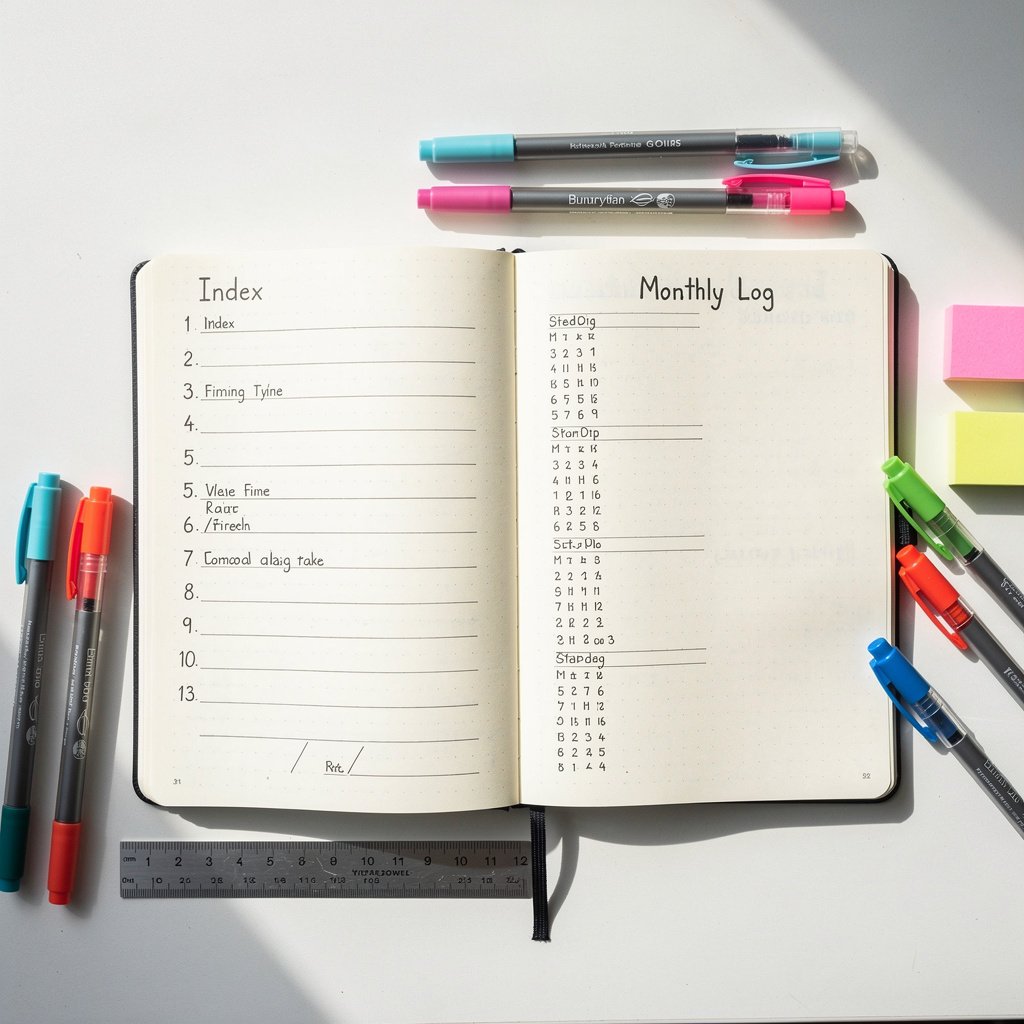
Welcome to Bullet Journal 101
Your complete free course to master bullet journaling. Follow these lessons in order to build a solid foundation, or jump to any section you need.
Course Overview
Time to complete: 1-2 hours of reading, lifetime of practice
What you will need: Any notebook and pen
Skill level: Complete beginner
Lesson 1: What is a Bullet Journal?
A bullet journal is a customizable organization system created by Ryder Carroll. It combines a planner, diary, to-do list, and notebook into one flexible system that adapts to your life.
Unlike pre-made planners, you build your bullet journal as you go. This means:
- No wasted pages for sections you do not use
- Complete flexibility to add what you need
- A system that evolves with your life
Key takeaway: Your bullet journal is whatever you need it to be.
Lesson 2: The Index
The index is your table of contents. Reserve the first few pages of your journal for it.
How it works:
- Number your pages as you create them
- Add each new spread to your index with its page number
- Find anything in seconds by checking your index
Read the complete Index Setup Guide
Lesson 3: Rapid Logging
Rapid logging is the language of the bullet journal. It uses short-form notation to capture information quickly.
The Core Symbols:
- • (dot) = Task
- ○ (circle) = Event
- — (dash) = Note
- × (x) = Task complete
- > (arrow) = Task migrated
Master Rapid Logging with our complete guide
Lesson 4: The Future Log
The future log captures events and tasks scheduled for months ahead. Create it after your index.
What belongs in your future log:
- Birthdays and anniversaries
- Appointments scheduled months ahead
- Deadlines and due dates
- Goals for future months
Learn to set up your Future Log
Lesson 5: Monthly Logs
At the start of each month, create a monthly log with two components:
Monthly Calendar
A simple list or grid of the month's days for appointments and events.
Monthly Task List
Everything you want to accomplish this month, migrated from your future log or brain dump.
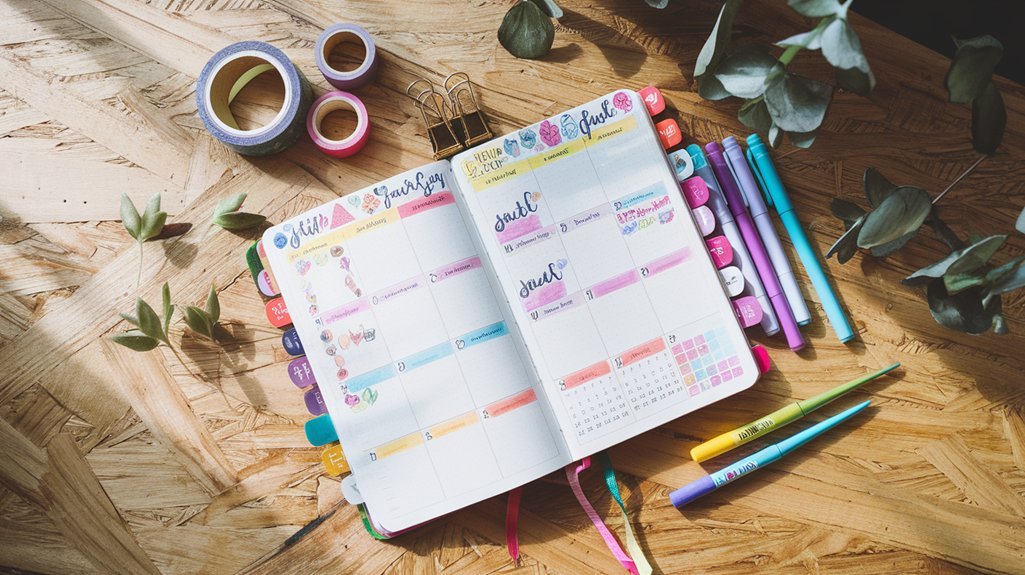
Lesson 6: Weekly Spreads
Many bullet journalers add weekly spreads for more detailed planning. These bridge the gap between monthly overviews and daily logs.
Lesson 7: Daily Logs
The daily log is where you spend most of your time. Each day, add a new entry using rapid logging.
Daily log structure:
- Write today's date
- Log tasks, events, and notes as they happen
- Use signifiers for priority items
- Review at day's end
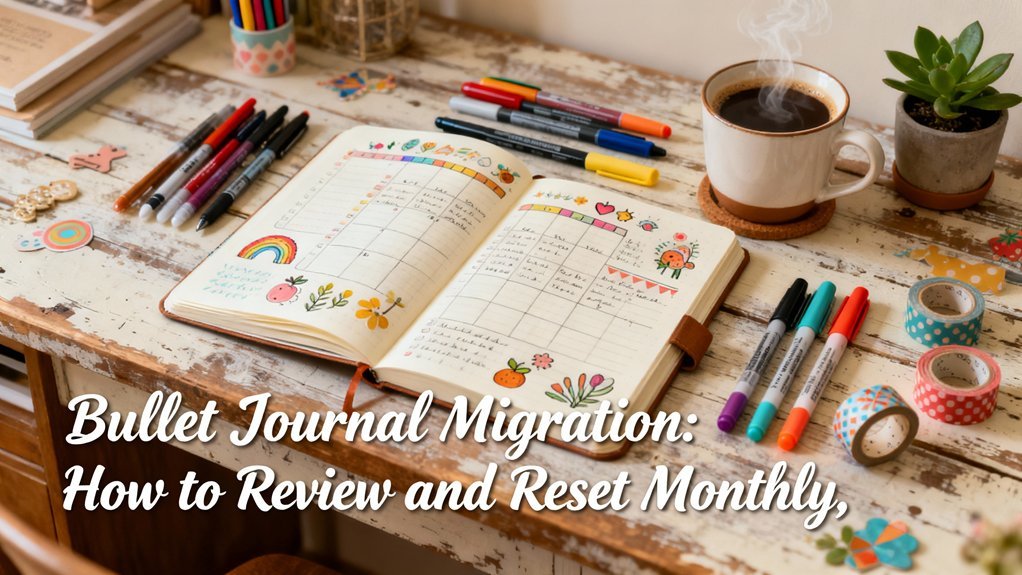
Lesson 8: Migration
Migration is what keeps your bullet journal sustainable. Regularly review incomplete tasks and decide:
- Is this still important? Migrate it forward.
- No longer relevant? Strike it out.
- Future date? Move to your future log.
Learn Migration and Collections
Lesson 9: Collections
Collections are themed pages that live outside your chronological logs. Examples:
- Books to read
- Movies to watch
- Gift ideas
- Project notes
- Habit trackers
Lesson 10: Trackers
Trackers visualize patterns in your life. Popular trackers include:
- Habit Trackers – Build better habits
- Mood Trackers – Understand emotional patterns
- Budget Trackers – Manage finances
Browse our complete Tracker Library
What is Next?
You now know the foundations of bullet journaling. Here is how to continue:
- Start simple. Index, future log, monthly log, daily log. That is all you need.
- Add slowly. Only add collections and trackers when you feel a need for them.
- Make it yours. Modify any element to fit your life.
Continue Learning:
- Spreads Library – Layout inspiration
- Lettering Guide – Make it beautiful
- Free Templates – Download and print
- Journal Prompts – What to write
Ready to start? Grab any notebook, turn to the first page, and create your index. Your bullet journaling journey begins now.