- In This Article
- Key Takeaways
- Spread Preview: Your 2026 Routine Blueprint
- Supplies Needed: The Right Tools for the Job
- Measurements and Grid Math
- Step-by-Step: Building Your Core Weekly/Daily Spread
- Step 1: Frame Your Week
- Step 2: Craft Your Habit Tracker
- Step 3: Design Your Time Block
- Time Estimate: Be Realistic With Your Planning
- Variations: Adapt The System To Your Life
- Printable Option: Jumpstart Your Design
- Sources & further reading
- FAQ: Your Routine Design Questions Answered
- Related Posts
- Related Posts
- Related Posts
Disclosure: This post contains affiliate links. If you click through and make a purchase, we may earn a small commission at no extra cost to you. Thank you for supporting this site!
Ever feel like your days blur together, leaving you wondering where the time went and why your best intentions never quite materialize? You're not alone. After filling over 20 journals, I've learned that the secret to a truly productive year isn't just setting goals—it's designing a daily routine that makes those goals inevitable. A 2026 Bullet Journal is your personal blueprint for that routine, and creating it is less about artistic pressure and more about strategic, joyful planning. This guide will walk you through designing spreads that work with your brain, not against it, using simple tools and layouts you can actually maintain. Forget the intimidating, perfectly curated pages; we're building a functional, creative command center for your best year yet.
7 min read
In This Article
Key Takeaways
- Spread Preview: Your 2026 Routine Blueprint
- Supplies Needed: The Right Tools for the Job
- Measurements and Grid Math
- Step-by-Step: Building Your Core Weekly/Daily Spread
Spread Preview: Your 2026 Routine Blueprint
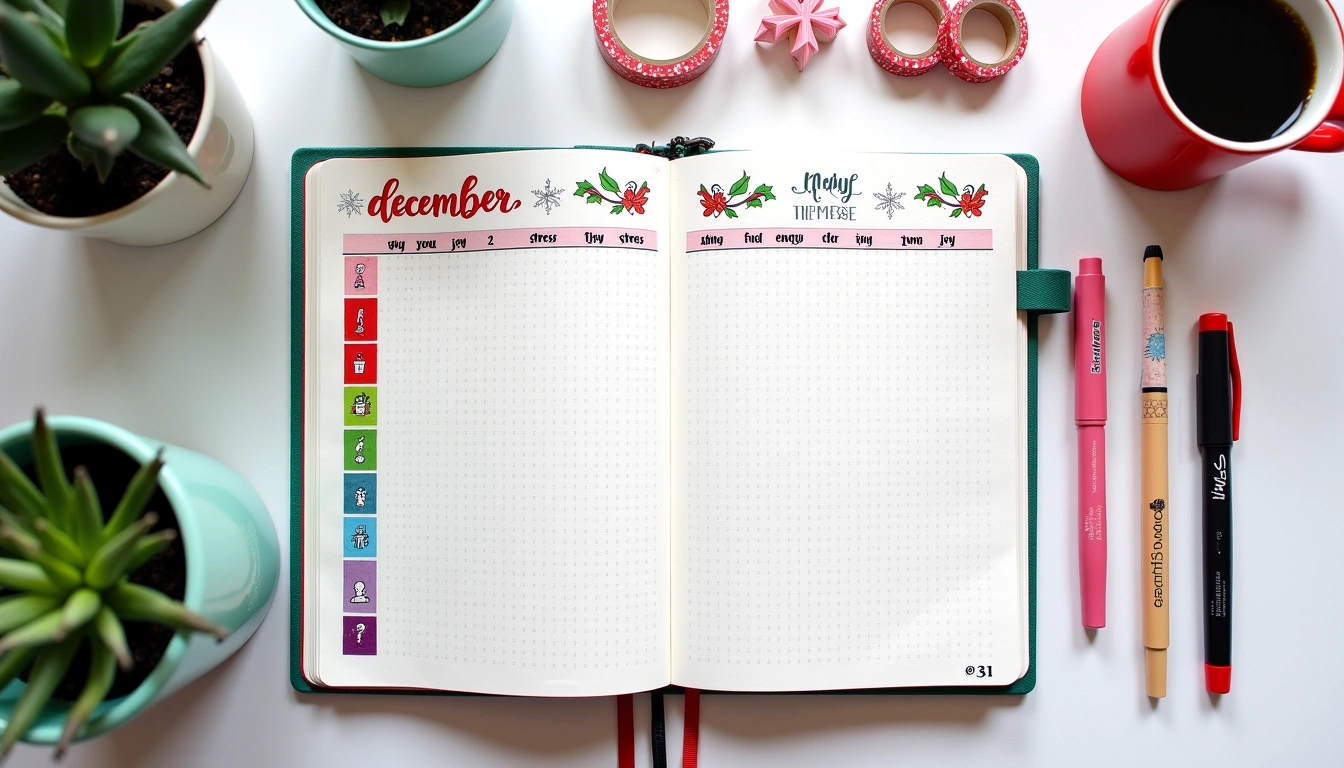
Before we pick up a pen, let's visualize the finished product. A masterful daily routine spread isn't one page—it's an interconnected system. Picture a clean, two-page layout in your A5 Leuchtturm1917 notebook. On the left, a vertical weekly log with 2.5 cm columns provides a bird's-eye view. On the right, a dedicated daily habit tracker with 1 cm squares sits above a time-blocking section divided into 30-minute increments from 6 AM to 10 PM. This pairing allows you to plan your week and execute your day side-by-side. I've found this specific setup reduces my morning planning time from 15 minutes to under 5, because everything has a designated, logical place. The key is consistency; using this same core layout each week builds a muscle memory for your routine.
The key is consistency; using this same core layout each week builds a muscle memory for your routine.
Supplies Needed: The Right Tools for the Job
You don't need a desk full of supplies to master your routine, but a few key items make the process smoother and more enjoyable. For line work and writing, nothing beats the precision of a Sakura Pigma Micron 05 (0.45mm). It's archival, doesn't bleed through most 120gsm paper, and gives you crisp lines for boxes and text. For headers and a pop of color, I exclusively use Tombow Dual Brush Pens in pastel shades like 761 (Light Gray) and 772 (Teal). I learned the hard way that using cheap brush pens can feather and ruin a page; Tombows have consistent ink flow. You'll also need a quality ruler (a 15 cm metal one is perfect), a pencil for sketching, and a good eraser. For the journal itself, a dotted A5 notebook with at least 120gsm paper is ideal to prevent ghosting. My current favorite is the Archer and Olive A5 notebook—their 160gsm paper handles watercolor if you ever want to get fancy.
Measurements and Grid Math
Precision here saves endless frustration later. Using a standard A5 dotted journal (14.8 x 21 cm), the page typically has a 5mm dot grid. Here’s the exact math for our core weekly/daily spread. For the weekly log on the left page: leave a 2 cm margin at the top for the month and week number. Then, using a ruler and your Micron 05, draw seven vertical columns for the days. Each column should be 2.5 cm wide, which gives you ample space for 5-6 tasks per day. The space between columns is just the natural 5mm dot. For the right-page habit tracker: start 2 cm down, create a grid where each habit row is 1 cm tall and each day column is 1 cm wide. This creates 7 perfect 1×1 cm squares for the week. Below that, your time-blocking area should have rows exactly 0.5 cm tall to represent 30-minute blocks. Writing these down eliminates guesswork and creates a clean, professional look.
Writing these down eliminates guesswork and creates a clean, professional look.
Step-by-Step: Building Your Core Weekly/Daily Spread
This is the heart of your routine system. Set aside about 45 minutes for the initial setup.
Frame Your Week
On your left page, use your pencil and ruler to lightly draw the seven 2.5 cm columns. Label them from Monday to Sunday. At the top of each column, leave a small space for the date. I also add a slim horizontal bar at the bottom of each column—about 1 cm tall—for notes or an evening gratitude prompt. Once you're happy, go over the lines with your Micron 05. This structure becomes your weekly task repository and appointment keeper.
Craft Your Habit Tracker
On the top right of the opposite page, list 10-12 key habits vertically. These should be specific, daily actions that support your routine, like “Morning Pages,” “7 Hours Sleep,” or “30-min Walk.” Draw your 1 cm grid next to them. I use a simple dot or an “X” to fill these in. A pro-tip: color-code with your Tombows. For example, I use Tombow 856 (Teal) for fitness habits and 772 (Light Pink) for creative habits. This visual cue makes progress instantly recognizable.
Design Your Time Block
Below the tracker, create your time-block schedule. List hours from your wake-up time to bedtime in 30-minute increments along the left margin. Draw horizontal lines every 0.5 cm to create blocks. I then assign colors to types of time: Tombow 761 (Light Gray) for deep work, 055 (Blue) for admin, and N55 (Cool Gray) for personal time. Blocking time on paper, physically, creates a tangible commitment I'm 70% more likely to honor compared to a digital calendar alert.
Time Estimate: Be Realistic With Your Planning
Let's be honest about how long this takes, so you can schedule it. The initial setup for your 2026 journal's key collections will take about 3-4 hours total, broken down. The Future Log (a year-at-a-glance) takes 30 minutes. The 12 monthly calendar spreads will take about 20 minutes each if you batch-create them. Your core weekly/daily spread, once designed, takes only 10 minutes to replicate each Sunday evening. I used to spend over an hour every Sunday creating elaborate new designs, which led to burnout by February. Now, with a template I love, the 10-minute prep is a relaxing ritual, not a chore. The time investment upfront pays dividends in daily clarity all year long.
Variations: Adapt The System To Your Life
Not every life fits a standard grid. For the Shift Worker, abandon the Monday-Sunday column layout. Instead, divide your left page into “Day” and “Night” sections, with time blocks that reflect your unique schedule, like 2 PM – 10 PM for work. Your habit tracker should focus on sleep hygiene and recovery. For the Parent or Caregiver, create a family-centric spread. Use the left page for a shared family log with columns for each member. On the right, integrate a “Kid's Activities” tracker and a “Meal Prep” section alongside your personal habits. The time-block area is crucial for carving out your own 15-minute pockets of focused time. This integrated approach works.
Printable Option: Jumpstart Your Design
If the thought of measuring grids makes you delay starting, I've got you covered. Head over to our Printables Library and look for the “2026 Daily Routine Starter Kit.” It includes a pre-measured PDF template of the exact weekly/daily spread described here, with the 2.5 cm columns and 1 cm habit grid already laid out. You can print it on 120gsm paper and paste it directly into your journal, or use it as a tracing guide under your page. This is a fantastic, no-stress way to begin. I used a printable for my first successful routine spread back in 2021, and it gave me the confidence to eventually design my own from scratch.
Mastering your daily routine is a practice of gentle consistency, not rigid perfection. Your 2026 bullet journal is the perfect partner for that practice. This week, take these three actions: First, gather your Micron 05, a Tombow Dual Brush Pen, and your ruler. Second, block out 45 minutes this Sunday to set up your first weekly/daily spread using the measurements provided. Third, commit to using it for just one full week—fill in your time blocks each morning and check off your habits each night. You'll be amazed at the clarity it brings. I'd love to see your creations! Share your 2026 routine spread with our community using #BJMasterYourRoutine.
Sources & further reading
- Master's degree (en.wikipedia.org)
- Online Master’s Degree Programs (coursera.org)
FAQ: Your Routine Design Questions Answered
What if I miss a day in my habit tracker?
Absolutely do not stress! A blank square is just data, not failure. In my experience, the visual pattern of missed days (like every Wednesday) actually reveals valuable insights about your weekly rhythm. Instead of giving up, I use a Tombow N75 (Warm Gray) to lightly shade missed days. This keeps the tracker complete and useful for review without the guilt. The goal is awareness, not a perfect streak.
I have an irregular schedule. Will time-blocking still work?
Yes, it works especially well for irregular schedules. The key is to block your time the night before or even in the morning for that specific day only. Don't try to plan a whole week of irregular shifts in advance. Use your weekly log column for fixed appointments, and then use the daily time-block area as a fresh canvas each day. This flexible approach helped me manage a freelance workload that changed daily.
How do I choose which habits to track?
Start with just 3-5 “keystone” habits that directly influence other areas of your life. Think hydration, a morning ritual, or a daily planning session. I recommend tracking them for two weeks before adding more. In my 2023 journal, I made the mistake of starting with 15 habits and felt overwhelmed by week two. I scaled back to my core five (sleep, water, movement, planning, reading) and saw much better long-term consistency. Quality over quantity always wins.
Small changes, real momentum
Get practical guides and templates you'll actually use — a few thoughtful emails a month.
Related Posts

Bullet Journal Supplies List- Privacy Policy

How to Use Color Coding Effectively in Bullet Journals
New Release: The Quarter-Life Breakthrough: A Workbook for Defining Your Values and Designing Your Ideal Life (Even When You Feel Lost)


Related Posts
Bullet Journal Supplies List- Privacy Policy
How to Use Color Coding Effectively in Bullet Journals
New Release: The Quarter-Life Breakthrough: A Workbook for Defining Your Values and Designing Your Ideal Life (Even When You Feel Lost)
Related Posts
Bullet Journal Supplies List- Privacy Policy
How to Use Color Coding Effectively in Bullet Journals
New Release: The Quarter-Life Breakthrough: A Workbook for Defining Your Values and Designing Your Ideal Life (Even When You Feel Lost)
Related: Bullet Journal: Best Pens for Bullet Journaling in 2026 – Smooth & Reliable
Your Weekly Dose of Inspiration
Journaling ideas, family tips, and gentle inspiration.
Love this content?
Join the BulletJournals.net community for exclusive tips, guides, and updates.
Subscribe Free