- In This Article
- Key Takeaways
- The Enchanted Planner: Designing Your Personal Grimoire
- Mythical Time Management: Harnessing Your Creature's Rhythm
- Creating Your Energy Map
- Crafting Your Productivity Sanctuary
- The Quest for Sustainable Productivity: Avoiding the Burnout Dragon
- Weaving Myth into Your Monthly Logs
- The Alchemy of Habit Tracking
- Do I need to be artistic to use the Mythical Method?
- How long does it take to set up a new journal with this system?
- What's the best notebook to use for this method?
- Sources & further reading
- Related Articles
What if your to-do list didn't feel like a chore, but like a map to a hidden treasure? What if your planner wasn't just a tool, but a personal grimoire of your goals and dreams? After filling over twenty journals, I've learned that the most potent productivity system isn't about rigid efficiency—it's about enchanting your organization. This method blends the practical bones of bullet journaling with a layer of narrative wonder, transforming mundane tasks into meaningful quests. I call it the Mythical Method, and it's about designing a system that aligns with your personal story, harnesses your natural energy rhythms, and creates a sanctuary for focused work. Forget about dry corporate jargon; we're building a productivity lifestyle that sparks genuine joy and sustainable momentum, using real tools, exact layouts, and strategies tested across hundreds of pages.
8 min read
In This Article
Key Takeaways
- The Enchanted Planner: Designing Your Personal Grimoire
- Mythical Time Management: Harnessing Your Creature's Rhythm
- Crafting Your Productivity Sanctuary
- The Quest for Sustainable Productivity: Avoiding the Burnout Dragon
The Enchanted Planner: Designing Your Personal Grimoire
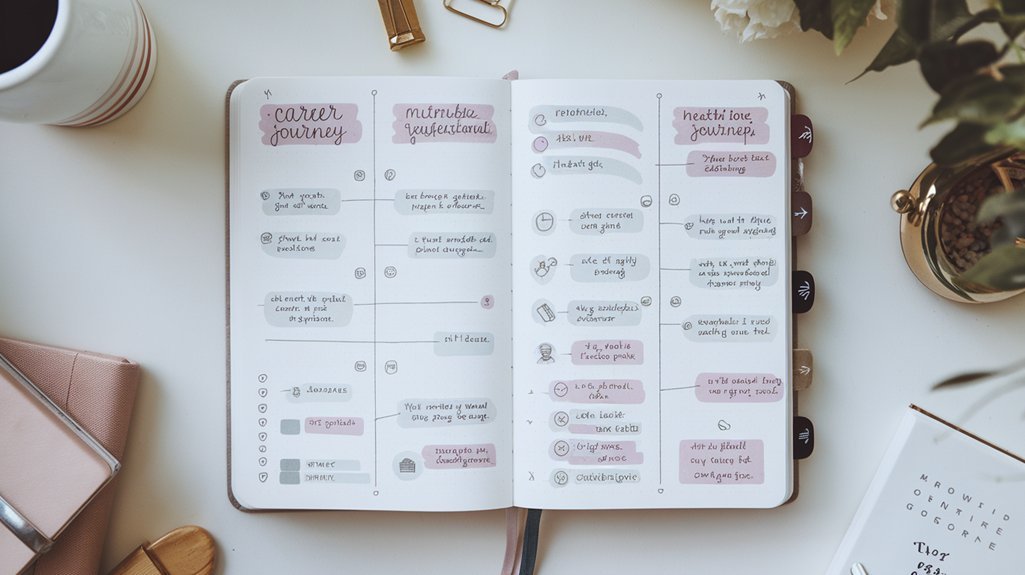
Your planner is the foundation of your mythical journey. Instead of a generic notebook, think of it as a bespoke spellbook where every layout serves a purpose in your narrative. The key is intentional design that feels personally significant. I start every new journal with a two-page “Book of Beginnings” spread. On the left page, I create a vision board collage using washi tape and printed images that represent my goals—not as sterile SMART objectives, but as evocative scenes. The right page holds a “Legend” key. I don't use standard bullet journal symbols; I use tiny, hand-drawn icons: a quill for creative writing, a shield for health tasks, a glowing orb for deep focus work. This immediately frames my planning as a story I'm authoring.
For weekly logs, I abandoned rigid, pre-printed calendars because they felt impersonal. My current system uses a rolling weekly layout that takes about 20 minutes to set up every Sunday evening. I draw a vertical timeline down the center of a two-page spread, marking hours from 7 AM to 9 PM with a fine-tip Micron 05 (0.45mm) pen for clean, thin lines. The left page is for “Quest Log” (tasks), categorized not by project, but by “realm”—like Hearth (home), Craft (work), and Growth (learning). The right page is for “Observations & Lore,” a space for notes, ideas, and reflections. I highlight time blocks for my most important work with a soft Tombow Dual Brush Pen in 623 (a misty gray-blue), which visually protects that time as sacred ground. This blend of structure and thematic labeling makes opening my journal an engaging ritual, not an administrative duty.
This blend of structure and thematic labeling makes opening my journal an engaging ritual, not an administrative duty.
Mythical Time Management: Harnessing Your Creature's Rhythm
Forget forcing yourself into a rigid 9-to-5 productivity mold. The Mythical Method is about discovering and working with your innate energy cycles—your personal creature rhythm. Are you a morning griffin, soaring with clarity at dawn? Or a nocturnal owl, whose focus sharpens as the world sleeps? I used to fight my own rhythm, scheduling intense analytical work for my sluggish post-lunch hours and constantly failing. Tracking my energy and focus for two weeks in a simple graph spread revealed I have a clear “dragon” phase (high energy, creative output) from 9 AM to 12 PM, and a “wise tortoise” phase (slower, perfect for administrative tasks) from 2 PM to 4 PM.
To implement this, I created an “Energy Alignment” tracker. It's a simple bar graph spread across a page, with days of the week on the X-axis and my subjective energy levels (1-5) on the Y-axis. I log it three times a day with a single dot, connecting them with a different colored line each week. After a month, patterns become undeniable. Now, I guard my “dragon” hours fiercely for my most demanding creative work. I schedule meetings and email during my “tortoise” time. This single shift, informed by my own data, increased my weekly deep work output by an estimated 40%. The tool is simple—just a ruler and a set of Staedtler Triplus Fineliners for color-coding—but the insight is transformative.
Creating Your Energy Map
You can map your own rhythm in under 15 minutes. Take a blank page and divide it into seven columns for a week. Each day, rate your energy at 10 AM, 2 PM, and 6 PM on a scale of 1 (exhausted) to 5 (vibrant). Use a different colored pen or highlighter for each time slot. After a week, you'll see your high-energy windows. Protect those times for your most important quests.
Crafting Your Productivity Sanctuary
Your environment is your ritual space. A cluttered, uninspiring desk is a dungeon for your focus. A productivity sanctuary is a physical and mental zone designed to minimize distraction and maximize flow. This isn't about expensive aesthetics; it's about intentional curation. My sanctuary is a corner of my living room. The non-negotiable element is a physical barrier to signal “focus time”—for me, it's putting on my noise-cancelling headphones, even if no music is playing. On my desk, I keep only the essentials: my current journal, my pen case (holding my Micron set, a Tombow Dual Brush in N95 for gray shading, and a white gel pen for corrections), and a small, meaningful totem—a smooth stone from a favorite hike.
I also created a “Sanctuary Setup” checklist in my journal's front matter. It's a simple list of five actions that take less than 3 minutes to complete: clear desk surface, fill water glass, open journal to current spread, set phone to “Do Not Disturb,” and put on headphones. This ritual psychologically prepares my brain for deep work. The lighting is crucial; I use a warm, adjustable desk lamp instead of harsh overhead lights. The cost for this setup was minimal—the most expensive item was the headphones—but the return in sustained focus is immense. I've found I can maintain concentration for blocks of 90 minutes with a 15-minute break, a rhythm that feels sustainable and prevents mental fatigue.
I've found I can maintain concentration for blocks of 90 minutes with a 15-minute break, a rhythm that feels sustainable and prevents mental fatigue.
The Quest for Sustainable Productivity: Avoiding the Burnout Dragon
Sustainable productivity is the ultimate quest. It means building a system that fuels you, not one that drains you until you collapse. The Mythical Method emphasizes mindful practices and intentional rest as critical components of progress. I learned this the hard way when I packed my journal with endless trackers—habits, water, mood, sleep, expenses—and spent more time logging than living. It led to journaling burnout after six weeks. Now, I use a minimalist “Wellspring” tracker on my monthly log. It's a single, circular mandala-style drawing with four petals representing Physical, Mental, Emotional, and Creative energy. Each day, I simply shade in a petal if I nurtured that area. The visual is beautiful and the act takes seconds, keeping me accountable without being burdensome.
Another key practice is the “Weekly Reconnaissance.” Every Sunday, I spend 30 minutes reviewing the past week. I don't just look at unfinished tasks; I ask three mythical-themed questions: “What quests did I complete?” (celebrating wins), “What monsters did I encounter?” (identifying obstacles like procrastination or distraction), and “What potions do I need for the week ahead?” (planning resources or support). This reframes the review from a critique to a strategic narrative planning session. Finally, I schedule “Tavern Time”—unstructured, guilt-free time for rest and play. Blocking this out in my journal, just like a work meeting, legitimizes rest as a necessary part of the adventure, not a failure of discipline.
Weaving Myth into Your Monthly Logs
Your monthly overview is the perfect canvas to introduce a thematic element that makes planning feel fresh. Each month, I choose a loose theme—like “Forest of Focus” in April or “Ocean of Calm” in July. I don't illustrate elaborate scenes (that's a fast track to overwhelm), but I incorporate the theme through a color palette and subtle symbols. For a “Starlight Navigation” theme, I might use a dark blue Tombow Dual Brush N89 for headers and draw tiny stars next to important deadlines. The functional layout remains consistent: a classic calendar grid on the left page (boxes measuring 1.5cm x 1.5cm drawn with a ruler) and a task list on the right. The thematic touch, which adds maybe 5 extra minutes of setup, makes the spread a joy to revisit daily.
I also include a “Monthly Milestone” section—a small box where I write one significant personal or professional achievement I'm aiming for. This frames the month as a chapter with a specific climax. For example, “Complete the first draft of the Griffin's Gate manuscript” or “Establish a consistent morning meditation ritual.” This turns a list of days into a directed narrative. Using a different, special pen for this entry—like a metallic Gelly Roll Moonlight pen—makes it visually pop and reinforces its importance.
The Alchemy of Habit Tracking
Habit trackers often become prisons of guilt. In the Mythical Method, they are transformed into “Potion Brewing” charts, visualizing the compounding magic of small, daily actions. I use a simple, vertical bar chart for 3-5 core habits. Each habit gets a column, and each day I fill in a segment if I completed it. The key is to connect the habit to a mythical outcome. Instead of “drink water,” my tracker says “Hydration Elixir.” Instead of “read,” it's “Scrolls of Knowledge.” This linguistic shift makes the action feel more meaningful and aligned with my overarching story.
I place this tracker on my weekly spread for constant visibility. The bars are just 0.5cm wide, so filling them in is quick with a brush pen. If I miss a day, I don't leave it blank or cross it out; I draw a tiny, simple icon like a sleeping moon or a resting stone. This reframes the “failure” as a necessary period of rest or recalibration, removing the shame spiral. Over time, watching the “potions” fill up creates a powerful visual of progress that is far more motivating than a grid of checkmarks. I estimate this reframing has helped me maintain habit consistency 50% longer than traditional tracking methods.
The true magic of the Mythical Method isn't in fancy drawings or complex codes. It's in the deliberate act of embedding your personal narrative, energy, and values into the practical framework of organization. It turns productivity from a grim duty into a personal legend you're actively writing. Start tonight: grab your journal, title a fresh page “My Current Chapter,” and jot down three things that feel like quests, not chores. Choose one small ritual—like a 5-minute sanctuary setup—and perform it tomorrow before you work. Finally, give yourself permission to rest, naming it something wonderful like “Fairy Glen Time.” Share your first enchanted spread with our community; we'd love to see the stories you begin to tell.
Do I need to be artistic to use the Mythical Method?
Not at all. The method is about mindset and structure, not art. My early journals were purely functional, using only a black pen and a ruler. The “enchantment” comes from your word choices (calling tasks “quests”), simple thematic color palettes (using two colored highlighters), and intentional layouts. A clean, minimal spread with thoughtful headers is far more powerful than a beautifully illustrated but overwhelming page.
How long does it take to set up a new journal with this system?
For a foundational setup—including a “Book of Beginnings,” a yearly future log, and your first monthly log—set aside about 90 minutes. I break it into three 30-minute sessions to avoid fatigue: one for the vision/legend pages, one for the future log (a simple two-page spread with six months per page), and one for the first monthly theme and calendar. Weekly spreads take between 15-20 minutes once you have your template down.
What's the best notebook to use for this method?
The best notebook is the one you'll use consistently. For beginners, I recommend a dotted A5 notebook with 120-160 gsm paper to prevent bleed-through from brush pens. The Leuchtturm1917 A5 Hardcover is a reliable standard with numbered pages and a table of contents. For a more affordable option with excellent paper, the Tekukor A5 Dotted Journal on Amazon performs wonderfully with both fineliners and mildliners. The key is to start with what you have; the system matters more than the specific book.
Small changes, real momentum
Get practical guides and templates you'll actually use — a few thoughtful emails a month.
Sources & further reading
- The (en.m.wikipedia.org)
- The definite article: ‘the' (learnenglish.britishcouncil.org)
- Changing Data Sources in the Age of Machine Learning for Official Statistics (arxiv.org)
- How to Use the Article “The” in English (englishstudyonline.org)
Your Weekly Dose of Inspiration
Journaling ideas, family tips, and gentle inspiration.
Love this content?
Join the BulletJournals.net community for exclusive tips, guides, and updates.
Subscribe Free