16 min read 3,753 words
Table of Contents
- In This Article
- Key Takeaways
- When Do We Dream? The Sleep Cycle Connection
- Decoding the Dream Dictionary: Types of Dreams
- Theories of Dreaming: Why Do We Do It?
- Dream Journaling: Your Personal Dream Decoder
- Creating Your Dream Journal Spread: A Practical Guide
- Dream Interpretation: Symbolism and Personal Meaning
- Overcoming Dream Recall Challenges
- Conclusion: Your Dreams, Your Inner Compass
- Sources & further reading
- Frequently Asked Questions About Dreams
Last updated:
Disclosure: BulletJournals may earn a commission from qualifying purchases through affiliate links in this article. This helps support our work at no additional cost to you. Learn more.
Last updated: September 19, 2026
13 min read
Has your brain ever felt like a bustling city after a night of vivid dreams, full of strange characters and illogical plots? Mine certainly has! For years, I’ve filled journal after journal, not just with daily tasks and goals, but with the fleeting, fascinating narratives that unfold behind closed eyelids. Dreams are such an integral, yet mysterious, part of our sleep cycle, and understanding them can offer incredible insights into our waking lives. I’ve spent countless hours researching, experimenting with dream journaling, and comparing different theories, all while trying to make sense of the bizarre and beautiful dreamscapes my mind conjures. Today, I want to share what I've learned about why we dream, the different types of dreams we experience, and the most compelling theories that try to explain this nightly phenomenon. Get ready to explore the hidden world of your dreams, and perhaps discover a new way to connect with your inner self.In This Article
- When Do We Dream? The Sleep Cycle Connection
- Decoding the Dream Dictionary: Types of Dreams
- Theories of Dreaming: Why Do We Do It?
- Dream Journaling: Your Personal Dream Decoder
- Creating Your Dream Journal Spread: A Practical Guide
- Dream Interpretation: Symbolism and Personal Meaning
- Overcoming Dream Recall Challenges
- Conclusion: Your Dreams, Your Inner Compass
Key Takeaways
- When Do We Dream? The Sleep Cycle Connection
- Decoding the Dream Dictionary: Types of Dreams
- Theories of Dreaming: Why Do We Do It?
- Dream Journaling: Your Personal Dream Decoder
When Do We Dream? The Sleep Cycle Connection
Dreams aren't just random occurrences; they're tied directly to specific stages of our sleep. Most people think dreams happen throughout the night, but the most vivid and memorable ones typically occur during Rapid Eye Movement (REM) sleep. Our sleep cycle is divided into two main types: Non-Rapid Eye Movement (NREM) and REM. NREM sleep has three stages, starting with light sleep and progressing to deep sleep, where our bodies do most of their physical repair. Then comes REM sleep, characterized by increased brain activity, rapid eye movements (hence the name), and muscle paralysis. It's during REM sleep that our brain is most active, almost as active as when we're awake, which is why this is when most dreaming happens.A typical night's sleep involves cycling through these stages multiple times. We start with NREM, then move into REM. The first REM period might be quite short, maybe only 10 minutes, but as the night progresses, these REM periods get longer. By the time we reach our final sleep cycles before waking, REM sleep can last for up to an hour. This means that the dreams you remember most clearly are often those from the later part of your sleep. It's estimated that the average person experiences about 4-6 dreams per night, though we only remember a fraction of them. In fact, studies suggest that if you wake someone up during REM sleep, they'll report dreaming about 80-90% of the time. This is why keeping a dream journal right by your bedside, with a pen ready, can be so effective for capturing these elusive experiences.This is why keeping a dream journal right by your bedside, with a pen ready, can be so effective for capturing these elusive experiences.
Decoding the Dream Dictionary: Types of Dreams
The world of dreams is incredibly diverse, ranging from the mundane to the utterly fantastical. I've personally experienced them all, and categorizing them has helped me find patterns and meaning. One of the most common types are **everyday dreams**, which often involve people, places, and events from our daily lives. These might seem insignificant, but they can reflect our current worries, hopes, or unresolved issues. For example, I once had a recurring dream about forgetting to pack a crucial item for a trip, which perfectly mirrored my anxiety about an upcoming work presentation.Then there are **nightmares**, dreams that evoke fear, anxiety, or distress. While unpleasant, nightmares often serve as a signal that something is troubling us. I remember a particularly intense nightmare after a stressful period at work; it felt like a physical manifestation of my pent-up stress. Conversely, **pleasant dreams** can leave us feeling refreshed and joyful. These might involve fulfilling desires or experiencing positive emotions. Perhaps the most intriguing are **lucid dreams**, where the dreamer becomes aware they are dreaming and can sometimes even control the dream's narrative. I’ve only had a handful of lucid dreams, but the sensation of flying or conjuring objects at will is absolutely exhilarating!Other categories include **prophetic dreams**, which some believe foretell future events, though scientific explanations often attribute these to subconscious pattern recognition. **Healing dreams** can offer insights into physical or emotional well-being, and **symbolic dreams** use metaphors and symbols to convey messages from our subconscious. Understanding these categories helps us approach our dream recall with a framework, making it easier to interpret their potential messages.Understanding these categories helps us approach our dream recall with a framework, making it easier to interpret their potential messages.
Theories of Dreaming: Why Do We Do It?
The question of *why* we dream has puzzled humans for centuries, leading to a variety of fascinating theories. One of the earliest and most influential was Sigmund Freud's psychoanalytic theory, which proposed that dreams are a “royal road to the unconscious,” revealing repressed desires and unresolved conflicts. Freud believed dreams had manifest content (the actual story) and latent content (the hidden symbolic meaning). While many of his interpretations are now considered outdated, his work laid the foundation for much of dream analysis. When I first started journaling my dreams, I tried to apply Freudian symbolism, but often found myself overanalyzing simple anxieties.A more modern perspective comes from the **Activation-Synthesis Hypothesis**, proposed by J. Allan Hobson and Robert McCarley. This theory suggests that dreams are simply the brain's attempt to make sense of random neural firings that occur during REM sleep. The brainstem sends signals to the cortex, which then tries to weave these signals into a coherent narrative. While this theory explains the often bizarre nature of dreams, it doesn't fully account for the emotional depth or recurring themes many people experience.Another compelling idea is the **Threat Simulation Theory**, which posits that dreams evolved as a way to rehearse responses to threatening situations in a safe environment. This could explain why so many dreams involve danger or conflict. On the other hand, the **Memory Consolidation Theory** suggests that dreaming plays a crucial role in processing and consolidating memories from the day, transferring them from short-term to long-term storage. This aligns with research showing increased brain activity in areas related to learning and memory during REM sleep. My own experience leans towards a combination of these; my dreams often feel like my brain is sorting through the day's events, practicing scenarios, and sometimes just throwing random images together for good measure.This aligns with research showing increased brain activity in areas related to learning and memory during REM sleep.
Dream Journaling: Your Personal Dream Decoder
If you're looking to understand your dreams better, there's no tool more powerful than a dream journal. It's more than just writing down what happened; it's an active process of exploration. I’ve kept a dream journal for over 10 years, and it’s been one of the most rewarding practices in my personal growth journey. The first step is simple: keep a notebook and pen (or a digital app) right by your bed. When you wake up, before you even move or think too much, try to recall any images, feelings, or snippets of the dream. Don't worry about making perfect sense of it; just jot down whatever comes to mind.I recommend using specific pens for your journal. My go-to is a **Tombow Dual Brush Pen** in a dark grey for the main dream narrative, as it’s smooth and vibrant without bleeding through thinner paper. For key symbols or emotions, I’ll use a **Sakura Pigma Micron 05** in a contrasting color, like a deep purple or teal. This visual distinction helps me quickly scan for important elements later. I also like to include a rating for how vivid the dream was (1-5 stars) and how I felt upon waking (e.g., confused, happy, anxious).Try to dedicate at least 5-10 minutes each morning to this practice. Even if you only remember a fragment, writing it down can help trigger more memories. Over time, you'll start to notice recurring themes, symbols, and emotions. This is where the real insight begins. I once noticed a recurring symbol of a locked door in my dreams. After weeks of journaling, I realized it symbolized a fear of commitment I was experiencing in a relationship. Once I identified it, I was able to address it consciously. Keeping a dream journal isn't about finding definitive “meanings” for every symbol, but rather about engaging with your subconscious and gaining a deeper understanding of your inner world.Once I identified it, I was able to address it consciously.
Creating Your Dream Journal Spread: A Practical Guide
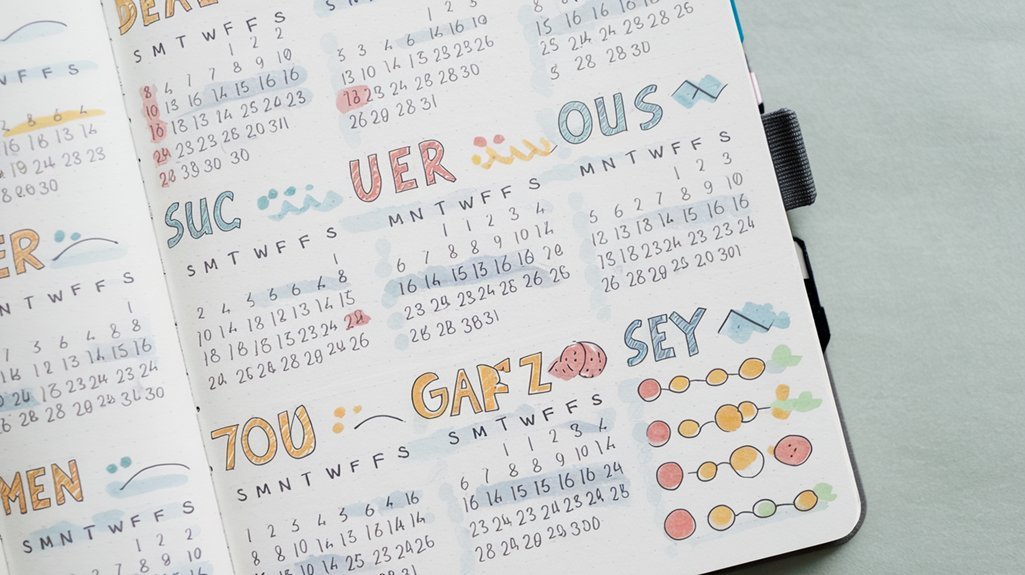
Ready to set up your own dream journal? It’s easier than you think, and you can tailor it to fit your style. For a physical journal, I recommend a standard A5 notebook. My favorite is a **Leuchtturm1917 A5 Dotted journal**, which offers a good balance of structure and freedom. For a basic dream log, you can dedicate a page or two per dream.Here’s a layout that works well for me, designed for quick logging upon waking:* **Date:** Top left corner. * **Dream Title (Optional):** A short, catchy title to help you remember the dream. * **Vividness Rating:** A simple star system (☆ to ☆☆☆☆☆). * **Waking Emotion:** A few words describing your immediate feeling. * **Dream Narrative:** The main section for writing down the dream. Use bullet points or short paragraphs. Don’t censor yourself! * **Key Symbols/Themes:** A separate small box or section to list recurring or striking elements. * **Interpretation/Connection:** A space for your thoughts on what the dream might mean, or how it connects to your waking life. I often use my Tombow pens here to jot down initial thoughts.**Measurements for an A5 Spread:*** **Date:** About 2 cm from the top edge, 3 cm from the left edge. * **Vividness Rating:** A 2×2 cm box in the top right corner. * **Waking Emotion:** Below the Vividness Rating, a 4×2 cm box. * **Dream Narrative:** This will take up the majority of the page, leaving about 1.5 cm margins on all sides. You can use your Micron 05 pen to draw faint horizontal lines if you prefer structure. * **Key Symbols/Themes:** A 5×5 cm box in the bottom left corner. * **Interpretation/Connection:** A 5×5 cm box in the bottom right corner.**Time Estimate:** Setting up this basic spread takes about 10-15 minutes. Logging a dream typically takes 5-10 minutes, depending on how much you recall.**Budget Alternative:** Any notebook will do! You can even use scrap paper if that’s what you have. The key is consistency, not fancy supplies. A regular ballpoint pen is perfectly fine.**Variations:** * **Thematic Focus:** If you’re working through a specific issue, dedicate a section to how dream symbols relate to that. * **Visual Dreams:** For artistic individuals, dedicate a larger portion of the page to sketching dream imagery. Use colored pencils or markers. * **Dream Mapping:** Create a larger, more elaborate spread once a week or month, connecting different dreams and symbols visually. This might take 30-45 minutes.The goal is to create a system that feels easy and inviting, not like another chore. The more you practice, the more fluent you'll become in your own dream language.Dream Interpretation: Symbolism and Personal Meaning
When I first started, I was obsessed with finding definitive meanings for dream symbols in books. While a dream dictionary can offer starting points, I’ve learned that the most powerful interpretations are deeply personal. A symbol’s meaning is often rooted in your unique experiences, memories, and cultural background. For instance, a snake might symbolize healing and transformation for one person, while for another, it might represent betrayal or fear based on a past encounter.When you encounter a symbol in your dream journal, ask yourself: * What does this symbol mean to *me*? * What are my first emotional reactions to it? * When did I last encounter this symbol or something similar in my waking life? * What is happening in my life right now that might relate to this symbol?For example, I had a recurring dream about flying. Initially, I looked up “flying dreams” in a dictionary, which suggested freedom. While that was part of it, the dream context was crucial. I was flying effortlessly over a beautiful, serene landscape. This happened during a period when I felt creatively blocked. The flying symbolized my desire for freedom and effortless creation, a stark contrast to my waking frustration. It was a message from my subconscious, reminding me of my potential and encouraging me to find ways to tap into that flow.It's also important to consider the emotional tone of the dream. A dream about water, for example, can have vastly different meanings depending on whether you're drowning, swimming peacefully, or observing a calm lake. Don't be afraid to be subjective. Your interpretation is the most valuable one. I often dedicate a separate section in my journal, or even a whole new spread, to “Dream Symbol Deep Dive” when a particular image or theme keeps reappearing. This might involve brainstorming associations, sketching the symbol, and writing down any related memories or feelings. This focused approach can often unlock significant insights.Overcoming Dream Recall Challenges
If you're struggling to remember your dreams, don't get discouraged! It’s a common challenge, and there are several techniques that can significantly improve your recall. Consistency is key, and it's about training your brain to pay attention to your dreams. Firstly, make your dream journal easily accessible. Having it right on your nightstand, perhaps with a pen tucked inside, reduces friction when you first wake up.Secondly, set an intention before you go to sleep. Simply tell yourself, “I will remember my dreams tonight.” This simple act can prime your mind to be more receptive. When you wake up, try to stay as still as possible for a few minutes. Resist the urge to immediately check your phone or get out of bed. Lie there quietly and gently probe your memory for any lingering images or feelings from your dreams. If you catch even a faint sensation, focus on that and let it guide you.I found that keeping a “dream incubation” section in my journal was helpful. Before sleep, I'd write down a question or topic I wanted to explore in my dreams. For example, “What is blocking my creativity?” or “How can I better manage my stress?” Sometimes, this focused intention leads to dreams that directly address the issue.Another tip is to associate dream recall with a pleasant ritual. Maybe it’s sipping a special herbal tea upon waking, or listening to a calming piece of music for a few minutes. Make the process enjoyable, not a task. If you only remember a single word or image, write that down. It’s better than nothing. Over time, these fragments will start to connect, and your recall will improve. I remember going through a phase where I could barely recall anything for weeks. It was frustrating, but by sticking to the intention-setting and quiet recall, I eventually started remembering again, and even more vividly than before. Remember, it's a skill that develops with practice.Small changes, real momentum
Get practical guides and templates you'll actually use — a few thoughtful emails a month.
Conclusion: Your Dreams, Your Inner Compass
Dreams are more than just random neural firings; they are a rich, often overlooked, source of insight into our subconscious minds. They offer a unique window into our fears, desires, unresolved issues, and creative potential. By engaging with our dreams through journaling and thoughtful interpretation, we can gain a deeper understanding of ourselves and develop a more profound connection with our inner world. It's like having a personal compass guiding us through the complexities of life.Here are three actionable steps you can take starting today: 1. **Set up your dream journal:** Grab any notebook and pen, and place it by your bedside. Make a commitment to write down at least one thing you remember from your dreams each morning for the next week. 2. **Practice mindful waking:** When you wake up, resist the urge to immediately engage with the outside world. Lie still for two minutes, focus on any lingering sensations or images, and then jot them down. 3. **Explore a recurring symbol:** If a particular image, person, or place keeps appearing in your dreams, dedicate a short journaling session to exploring what it might mean to *you*, without relying solely on external interpretations.My personal recommendation is to try the **Leuchtturm1917 A5 Dotted journal** with a **Tombow Dual Brush Pen** and a **Sakura Pigma Micron 05** for your dream journaling. The quality of the paper and the smooth ink flow make the practice a pleasure, and the visual distinction helps in organizing your thoughts. But remember, the best tools are the ones you will actually use consistently. So, start simple, be patient with yourself, and enjoy the fascinating journey into your own dreamscape.Sources & further reading
Frequently Asked Questions About Dreams
What is the most common dream theme?
While themes vary, common dream scenarios often include falling, being chased, flying, being naked in public, or experiencing dental problems. These themes are thought to reflect universal human anxieties or desires, such as loss of control (falling), avoidance of confrontation (being chased), freedom or escape (flying), vulnerability (nakedness), or communication/self-image concerns (dental issues). The specific meaning, however, is always influenced by the individual dreamer's personal experiences and current life circumstances.Can dreams predict the future?
Scientifically, there's no evidence that dreams can predict the future in a supernatural sense. However, dreams can sometimes feel prophetic because our subconscious mind is constantly processing information and identifying patterns that our conscious mind might miss. A dream might reflect a likely outcome based on current circumstances or a strong intuition about a situation. For example, if you have a strong feeling that a project will fail, you might dream about it failing, which can then feel like a prediction. It's more about subconscious pattern recognition than true precognition.Why do I forget most of my dreams?
Forgetting dreams is incredibly common, and it's largely due to the neurochemistry of sleep. When we are in REM sleep, the brain regions responsible for memory encoding (like the hippocampus) are less active. Additionally, as soon as we wake up, our conscious mind takes over, and the transition can quickly overwrite the fragile dream memories. To combat this, consistent dream journaling and setting an intention to remember upon waking are crucial. The more you practice recalling and recording, the better your brain becomes at retaining dream information.Are nightmares a sign of a serious problem?
Occasional nightmares are a normal part of the human experience and can be triggered by stress, trauma, illness, or even certain medications. However, if nightmares are frequent, intensely disturbing, and significantly disrupt your sleep or daily functioning, they could be a sign of an underlying issue like PTSD, anxiety disorders, or sleep disorders like sleep apnea. If you're concerned, it's always a good idea to consult with a healthcare professional or a sleep specialist. They can help identify the cause and recommend appropriate treatment strategies.How can I have more lucid dreams?
Lucid dreaming can be cultivated with practice. Techniques include reality checks throughout the day (e.g., asking yourself “Am I dreaming?” and performing a test, like trying to push your finger through your palm), keeping a detailed dream journal to recognize dream signs, and using MILD (Mnemonic Induction of Lucid Dreams) or WILD (Wake-Initiated Lucid Dreams) techniques before sleep. MILD involves repeating a mantra like “Next time I'm dreaming, I will remember I'm dreaming” as you fall asleep. WILD attempts to maintain consciousness while transitioning from wakefulness into sleep. It takes patience and consistent effort, but many people find it a rewarding skill to develop.Your Weekly Dose of Inspiration
Journaling ideas, family tips, and gentle inspiration.
Love this content?
Join the BulletJournals.net community for exclusive tips, guides, and updates.
Subscribe Free