- In This Article
- Key Takeaways
- Why Mornings Deserve Their Own Spread
- Supplies That Actually Work for Morning Spreads
- 10 Morning Spreads to Build Into Your 2026 Layout
- 1. The 5-Box Morning Anchor
- 2. The Sunrise Habit Arc
- 3. The 90-Minute Power Hour Timeline
- 4. Gratitude and Intention Half-Page
- 5. Hydration and Movement Dual Tracker
- 6. The Brain Dump Before Breakfast Box
- 7. Weather, Mood, and Energy Trio
- 8. Sunday Reset Morning Prep Spread
- 9. Digital-Analog Hybrid Morning Dashboard
- 10. The Minimalist One-Line Morning Log
- How Long Each Spread Really Takes
- Adapting These Spreads: Minimalist, ADHD-Friendly, and Digital Variations
- Free Printable Templates for Every Spread
- How much time should a morning bullet journal spread realistically take?
- What's the best pen for small tracker boxes without bleed-through?
- Can I use these spreads if I only journal a few times a week?
- Do I need dot grid paper for these measurements to work?
- Sources & further reading
- Related Posts
- Related Posts
Disclosure: This post contains affiliate links. If you click through and make a purchase, we may earn a small commission at no extra cost to you. Thank you for supporting this site!
The average person checks a phone within 3 minutes of waking up, according to a 2023 Asurion survey of 2,000 U.S. smartphone users. What if the first thing your eyes landed on was your own handwriting instead of a notification badge? That's the whole premise behind a morning spread: a dedicated page in your bullet journal that catches your brain before your inbox does. I've filled more than 20 journals since 2018, and the morning spreads I still use are the ones that took under 15 minutes to build and didn't require me to be awake enough to think in straight lines.
8 min read
In This Article
Key Takeaways
- Why Mornings Deserve Their Own Spread
- Supplies That Actually Work for Morning Spreads
- 10 Morning Spreads to Build Into Your 2026 Layout
- How Long Each Spread Really Takes
Why Mornings Deserve Their Own Spread
A daily log crammed with work tasks, dinner plans, and a doctor's appointment doesn't leave room for the small stuff that actually shapes your energy: water, sunlight, five minutes of quiet. Cal Newport has written about “shallow” versus “deep” planning, and mornings are where that split shows up fastest. If your only tracker lives at the bottom of a packed daily page, it gets skipped by 8:15 a.m.
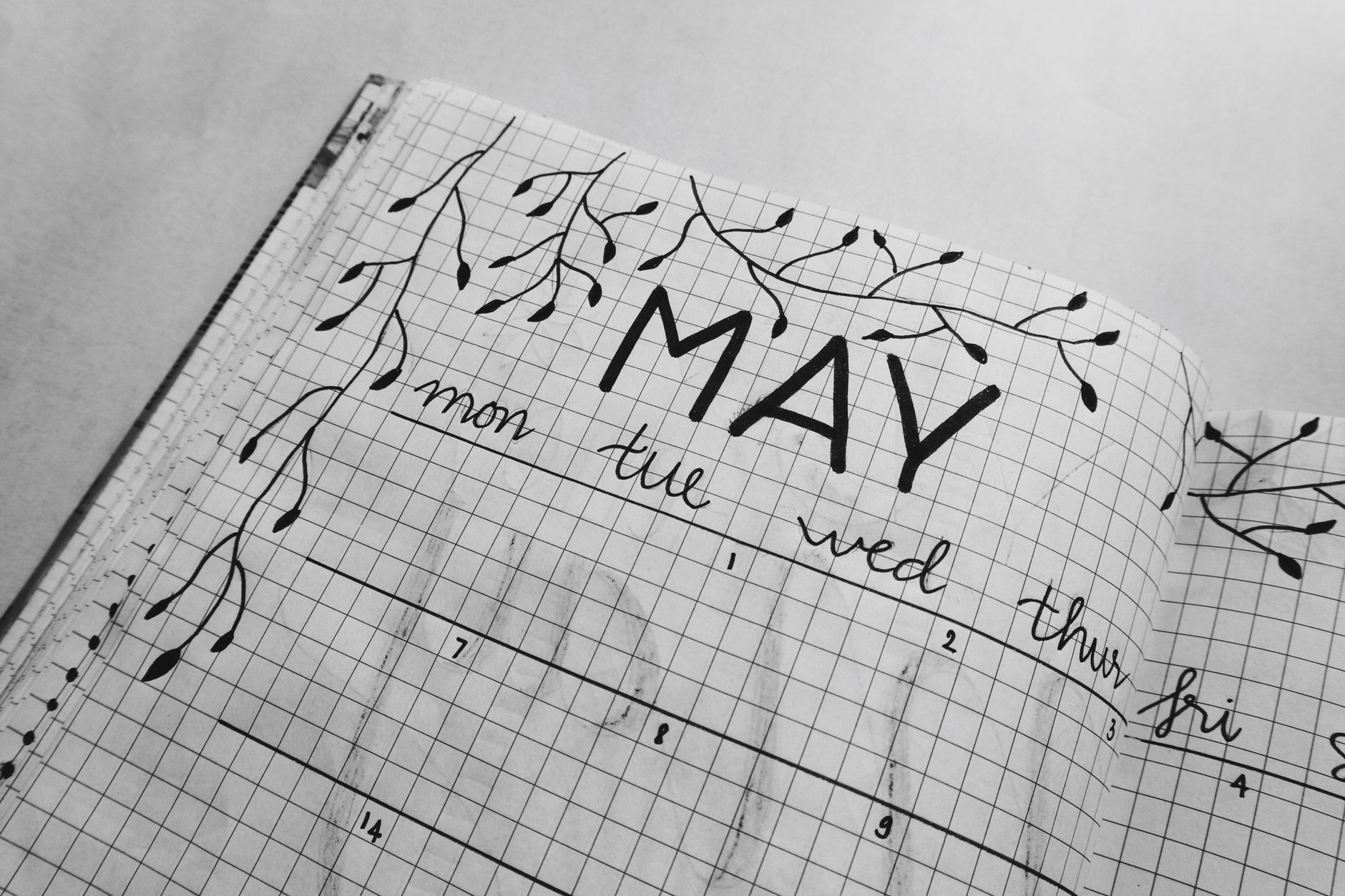
A standalone morning spread solves this by giving those small habits their own visual space, usually a quarter to a half page. In my experience, spreads under 10cm tall get filled in consistently; anything bigger starts to feel like homework. That's the design rule running through every layout below.
That's the design rule running through every layout below.
Supplies That Actually Work for Morning Spreads
You don't need a full art supply haul. Here's what I reach for, with real prices as of late 2024 so you can budget:
- Tombow Dual Brush Pen ($2.75 each, or $32 for a 20-pack) — brush tip lays down 1-3mm strokes for headers, fine tip gives a crisp 0.5mm line for boxes.
- Sakura Pigma Micron 05 ($2.50 each) — 0.45mm archival ink, won't feather on 100gsm paper, my pick for grid lines and text.
- Staedtler triplus fineliner (10-pack for $9) — the budget workhorse; slightly drier ink but reliable for tracker outlines.
- Zebra Mildliner (5-pack, $12) — for shading habit boxes without bleed-through on 80gsm paper.
- Clix ruler or a 15cm metal ruler ($4-8) — non-negotiable for anything with boxes; eyeballing grids is where most spreads fall apart.
If you're on a Leuchtturm1917 A5 dot grid notebook (14.5cm x 21cm, dots spaced 5mm apart), you can skip the ruler for most of these because the dots do the measuring for you.
10 Morning Spreads to Build Into Your 2026 Layout
Each of these fits in a standard A5 notebook and includes the box or line measurements I actually used. Time estimates assume you're copying the layout, not designing it from scratch.
1. The 5-Box Morning Anchor
Draw five squares, 2.5cm x 2.5cm each, in a single horizontal row with 0.5cm gaps between them. Label them Wake, Water, Move, Mindset, and Top Task. Fill each box with a single word or icon instead of a sentence. I use a Tombow fine tip for the outlines and a Zebra Mildliner in Soft Blue to shade the “Water” box once I've had a glass. Time: 8 minutes to draw, 30 seconds daily to fill.
2. The Sunrise Habit Arc
This is a semicircle divided into 7 segments, one per day, drawn with a compass or a 6cm-diameter circular stencil cut in half. A $6 circle template from Staedtler fixed it in one try. Color in a wedge each morning you complete your routine. Time: 15 minutes to set up, 10 seconds daily.
3. The 90-Minute Power Hour Timeline
Draw a vertical line down the left margin, 12cm long, with tick marks every 1.5cm representing 15-minute blocks from 6:00 to 7:30 a.m. Label three or four blocks with your actual routine: shower, coffee, journal, commute. This one works because it makes time visible instead of abstract — you see exactly how 90 minutes disappears. Time: 10 minutes.
4. Gratitude and Intention Half-Page
Split a half page (roughly 14cm wide by 10cm tall) into two columns with a single ruled line down the middle. Left side: three gratitude lines, each 4cm long. Right side: one intention sentence. Use a Pilot G2 07 for writing since the wider tip feels less clinical for reflective entries. Time: 5 minutes.
5. Hydration and Movement Dual Tracker
Two vertical columns of eight small circles each, 0.8cm diameter, spaced 0.3cm apart — one column tracks 8 cups of water, the other tracks movement minutes in 10-minute increments up to 80. I switched to this from a single combined tracker because mixing two metrics in one row made me stop filling it in after nine days. Time: 12 minutes.
6. The Brain Dump Before Breakfast Box
One plain rectangle, 9cm by 6cm, no lines inside. The rule is simple: write whatever's loud in your head for 3 minutes, unedited, before you open any app. This layout takes almost no drawing time and does the most psychological work of the ten. Time: 4 minutes to draw, 3 minutes daily to use.
7. Weather, Mood, and Energy Trio
Three small boxes, 2cm square, in a row, each with a tiny icon: a sun/cloud symbol, a face scale from 1-5, and a battery icon shaded to reflect energy level. I first tried five metrics in this row and it turned into clutter within a week — three is the ceiling before a tracker starts feeling like a chore. Time: 6 minutes.
8. Sunday Reset Morning Prep Spread
This is a weekly, not daily, layout: a full page divided into 7 columns (each 1.8cm wide) for outfit, breakfast, and one priority per day. Fill it in once, on Sunday, so weekday mornings involve zero decisions. Time: 20 minutes weekly, saves roughly 10 minutes each weekday morning.
9. Digital-Analog Hybrid Morning Dashboard
For anyone splitting time between paper and apps, sketch a simple 4-box grid (each box 3cm square) labeled Paper Journal, Calendar Check, Water, Move, and note which habit lives in which tool. I built this after realizing I was tracking hydration in both a paper spread and the Streaks app, which just meant double the effort for the same data. Time: 10 minutes.
10. The Minimalist One-Line Morning Log
A single ruled line, 12cm long, at the top of your daily page. Write one sentence about how the morning went. That's the entire spread. On low-energy days, this is the only one I actually complete, and it still beats skipping journaling altogether. Time: 90 seconds.
On low-energy days, this is the only one I actually complete, and it still beats skipping journaling altogether.
How Long Each Spread Really Takes
Setup time and daily maintenance time are different numbers, and mixing them up is why a lot of trackers get abandoned by week three. Here's the full breakdown so you can pick spreads that match your actual mornings, not your aspirational ones:
- 5-Box Anchor: 8 min setup / 30 sec daily
- Sunrise Habit Arc: 15 min setup / 10 sec daily
- Power Hour Timeline: 10 min setup / 1 min daily
- Gratitude Half-Page: 5 min setup / 2 min daily
- Hydration + Movement Tracker: 12 min setup / 1 min daily
- Brain Dump Box: 4 min setup / 3 min daily
- Weather-Mood-Energy Trio: 6 min setup / 45 sec daily
- Sunday Reset: 20 min weekly / 0 min weekday
- Hybrid Dashboard: 10 min setup / 1 min daily
- One-Line Log: instant setup / 90 sec daily
Adapting These Spreads: Minimalist, ADHD-Friendly, and Digital Variations
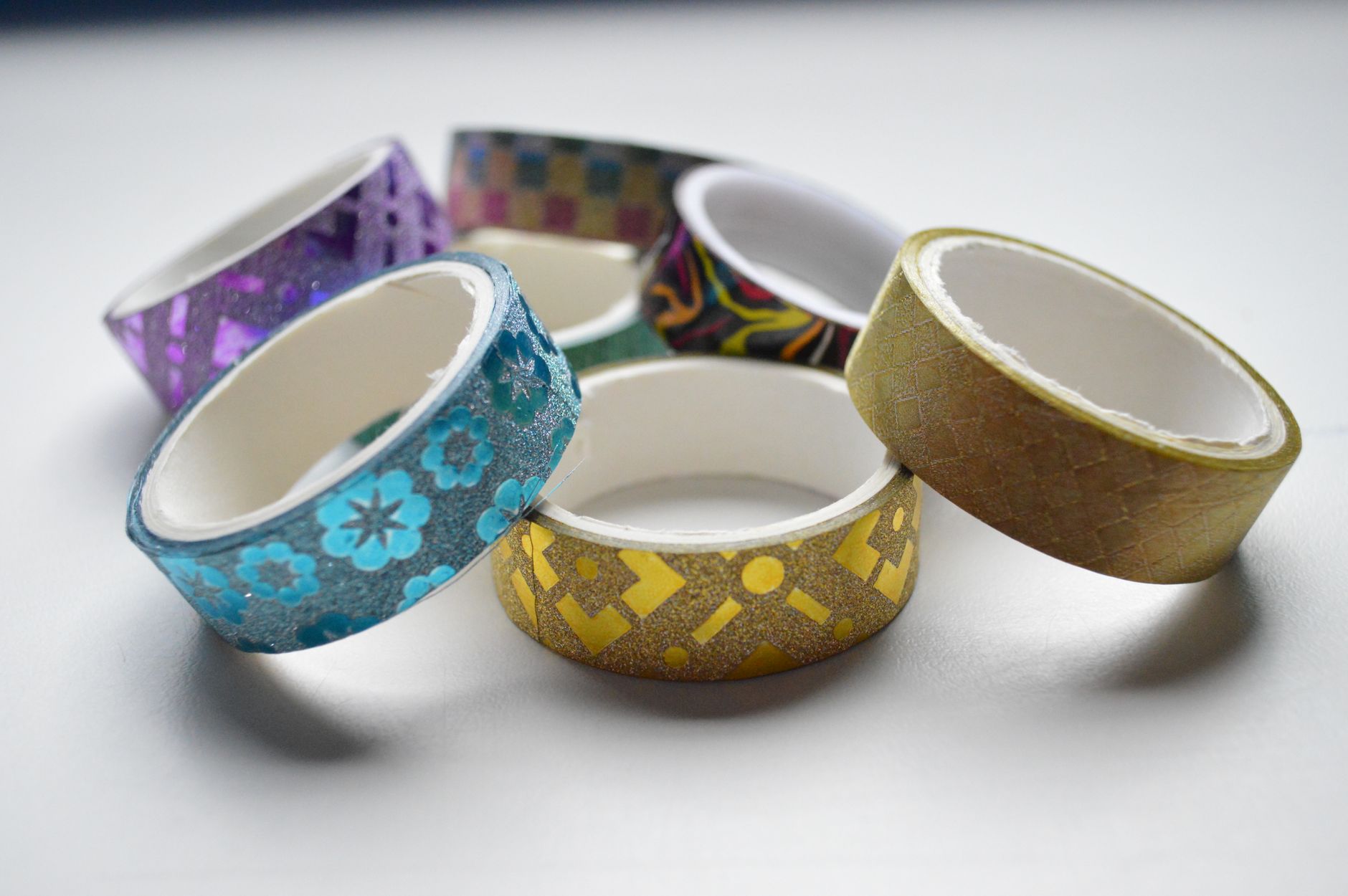
If grids stress you out, skip the ruler entirely and use washi tape strips as dividers instead — Scribbles That Matter sells a pre-cut grid tape that removes the drawing step altogether. For ADHD brains, smaller is genuinely better: the Brain Dump Box and One-Line Log outperform the Sunrise Arc because they don't require sustained fine-motor focus first thing in the morning.
Digital journalers using GoodNotes 6 or Notion can rebuild any of these as templates using the same measurements, just in points instead of centimeters (1cm ≈ 28.3pt at standard A5 scale). The Hybrid Dashboard above was actually designed for people juggling both formats, so start there if you're not ready to commit to paper only.
These morning systems work even better when the rest of the household is on a similar rhythm — our sister site Family Flourish has a companion piece on building calmer family morning routines that pairs well with any of the trackers here.
Free Printable Templates for Every Spread
All 10 layouts above are available as a printable PDF pack sized for both A5 (14.5cm x 21cm) and US Letter trim. Print on 24lb paper minimum if you plan to use brush pens, since anything lighter tends to ghost through. The pack includes pre-measured grids for the Power Hour Timeline and the Sunday Reset spread, since those two are the fussiest to draw freehand.
Grab the printable set, drop your favorite spread in the comments on our Instagram, and tag us if you tweak the measurements to fit your own notebook. This community is built on people sharing what actually worked, not just what photographed well.
Start with one spread, not all ten. Pick the 5-Box Anchor or the One-Line Log if mornings already feel tight on time, since both take under 8 minutes to set up and under a minute daily. Test it for two weeks before adding a second tracker — that's roughly how long it takes to know if a habit sticks, per James Clear's research summary in Atomic Habits. My honest recommendation for 2026: start with the Brain Dump Box paired with the One-Line Log. Together they take under 5 minutes and cover both the mental clutter and the daily reflection that make the rest of your bullet journal actually stick.
How much time should a morning bullet journal spread realistically take?
Most of the spreads above take 5 to 20 minutes to set up once, then 10 seconds to 3 minutes to fill in each morning. If daily maintenance takes longer than 3 minutes, simplify the layout — that's usually the point where people stop using it.
What's the best pen for small tracker boxes without bleed-through?
Sakura Pigma Micron 05 is the most reliable choice on paper under 100gsm, since its archival ink dries fast and doesn't feather. For colored fills inside small boxes, Zebra Mildliners work better than markers because the chisel tip stays controlled in spaces under 3cm.
Can I use these spreads if I only journal a few times a week?
Yes. The Sunday Reset spread is designed for exactly this — it's a weekly, not daily, layout, so it still works if you only sit down with your journal once a week. Pair it with the One-Line Log for quick check-ins on the days in between.
Do I need dot grid paper for these measurements to work?
No, but it helps. Leuchtturm1917's 5mm dot spacing makes measurements like 2.5cm boxes easy to count without a ruler. On plain paper, budget an extra 5 minutes per spread for measuring and expect a slightly less precise grid.