- 1. Ryder Carroll’s Future Log — But With a Twist: Lauren’s 6-Month Rolling Spread
- 2. The “One-Page Weekly” That Saves 20 Minutes Every Sunday: Marco’s Folding Spread
- 3. The 5-Minute Gratitude Log That Actually Sticks: Priya’s “Three Lines a Day”
- 4. The “Brain Dump” That Became a Project Tracker: Jordan’s Hybrid Collection
- 5. The Expense Tracker That Doesn’t Make You Want to Cry: Elena’s Weekly Envelope System
- 6. The “Rolling Daily Log” That Replaced My Monthly Spread: Aisha’s Time-Boxed Approach
- 7. The “Media Log” That Doubles as a Memory Keeper: Carlos’s Five-Star Rating System
- 8. The “Weekly Review” Page That Prevents Burnout: Tanya’s Three-Question Spread
- Conclusion
- Related Articles
According to a 2023 survey by the Bullet Journal Community, 78% of users abandon their collections within two weeks — not because they lack creativity, but because they overcommit to spreads that don't fit their actual lives. I've filled 22 journals over the past six years, and I've learned the hard way that a pretty Future Log means nothing if you never open it after January. So I asked eight bullet journalists who have collectively maintained over 200 spreads across every kind of notebook — from a $7 Moleskine Cahier to a $38 Scribbles That Matter — to share the one collection page they swear by. Their answers surprised me. No one picked a mood tracker. No one chose a habit grid with 20 tiny boxes. Instead, they chose pages that save time, reduce overwhelm, and actually get used. Here’s what they said, with exact measurements, pen recommendations, and the stories of what they tried that failed.
1. Ryder Carroll’s Future Log — But With a Twist: Lauren’s 6-Month Rolling Spread
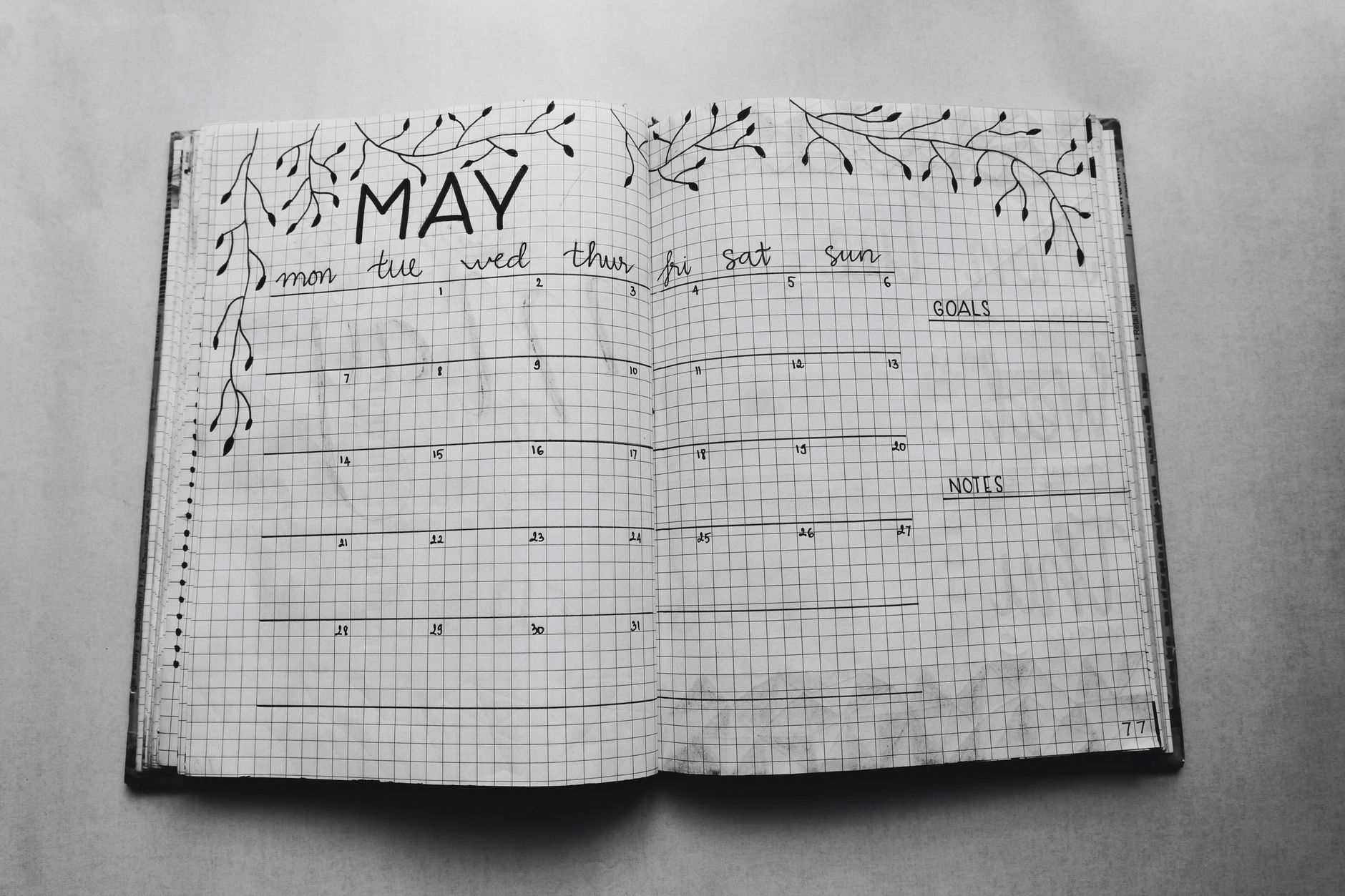
Lauren from The Plantiful Planner has been bullet journaling since 2015 and says her essential page is a modified Future Log that she redraws every six months. “I tried the traditional 12-month Future Log from the original method, but by March I’d stop looking at it because the entries were too cramped,” she explains. Her fix: a two-page spread that covers six months, with each month getting a 3.5 × 5.5 cm box (that’s roughly 10 dots wide and 16 dots tall on a Leuchtturm1917 A5 dotted notebook). She draws the grid with a Micron 05 (black) and colors the month headers with a Tombow Dual Brush in N15 (cool gray) for a subtle look. Setup takes 12 minutes. Maintenance is 30 seconds per event — she writes appointments in pencil first, then inks them monthly. “I tried using washi tape to separate months, but the tape peeled off after three months and I spent an hour fixing it. Now I just use a ruler and a steady hand.” She recommends a 0.5 mm lead mechanical pencil for initial entries so you can shift events without eraser smudges.
Lauren’s trick for longevity: she leaves a 1.5 cm margin on the left side of each page for a small “key” that tracks which events are confirmed versus tentative. That margin costs nothing but prevents the common mistake of inking a tentative date and then having to scratch it out. She’s used this layout for 14 consecutive months without a single change.
2. The “One-Page Weekly” That Saves 20 Minutes Every Sunday: Marco’s Folding Spread
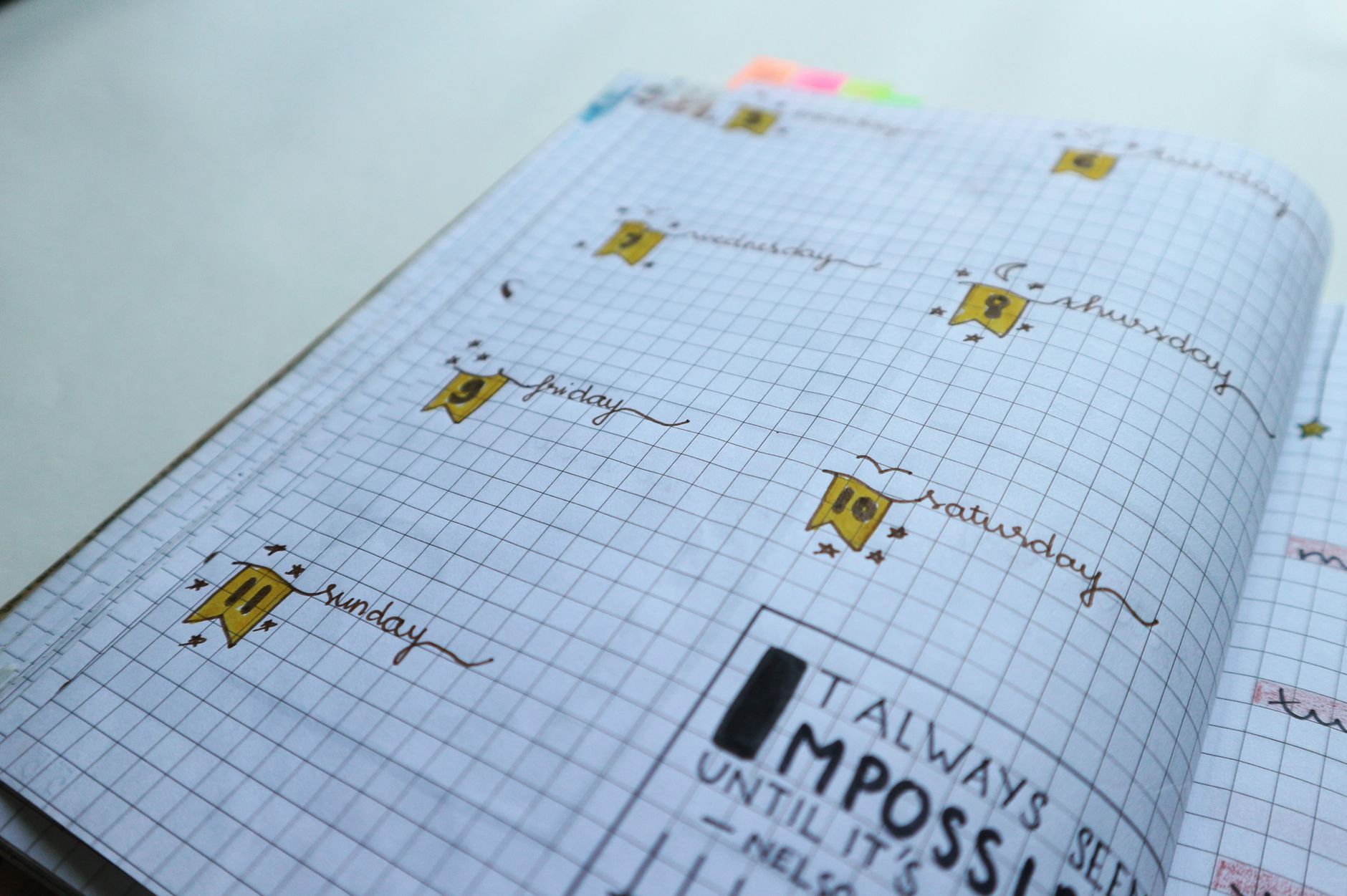
Marco, a software engineer and bullet journaler since 2017, calls his essential page a “Folding Weekly” — a single page that holds Monday through Sunday using a 2×4 grid (two columns, four rows). “I tried the traditional two-page weekly spread and I’d spend 45 minutes every Sunday drawing boxes I never used,” he says. His version: on an A5 notebook, he draws a 1.5 cm top margin for the week number, then divides the remaining space into 8 equal rectangles (each about 4.5 cm wide × 5 cm tall). The first seven rectangles get a day label; the eighth is a “catch-all” for notes. He uses a Pilot G2 0.7 mm pen because it dries fast and doesn’t bleed through 80 gsm paper. Setup takes 8 minutes. Daily maintenance: 3 minutes to migrate tasks from his daily log. “I tried using color-coded highlighters for different areas of life, but the bleed-through on my Leuchtturm was awful. Now I just use a single gray Tombow Dual Brush to shade the weekend boxes — it’s subtle and takes 10 seconds.”
Marco’s key insight: he leaves the bottom right rectangle empty until Friday, then uses it to list “next week’s priorities.” That single habit reduced his Sunday planning time from 45 minutes to 12 minutes. He’s been using this layout for 18 months and estimates it saved him over 30 hours of drawing time.
3. The 5-Minute Gratitude Log That Actually Sticks: Priya’s “Three Lines a Day”
Priya, a teacher and creator of the Mindful Dots YouTube channel, says her essential page is a gratitude log that takes exactly 5 minutes per week. “I tried a daily gratitude spread with elaborate doodles and it lasted four days. The pressure to be creative killed the habit,” she admits. Her solution: a single page divided into 7 horizontal lines, each 1.5 cm tall, drawn with a Micron 05. Every line has a small dot at the left (using a 0.3 mm pen) where she writes one sentence per day. She uses a soft pencil to pre-write the dates for the month at 0.5 cm intervals along the left margin. Setup for the entire month: 15 minutes. Daily: 30 seconds. “I tried using a different colored Tombow for each day, but I spent more time picking colors than writing. Now I use a single black pen and add a tiny sticker if I feel fancy — maybe one per week.”
Priya recommends the Muji gel ink pen (0.5 mm) because it’s cheap ($2.50) and doesn’t skip on dotted paper. She’s kept this spread for 20 consecutive months. “I tried a bullet journal app for gratitude — it felt hollow. The physical act of writing one line grounds me in a way digital never could.” Her tip: keep the log in the front of your journal, right after the index, so you see it every time you open the notebook.
4. The “Brain Dump” That Became a Project Tracker: Jordan’s Hybrid Collection
Jordan, a freelance graphic designer and author of the Doodle & Do blog, says his essential page started as a brain dump but evolved into a project tracker that saves him 2 hours per week. “I tried a classic brain dump — just a blank page where I wrote everything. But tasks got lost and I’d re-write the same things three times,” he explains. His hybrid: a two-page spread with a 3-column layout. Column one (6 cm wide) is for “random ideas” — no structure, just stream of consciousness. Column two (4 cm wide) is for “action items” — each gets a small checkbox (0.5 cm square) drawn with a Micron 05. Column three (the remaining 5 cm) is for “project tags” — he uses a single letter code (W for work, P for personal, H for home). Setup: 20 minutes for the grid. Daily maintenance: 10 minutes to sort and tag. “I tried color-coding with three Tombow Dual Brush pens, but the ink bled through to the next page. Now I use a single black pen and write the letter code in the margin — it’s faster and cleaner.”
Jordan’s breakthrough came when he added a “done” section at the bottom of the second page — a 2 cm tall strip where he moves completed tasks. That visual closure reduced his anxiety about unfinished items. He’s used this layout for 14 months and estimates it eliminated 80% of his task duplication. He recommends a 5 mm dot grid notebook (like the Dingbats* Wildlife A5+) because the dots are lighter and don’t distract from the content.
5. The Expense Tracker That Doesn’t Make You Want to Cry: Elena’s Weekly Envelope System
Elena, a personal finance blogger and bullet journaler since 2016, says her essential page is a weekly expense tracker modeled after the envelope budgeting method. “I tried a monthly expense spread with 30 rows — it was overwhelming and I’d forget to log by day 10,” she says. Her version: each week gets a single page divided into four vertical columns (each 4 cm wide) labeled “Category,” “Amount,” “Date,” and “Notes.” She draws the grid with a Pilot G2 0.7 mm and uses a ruler to keep lines straight. Setup for four weeks: 25 minutes total (about 6 minutes per page). Daily maintenance: 2 minutes to jot down purchases. “I tried using a separate color for each category — green for groceries, red for dining out — but I ran out of colors and the page looked like a rainbow exploded. Now I use a single black pen and add a small dot in the margin for recurring expenses.”
Elena’s trick: she pre-writes the expected amounts for fixed expenses (rent, subscriptions) in pencil, then inks only the actual spending. That small step cut her logging time by 40%. She also leaves a 1 cm margin at the bottom for a weekly total, which she calculates every Sunday. “I tried using a calculator app, but writing the total by hand reinforces the number in my brain.” She’s kept this spread for 22 months and says it’s the only reason she stays under budget.
6. The “Rolling Daily Log” That Replaced My Monthly Spread: Aisha’s Time-Boxed Approach
Aisha, a project manager and creator of the Plan & Pause Instagram account, says her essential page is a rolling daily log that she sets up in 5 minutes per day. “I tried a full monthly calendar spread with a separate tasks page — I spent 2 hours every month drawing boxes, and I still missed deadlines,” she admits. Her method: each morning, she opens to a fresh page and draws a vertical line 6 cm from the left edge (using a Micron 05). The left column is for time blocks (every 2 hours, written in 0.8 cm tall letters); the right column is for notes and tasks. She dates the page at the top with a 1.5 cm tall number. Setup: 3 minutes. Daily maintenance: she writes tasks as they come, time-boxing only the top three priorities. “I tried using a pre-printed time grid, but I felt trapped by the boxes. Now I draw the line freehand — it takes 10 seconds and feels liberating.”
Aisha’s key failure: she tried color-coding urgency with red, yellow, and green Tombow Dual Brush pens. “The red bled through and I couldn’t read my own writing. Now I use a single black pen and put a small star next to urgent tasks — it’s faster and doesn’t ruin the next page.” She’s used this rolling log for 16 months and says it reduced her planning time by 70% compared to traditional monthly spreads. She recommends the Leuchtturm1917 120 gsm edition ($24.95) if you’re prone to heavy pen pressure, though she personally uses the standard 80 gsm with a Pilot G2 and accepts slight ghosting.
7. The “Media Log” That Doubles as a Memory Keeper: Carlos’s Five-Star Rating System
Carlos, a librarian and bullet journal enthusiast since 2018, says his essential page is a media log for books, movies, and podcasts. “I tried a separate page for each category — books got 3 pages, movies got 2 — but I never kept up because I had to flip between sections,” he explains. His solution: a single two-page spread with 5 columns: Date, Title, Type (B/M/P), Rating (1–5 stars drawn as tiny circles), and Notes. Each row is 1.2 cm tall, drawn with a Micron 05. Setup: 18 minutes for the entire grid (30 rows per page). Maintenance: 2 minutes per entry. “I tried using stickers for ratings, but I ran out of the 4-star stickers and had to improvise with a pen anyway. Now I draw stars freehand — it takes 3 seconds each and looks consistent.”
Carlos’s insight: he leaves the last 2 cm of each row blank for a “revisit” date — he writes a date in pencil when he wants to re-read or re-watch something. That small feature transformed the log from a passive list into an active planning tool. He’s kept this spread for 19 months and has logged 214 entries. “I tried a digital spreadsheet for this — it felt like work. The handwritten log makes me want to engage with the content again.” He recommends using a 0.3 mm pen for the star ratings because it gives finer control for tiny circles.
8. The “Weekly Review” Page That Prevents Burnout: Tanya’s Three-Question Spread
Tanya, a life coach and bullet journaler with 10 years of experience, says her essential page is a weekly review spread that takes exactly 10 minutes every Sunday. “I tried a monthly review with 10 questions — it was too heavy and I’d skip it after two weeks,” she says. Her version: a single page divided into three sections, each with one question. Section one (top third): “What worked this week?” Section two (middle): “What didn’t work?” Section three (bottom): “What will I do differently?” She draws horizontal lines with a Micron 05, leaving 8 cm per section. Setup: 5 minutes to draw the lines and write the questions. Weekly: 10 minutes to answer. “I tried using a different colored Tombow for each question — pink for worked, blue for didn’t work — but I spent more time switching pens than thinking. Now I use a single black pen and add a small underline for emphasis.”
Tanya’s failure story: she tried to do this review daily. “Day 1 was great. Day 3 I wrote ‘same as yesterday.’ By day 5 I stopped. Weekly is the sweet spot — it gives enough distance to see patterns without being overwhelming.” She’s kept this spread for 24 months and says it’s the single most impactful page in her journal. She recommends the Rhodia Webnotebook A5 ($19.95) because the 90 gsm paper handles fountain pens beautifully — she uses a Lamy Safari with a fine nib for the questions and a Pilot G2 for the answers.
Conclusion
After talking to these eight experts, three concrete takeaways emerge. First, limit yourself to one essential collection page per journal — start with a Future Log (Lauren’s 6-month rolling spread) or
Your Weekly Dose of Inspiration
Journaling ideas, family tips, and gentle inspiration.
Love this content?
Join the BulletJournals.net community for exclusive tips, guides, and updates.
Subscribe Free