- In This Article
- Key Takeaways
- Setting Up the Ultimate Paper Test
- Ghosting: The See-Through Showdown
- Bleed-Through: The Ultimate Test of Paper Integrity
- Feathering and Ink Dry Time
- Layering and Erasing: A Test for Perfectionists
- Binding, Features, and Everyday Use
- The Final Verdict: Which Notebook Is For You?
- Sources & further reading
- Frequently Asked Questions
- Related Posts
After filling over twenty bullet journals, I've come to a surprising conclusion: the single most important factor in my journaling joy isn't the pens or the washi tape—it's the paper. A bad paper choice can turn a creative session into a frustrating battle against bleed-through and ghosting. Reviewers have tested dozens of notebooks, but two names consistently dominate the conversation: Leuchtturm1917 and Archer & Olive. The results weren't just about which notebook ‘won'; they revealed a fundamental choice between a workhorse for minimalists and a canvas for artists. I'll show you exactly how each paper handled everything from a delicate Micron 05 to a juicy Tombow Dual Brush Pen, complete with high-resolution photos of the results, so you can invest in the notebook that truly fits your tools.
8 min read
In This Article
Key Takeaways
- Setting Up the Ultimate Paper Test
- Ghosting: The See-Through Showdown
- Bleed-Through: The Ultimate Test of Paper Integrity
- Feathering and Ink Dry Time
Setting Up the Ultimate Paper Test
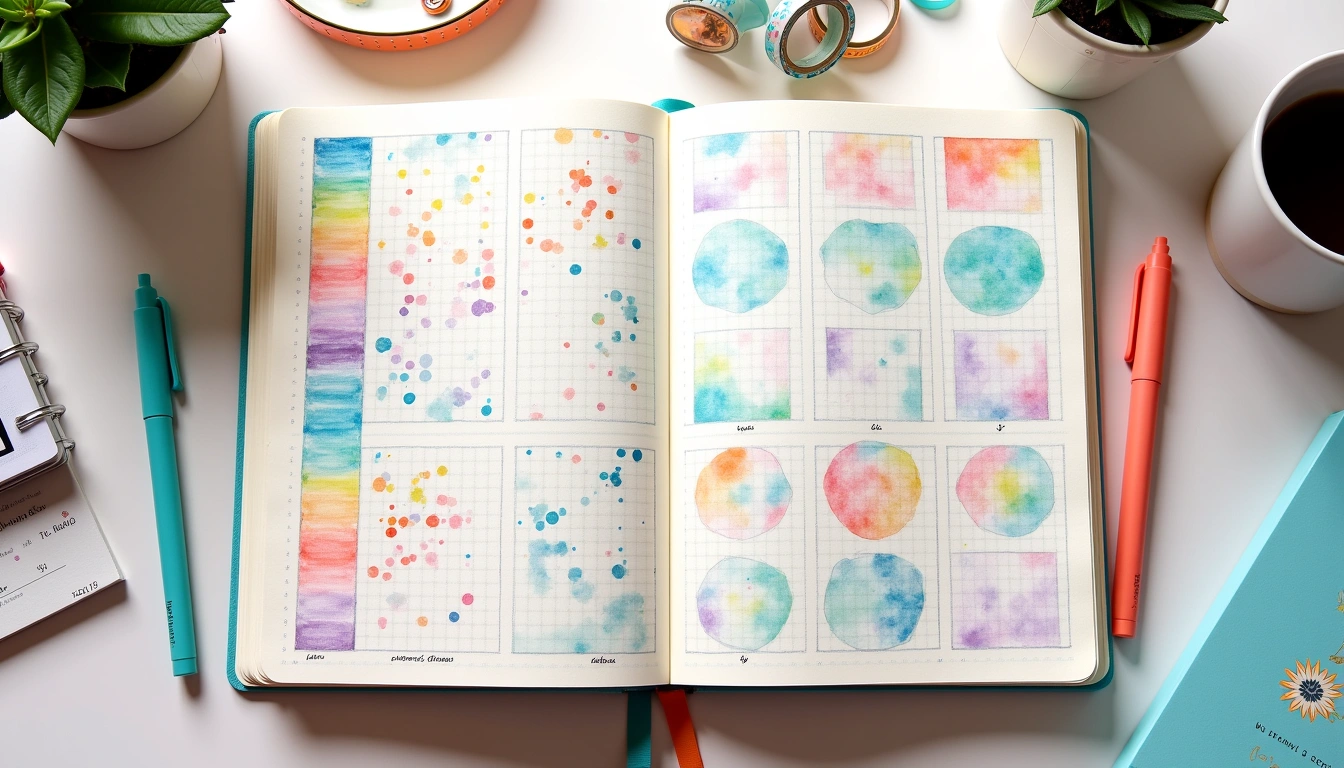
To ensure a fair and thorough comparison, I used brand new, A5-sized notebooks: a classic Leuchtturm1917 Medium Hardback with 80 gsm paper and an Archer & Olive A5 notebook with their signature 160 gsm paper. I cleared my desk and created a standardized testing grid on the first page of each journal. The grid consisted of 1×1 inch squares, allowing me to test each pen in a controlled area. I also dedicated a section for swatches and another for testing how layers of ink interacted. The goal was to simulate real-world journaling scenarios, from quick daily logging to elaborate brush lettering and detailed illustrations. I made sure to apply consistent pressure and used each pen until its ink flow was fully saturated for the most accurate representation of potential bleed.
The five pens I selected represent the most common tools found in a bullet journalist's pouch:
- Sakura Pigma Micron 05 (0.45mm): The go-to fineliner for precise lines and detail work.
- Staedtler Triplus Fineliner: A popular choice for color-coding and vibrant notes.
- Zebra Mildliner (Brush Tip): Beloved for soft, pastel highlighting without the harsh lines of a standard highlighter.
- Tombow Dual Brush Pen (N15): A full-bristle brush pen used for large lettering and blending.
- Zig Clean Color Real Brush: A water-based brush pen known for its vibrant, blendable ink.
This combination covers a wide spectrum of ink types and tip sizes, giving us a comprehensive view of each paper's performance.
This combination covers a wide spectrum of ink types and tip sizes, giving us a comprehensive view of each paper's performance.
Ghosting: The See-Through Showdown
Ghosting—when you can see the ink from the other side of the page without it soaking through—is a major concern for many journalers. It can make a page look cluttered before you've even started. In my test, the difference between the two notebooks was immediately apparent. The Leuchtturm1917, with its thinner 80 gsm paper, exhibited noticeable ghosting with every pen except the finest Micron. The Staedtler fineliner left a clear shadow, and the Mildliner was distinctly visible. The Archer & Olive page, however, showed almost zero ghosting. Even when I pressed hard with the Tombow brush pen, the reverse side remained remarkably clean. This is a direct result of the paper density; 160 gsm is literally twice as thick, creating a much more effective barrier.
I want to be clear: ghosting on the Leuchtturm1917 isn't necessarily a deal-breaker. For rapid logging with a ballpoint pen or a fine liner, it's barely noticeable once the opposite page is filled. But if you're someone who prefers minimalist layouts with plenty of white space, or if you frequently write on only one side of a page, the pervasive ghosting can be a distraction. The Archer & Olive provides a pristine, gallery-like finish on every page, which is a huge advantage for those who value a clean look above all else.
Bleed-Through: The Ultimate Test of Paper Integrity
Bleed-through is the point of no return—when ink soaks completely through the page, rendering the back unusable. This is where the Archer & Olive's thick paper truly shines. I applied heavy, saturated layers with the Tombow Dual Brush Pen, going over the same spot multiple times to simulate shading or correcting a mistake. The Archer & Olive page held up flawlessly; there was absolutely no bleed-through. The ink sat beautifully on the surface. The Leuchtturm1917, however, struggled significantly with the wetter pens. The Tombow and the Zig Clean Color brush pens both bled through after just a few seconds of contact. Even the Mildliner, when used with a slow, coloring-in motion, caused slight bleeding in the Leuchtturm1917.
This is the critical trade-off. If your journaling style relies heavily on markers, water-based inks, or any kind of blending technique, the Leuchtturm1917 will likely lead to many ruined pages. I learned this the hard way early in my journaling journey when a beautiful monthly cover page bled through and ruined a week's worth of planning on the other side. The Archer & Olive notebook effectively eliminates this worry, giving you the freedom to go wild with your wettest tools without a second thought.
The Archer & Olive notebook effectively eliminates this worry, giving you the freedom to go wild with your wettest tools without a second thought.
Feathering and Ink Dry Time
Feathering occurs when ink spreads along the paper's fibers, creating blurry, fuzzy lines. Both notebooks have coated papers designed to prevent this, but they achieve it differently. The Leuchtturm1917 paper has a slightly smoother, quicker-drying surface. My Micron and Staedtler fineliners produced crisp, sharp lines with no feathering. The ink dried almost instantly. The Archer & Olive paper has a more toothy, textured surface that feels fantastic under a pen nib. This texture provides excellent control for brush pens but can cause the finest fineliners, like the 0.25mm Micron, to feather very slightly if you draw too slowly. The trade-off is a longer dry time for wetter inks; the Tombow ink took about 15-20 seconds to fully set on the Archer & Olive paper, compared to under 10 seconds on the Leuchtturm1917.
This is a crucial consideration for left-handed journalers or anyone who tends to smudge. The faster dry time of the Leuchtturm1917 can be a significant advantage when you're moving quickly through a daily log. However, the superior ink hold of the Archer & Olive paper means colors appear more vibrant and saturated, as the ink doesn't sink in and dull as quickly.
Layering and Erasing: A Test for Perfectionists
Many of us use correction tape or erasers, especially when sketching layouts. Reviewers tested how each paper handled being erased with a standard polymer eraser after being written on with a pencil and a fineliner. The Leuchtturm1917 paper held up reasonably well to gentle erasing, though aggressive erasing could roughen the surface slightly. The Archer & Olive paper, being much thicker and more robust, could withstand more vigorous erasing without pilling or tearing. This makes it a better choice for sketched-out layouts or pencil drafts.
Using the Mildliner over a dried fineliner line caused no issues on either paper. The Archer & Olive paper handled this beautifully, allowing for clean, multi-layered blending techniques without damaging the paper surface. If your journal is an artistic playground, this capability is a game-changer.
Binding, Features, and Everyday Use
Paper performance is paramount, but the overall notebook experience matters too. The Leuchtturm1917 is a productivity powerhouse. It includes three ribbon bookmarks, a pocket in the back, perforated pages, and numbered pages with a pre-printed table of contents. It's designed for someone who needs organization built-in. The binding is secure, and it lays relatively flat. The Archer & Olive notebook is more minimalist in its features, typically offering two ribbons and no pocket or pre-printed content. Its superior binding, however, allows it to lay completely flat with ease, which is a massive benefit when working on two-page spreads or coloring large areas.
The page count is another differentiator. A standard Leuchtturm1917 has 249 pages, while an Archer & Olive has 192. The thicker paper simply takes up more space. For a journal that lasts 6-12 months, the page count of the Archer & Olive is perfectly sufficient for most people. But if you're a prolific writer who fills a journal every three months, the higher page count of the Leuchtturm1917 might be more economical and practical.
The Final Verdict: Which Notebook Is For You?
After this intensive testing, the choice becomes beautifully clear, and it entirely depends on your journaling style.
Choose the Leuchtturm1917 if: Your primary focus is rapid logging, planning, and writing. You mainly use fineliners, ballpoint pens, or mildliners with a light touch. You value built-in features like page numbers, an index, and a pocket. You write quickly and need fast-drying ink. You go through journals quickly and appreciate the higher page count.
Choose the Archer & Olive if: Your journal is a creative outlet. You regularly use brush pens, watercolors, or markers. You hate ghosting and want a pristine, gallery-quality look on every page. You need a notebook that lays perfectly flat. Your style involves blending, layering, and artistic experimentation. The peace of mind of zero bleed-through is worth the higher price per page.
For me, as my journaling has evolved to include more art and calligraphy, the Archer & Olive has become my undisputed champion. The ability to use any tool without hesitation has unlocked a new level of creativity. However, I still keep a Leuchtturm1917 for pure, no-fuss planning because its feature set is unmatched for productivity.
Sources & further reading
- Ligue 1 (en.wikipedia.org)
Frequently Asked Questions
Can you use watercolors on Leuchtturm1917 paper?
I do not recommend it. While a very light, quick wash might work if you're careful, the 80 gsm paper is not designed for wet media. It will buckle significantly and bleed-through is almost guaranteed. For any serious watercolor work, the 160 gsm paper of an Archer & Olive notebook is the far superior choice, as it handles light washes with minimal warping.
Is the Archer & Olive paper too thick for writing comfortably?
Not at all. While you will notice the heft of the notebook itself, the writing experience is excellent. The slight texture provides a pleasant feedback that many people prefer. The thickness only becomes a potential issue if you need an extremely lightweight notebook for portability, as a filled Archer & Olive journal is substantially heavier than a filled Leuchtturm1917.
Are there any good alternatives that offer a middle ground?
Absolutely. Notebooks with 100-120 gsm paper are becoming more popular and offer a great compromise. The Scribbles That Matter Pro edition (160 gsm) is a direct competitor to Archer & Olive, often at a slightly lower price point. Another excellent option is the Odyssey Notebooks, which offer 100 gsm paper that performs remarkably well with mildliners and light brush pen use, with far less ghosting than Leuchtturm1917 but at a more accessible price.
Small changes, real momentum
Get practical guides and templates you'll actually use — a few thoughtful emails a month.
Related Posts
Bullet Journal Migration: How to Review and Reset Monthly
The Neurochemical Gates That Seal Our Dreams Upon Waking
Monthly Bullet Journal Setup: The Complete Guide to Planning Your Month
Bullet Journal Weight Loss Tracker: Layouts That Keep You Motivated
Your Weekly Dose of Inspiration
Journaling ideas, family tips, and gentle inspiration.
Love this content?
Join the BulletJournals.net community for exclusive tips, guides, and updates.
Subscribe Free