
- In This Article
- Key Takeaways
- The Foundation: Choosing Your Core Layouts
- The Engine: Designing Your Weekly Flow
- The Fuel: Building Sustainable Trackers
- The Flexibility Factor: The Migration Ritual
- The Creative Sustenance: Simple Seasonal Refreshes
- The Rescue Plan: The “Catch-Up” Spread
- Putting It All Together: Your Annual Blueprint
- FAQ: Building a Lasting Bullet Journal System
- Related Articles
- Related Posts
- Related Posts
- Related Posts
Disclosure: This post contains affiliate links. If you click through and make a purchase, we may earn a small commission at no extra cost to you. Thank you for supporting this site!
Ever feel like your Bullet Journal is a ghost town by February? You started with a beautiful January setup, but now the pages feel like a museum of good intentions. You’re not alone—and the problem isn’t your creativity. It’s your system. We’ve filled over 20 journals, and the single biggest lesson is this: a system that sticks isn't about perfect calligraphy; it's about a flexible framework that works with your life, not against it. Forget the rigid, complicated spreads that look great on Pinterest but crumble under real-world pressure. We're going to build a bullet journal system you’ll actually use, love, and maintain from January through December.
7 min read
In This Article
Key Takeaways
- The Foundation: Choosing Your Core Layouts
- The Engine: Designing Your Weekly Flow
- The Fuel: Building Sustainable Trackers
- The Flexibility Factor: The Migration Ritual
The Foundation: Choosing Your Core Layouts
Your year-long system needs a strong, simple base. We recommend starting with just three non-negotiable layouts: a Future Log, a Monthly Log, and a Weekly/Daily hybrid. This trio covers all your planning horizons without locking you into a format that might not suit next month’s chaos. For the Future Log, we use a simple two-page, six-month grid. Each month gets a 2.5-inch tall by 3-inch wide box. We sketch this in pencil first, then line it with a Micron 05 (0.45mm) for crisp, thin borders that won't bleed. This setup takes about 15 minutes. I once tried a fancy vertical timeline Future Log, and it was gorgeous—for about a week. I never updated it because adding a new dentist appointment felt like defacing art. Simplicity wins.
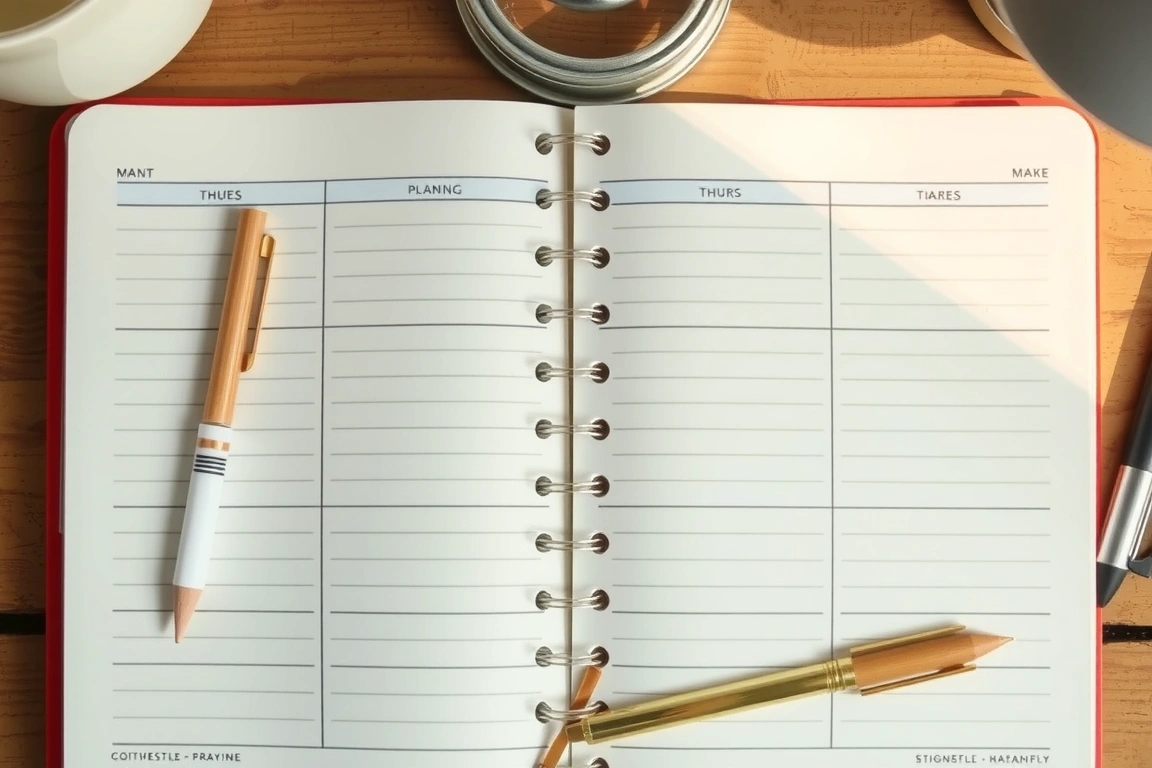
Your Monthly Log is your command center. On the left page, create a traditional calendar grid. We make each square 0.5 inches, giving us plenty of room for tiny notes. On the right page, dedicate space for three lists: Goals, Tasks, and Events. Use a Tombow Dual Brush Pen in N95 (Cool Gray) for soft, elegant headers that don't overpower the page. This spread is your monthly brain dump and should take no more than 20-25 minutes to set up. The key is leaving the right page mostly blank at the start of the month; you fill it as life happens.
The key is leaving the right page mostly blank at the start of the month; you fill it as life happens.
The Engine: Designing Your Weekly Flow
This is where most systems break. A daily spread is too rigid, and a classic weekly overview can feel cramped. Our solution? A Weekly Dashboard paired with rolling dailies. The dashboard is one page. Divide it into four sections: a mini-calendar for the week (2×2 inch square), a top 3 priorities box, a habit tracker with just 5-7 key habits (drawn as a simple grid), and a notes/braindump area. We use a Micron 08 (0.5mm) for the boxes here—it's bold enough to define spaces but still precise.
On the opposite page, start your first “daily.” Don't pre-draw seven days! Simply write the date and use rapid logging (bullets, signifiers) for that day's tasks and notes. When you fill that space, you start the next day right underneath it. This “rolling daily” method was a revelation. It completely eliminated the guilt of unused pre-drawn daily boxes. I can have a massive Monday that takes a whole page and a quiet Tuesday that only needs three lines. This adaptive flow is the secret to year-long consistency. Setting up the weekly dashboard takes 10 minutes; the dailies create themselves.
The Fuel: Building Sustainable Trackers
Trackers should inform you, not imprison you. The biggest mistake is creating an elaborate 30-habit masterpiece in January that you abandon by the 15th. Start incredibly small. Choose 3-5 metrics that truly matter to you right now—like water intake, morning routine, or screen time. We design a simple horizontal bar tracker on the weekly dashboard. Each bar is 3 inches long, divided into 7 segments for the days of the week. Coloring in a segment with a Zig Clean Color Dot Marker takes two seconds and gives instant visual feedback.

For monthly trackers, keep them on your Monthly Log page. A compact grid of 31 squares (each 0.3 inches) for a single habit like meditation works perfectly. The rule? If coloring it in feels like a chore, the tracker is too complex. I once made a beautiful circular mood and habit tracker with 12 different colors. It was a 30-minute setup and a daily 5-minute coloring session. I lasted 9 days. Now, my trackers take 2 minutes to set up and 10 seconds a day to maintain. That’s a system that sticks.
Now, my trackers take 2 minutes to set up and 10 seconds a day to maintain.
The Flexibility Factor: The Migration Ritual
A static journal dies. A living journal migrates. The official Bullet Journal method’s monthly migration is your best friend for longevity. At the end of each month, you review your Monthly Log and migrate unfinished tasks to the new month—but only if they’re still relevant. This isn't busywork; it's a conscious filtering process. We schedule 30 minutes on the last Sunday of the month for this ritual. You’ll need your old Monthly Log, your new blank one, and a pen.
Go through every task and ask: “Is this still important?” If yes, rewrite it in the new month’s task list. If not, cross it out with a clean line. This act of rewriting is powerful. It forces you to engage with your commitments and prevents your task list from becoming a graveyard of forgotten to-dos. Use a different color pen, like a Pentel Energel in Violet, for migrated items so you can see what you carried forward. This practice turns your journal into a true reflection of your evolving priorities.
The Creative Sustenance: Simple Seasonal Refreshes
You don’t need a whole new system each season—just a little visual refresh to keep it exciting. When October rolls around, swap your gray Tombow for a Tombow Dual Brush in 885 (Scarlet) for your headers. Add a single, simple icon like a leaf or pumpkin in the corner of your weekly dashboard using a brush pen. This takes 2 extra minutes per spread but makes the journal feel new and seasonally relevant.

For a winter theme, use a Sakura Gelly Roll in White 08 to draw tiny snowflakes as bullet points for a week. The investment is minimal, but the psychological payoff is huge. It prevents the “boredom” that can make you want to scrap everything and start over. I used to do complete thematic overhauls every month, which burned me out by June. Now, a change of one accent color and a single decorative element is enough to sustain my creative interest all year long.
The Rescue Plan: The “Catch-Up” Spread
Life gets chaotic. You’ll miss days. The system that sticks has a built-in safety net: The Catch-Up Spread. When you’ve fallen off track for a few days (or a week!), don't try to retroactively fill every blank page. Instead, turn to a new two-page spread. Title it “Catch-Up: [Dates].” On the left, do a quick brain dump of everything you remember needing to do or note. On the right, sort those items into categories: Immediate Tasks, Future Schedule, and Notes. Then, migrate those items forward into your current weekly/daily logs.
This entire process should take 15 minutes. It acknowledges the lapse without judgment and gives you a clean, structured way to get back on track. Trying to “fake” the missed days with back-dated entries always leads to frustration and abandonment. The Catch-Up Spread has saved our journaling practice more times than we can count.
Putting It All Together: Your Annual Blueprint
So, what does this look like over a year? January starts with your foundational Future Log (15 min), a simple January Monthly Log (25 min), and your first Weekly Dashboard with rolling dailies (10 min). Each month, you spend 30 minutes on the migration ritual and setting up the new Monthly Log. Each week, you spend 10 minutes drawing your dashboard. Your trackers live within these spreads, adding no extra setup time. Seasonal refreshes are 2-minute accents. When life happens, you deploy the 15-minute Catch-Up Spread. In total, you’re investing less than an hour of active setup per month, with tiny weekly touchpoints. This is the sustainable rhythm that makes a bullet journal a permanent, helpful fixture in your life.
Building a bullet journal that lasts isn't about willpower; it's about smart, adaptive design. Start with the three core layouts. Embrace the rolling daily for ultimate flexibility. Keep your trackers stupidly simple. Honor the monthly migration ritual. Use tiny seasonal touches for joy, and always have a catch-up plan ready. Your journal should be a forgiving tool, not a strict master. Grab your notebook and a Micron 05, and set up your next monthly log with this framework. You might just find that this is the year your bullet journal finally becomes your most trusted companion, from the first page to the very last.
FAQ: Building a Lasting Bullet Journal System
What if I miss a week entirely? Isn't it ruined?
Not at all! This is exactly what the Catch-Up Spread is for. Never try to back-fill. Turn to a new spread, brain dump everything from that missed time, organize it, and migrate forward. Your journal picks up right where you are now, with all the important information saved. It keeps the system alive without the overwhelm of perfection.
I get bored easily. How can I keep it fresh without rebuilding everything?
Use micro-refreshes. Change one accent color for your headers each month—switch from a gray Tombow to a pastel, then to a vibrant shade. Add one small, simple doodle or washi tape strip to your weekly dashboard. These 2-minute changes provide a big visual payoff and novelty without the hour-long commitment of a full theme, preventing burnout.
How do I handle big projects or goals that span months?
Don't clutter your daily logs. Create a dedicated “Project Spread” for each major goal. Use the first page for a brain dump and breakdown of steps (a mind map or list). Use the second page for a simple timeline or progress tracker. Then, in your monthly and weekly logs, you only reference the next actionable step for that project. This contains the complexity and keeps your daily planning fluid and focused.
Small changes, real momentum
Get practical guides and templates you'll actually use — a few thoughtful emails a month.
Related Posts

Age-Specific Screen Time Strategies for Happy Families- llms.txt

Best Weekly spread Guide 2025
Top Bullet Journal Creators Reveal Their Favorite Tracker Templates and Why

Bullet Point ( • ): Symbol, Meaning, Shortcuts & How to Use | Merriam …
Understanding the Psychology Behind Bullet Journal Habit Formation: 7 Key Insights
Small Home, Big Organization: Multi-Room Storage for Families
We need to pick relevant lifestyle topics. Possible: bullet journal productivity, family meeting organization, grounding/wellness. Or combine? But titles must be specific.
Related: Bullet Journal: Best Pens for Bullet Journaling in 2026 – Smooth & Reliable
Related Posts
Age-Specific Screen Time Strategies for Happy Families- llms.txt
Best Weekly spread Guide 2025
Top Bullet Journal Creators Reveal Their Favorite Tracker Templates and Why
Bullet Point ( • ): Symbol, Meaning, Shortcuts & How to Use | Merriam …
Understanding the Psychology Behind Bullet Journal Habit Formation: 7 Key Insights
Small Home, Big Organization: Multi-Room Storage for Families
We need to pick relevant lifestyle topics. Possible: bullet journal productivity, family meeting organization, grounding/wellness. Or combine? But titles must be specific.
Related Posts
Age-Specific Screen Time Strategies for Happy Families- llms.txt
Best Weekly spread Guide 2025
Top Bullet Journal Creators Reveal Their Favorite Tracker Templates and Why
Bullet Point ( • ): Symbol, Meaning, Shortcuts & How to Use | Merriam …
Understanding the Psychology Behind Bullet Journal Habit Formation: 7 Key Insights
Small Home, Big Organization: Multi-Room Storage for Families
We need to pick relevant lifestyle topics. Possible: bullet journal productivity, family meeting organization, grounding/wellness. Or combine? But titles must be specific.
✨ Our Recommendation
Editor's Pick: A dot grid journal and quality journal supplies.
Your Weekly Dose of Inspiration
Journaling ideas, family tips, and gentle inspiration.
Love this content?
Join the BulletJournals.net community for exclusive tips, guides, and updates.
Subscribe FreeRelated Posts
Age-Specific Screen Time Strategies for Happy Families- llms.txt
Best Weekly spread Guide 2025
Top Bullet Journal Creators Reveal Their Favorite Tracker Templates and Why
Bullet Point ( • ): Symbol, Meaning, Shortcuts & How to Use | Merriam …
Understanding the Psychology Behind Bullet Journal Habit Formation: 7 Key Insights
Small Home, Big Organization: Multi-Room Storage for Families
We need to pick relevant lifestyle topics. Possible: bullet journal productivity, family meeting organization, grounding/wellness. Or combine? But titles must be specific.